
The seamless convenience of clicking a button and having a package materialize on your doorstep in less than a day often feels like a modern form of magic, a testament to the hyper-efficient logistics of the digital age. Behind this veil of effortless consumption lies a complex and environmentally taxing reality, where the demand for speed directly clashes with the principles of sustainability. This growing expectation for instant gratification has reshaped global supply chains, creating a system that prioritizes velocity over efficiency, leaving a significant carbon footprint in its wake. The true cost of that 24-hour shipping promise is not measured in dollars alone, but in the environmental toll of a logistics network pushed to its limits.
The Real Price of That Next-Day Delivery Promise
The appeal of receiving a purchase almost instantaneously is undeniable, yet it prompts a critical question about the unseen trade-offs. To fulfill a one- or two-day delivery window, an intricate and energy-intensive chain of events is set in motion the moment an order is placed. This process bypasses the slower, more methodical, and ultimately more efficient pathways of traditional shipping. Instead of allowing time for packages to be consolidated and routes to be optimized, the system defaults to the fastest possible option at every stage, regardless of the environmental consequence.
This accelerated timeline forces a fundamental compromise between speed and ecological responsibility. The logistical decisions required to move a single item from a warehouse to a front door in under 48 hours—often across vast distances—necessitate the use of more vehicles, more fuel, and more carbon-intensive modes of transport. The convenience enjoyed by the consumer is therefore directly subsidized by a higher environmental expenditure, a cost that is becoming increasingly difficult to ignore.
The Rise of Instant Gratification and Its Supply Chain Consequences
The e-commerce boom has fundamentally altered consumer behavior, cultivating a culture where immediate access to goods is no longer a luxury but an expectation. This shift has placed immense pressure on retailers to compete on the basis of delivery speed, turning logistics into a key battleground for customer loyalty. The promise of next-day or even same-day delivery has become a standard offering, compelling companies to re-engineer their entire supply chains around the principle of velocity.
This relentless focus on speed creates a direct and unavoidable conflict with environmental efficiency. A supply chain optimized for sustainability relies on patience; it allows time for trucks to be filled to capacity, for shipments to be grouped by destination, and for goods to travel via less polluting means like rail or sea. In contrast, a supply chain built for instant gratification must sacrifice these efficiencies. It operates on an ad-hoc basis, dispatching vehicles as soon as orders are ready, leading to a system characterized by partially filled trucks, suboptimal routes, and a heavy reliance on the most polluting forms of transport.
Deconstructing the Environmental Damage of Expedited Shipping
One of the most significant environmental drawbacks of expedited shipping is the proliferation of partially filled delivery trucks. To meet a next-day deadline, a vehicle may be dispatched from a fulfillment center carrying only a fraction of its potential cargo, simply because there is no time to wait for more orders to consolidate. This practice multiplies the number of trucks on the road needed to deliver the same volume of goods. Sreedevi Rajagopalan, a research scientist at MIT’s Center for Transportation and Logistics, notes that this inefficiency is compounded by the return journey, as companies often have to “bring back that truck empty,” doubling down on the wasted fuel and emissions for each trip.
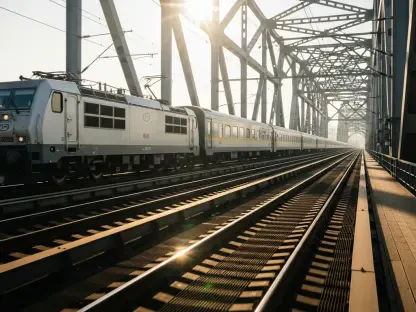
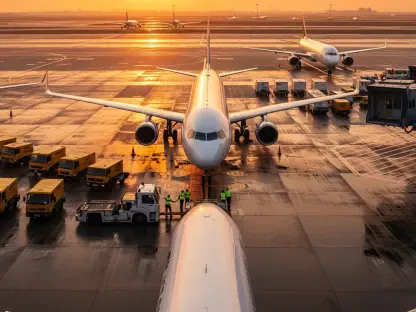
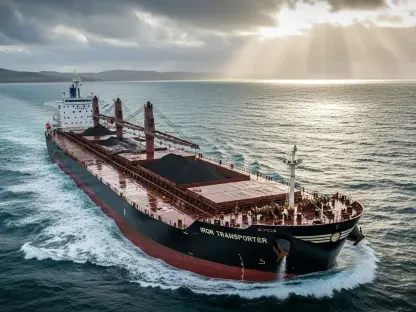
To bridge long distances within a tight timeframe, companies frequently turn to air freight, the most carbon-intensive mode of transportation available. While ground shipping via truck or rail is far more fuel-efficient per package, it is often too slow to meet overnight or two-day delivery promises for cross-country shipments. This “mode shift” to aviation comes at a severe environmental cost, as airplanes emit substantially more carbon dioxide per ton-mile than any ground-based alternative. The convenience of receiving a package from across the country in 24 hours is powered by a disproportionate amount of fossil fuel consumption.
The final leg of the journey, known as “last-mile” delivery, is notoriously inefficient and represents a major source of urban pollution. This stage is particularly vulnerable to the negative impacts of consumer habits, such as placing multiple, small orders throughout the day. When a customer places one order in the morning and another in the evening, logistics systems often cannot bundle them into a single delivery. This results in two separate trips by a delivery van to the same address, doubling the emissions for that household’s purchases and contributing to increased traffic congestion and air pollution in residential areas.
Evidence from the Experts Quantifying the Impact of Speed
The environmental penalty for speed is not merely theoretical; it is quantifiable. Research led by Sreedevi Rajagopalan at MIT provides a clear metric, concluding that for the same level of consumer demand, the logistical choices required for fast shipping directly increase carbon emissions by an estimated 10 to 12 percent. This figure isolates the impact of speed itself, demonstrating that the very act of accelerating delivery has a measurable and detrimental effect on the environment.
Perhaps more compelling is the data revealing the profound benefits of exercising a little patience. The same body of research highlights that delaying a delivery by just one to two days can slash the associated carbon dioxide emissions by a remarkable 36 percent. Waiting three to four days achieves an even greater reduction of 56 percent. These statistics underscore the immense power that a small shift in consumer expectation can have, transforming a simple choice at checkout into a meaningful act of environmental stewardship.
Furthermore, evidence suggests that consumers are willing to make more sustainable choices when they are properly informed. A 2024 study co-authored by Rajagopalan found that when online shoppers in Mexico were shown data on the environmental impact of their shipping options, a significant number chose slower delivery times. This indicates that transparency is a powerful tool; empowering consumers with clear information can directly influence behavior and help mitigate the carbon footprint of e-commerce.
Charting a More Sustainable Course for Companies and Consumers
In response to these challenges, industry leaders are developing strategies to mitigate the environmental impact of their operations. Amazon, for example, is implementing a multi-faceted approach. According to Chris Atkins, the company’s Director of Worldwide Operations Sustainability, this includes building more local fulfillment centers to reduce the distance packages travel, particularly by air. The company is also decarbonizing its fleet with electric delivery vans and shifting more packages to less carbon-intensive modes like rail. A key initiative encourages customers to group their orders into a single weekly delivery day, a program that in the first nine months of 2025 alone reduced more than 300 million delivery stops and avoided 100,000 tons of carbon emissions.
Ultimately, consumers wield significant influence in this equation. By making conscious choices, shoppers can collectively steer the industry toward more sustainable practices. The most effective strategies are simple: bundling items into a single, larger order instead of placing multiple small ones; selecting standard shipping options whenever possible; and resisting the impulse for next-day delivery unless absolutely necessary. Embracing a little more patience not only benefits the planet but also sends a clear message to retailers that sustainability is a priority.
The convenience of rapid delivery became an embedded feature of modern commerce, but its environmental consequences were a debt that continued to accrue. A crucial shift occurred as both corporations and consumers began to acknowledge their shared responsibility. Innovations in logistics, combined with a growing public awareness, demonstrated that the choice was never simply between speed and sustainability. Instead, it was about finding a new equilibrium where the efficiency of e-commerce could coexist with the health of the planet, proving that thoughtful choices, made collectively, had the power to redefine the cost of convenience.