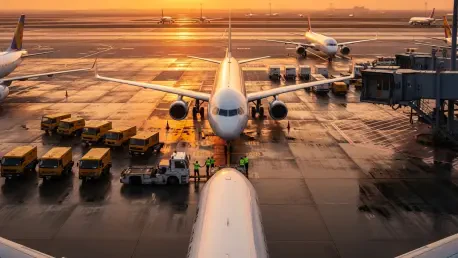

Efficiency at a major international airport depends on a silent choreography of logistics that ensures thousands of passengers reach their destinations without a single hitch. At London Gatwick, this intricate dance has entered a new phase as DHL Supply Chain takes the lead for Air France-KLM. This partnership is not just a contract; it is a strategic alignment designed to support the airline’s expanding footprint, specifically its vital connection to Paris-Charles de Gaulle.
A Strategic Partnership Takes Flight at London Gatwick
The collaboration marks a significant shift in how ground operations are managed at London’s second-busiest aviation hub. By integrating DHL’s logistical prowess with the premium service standards of Air France-KLM, the duo aims to redefine the turnaround process. This move comes at a pivotal time as the airline seeks to maximize its operational footprint in the competitive London market.
This alliance focuses on more than just moving bags; it is about the evolution of airport logistics. As air travel demand grows, the pressure on ground crews to maintain punctuality becomes immense. This partnership ensures that every flight departing for Paris benefits from a streamlined, professional process that prioritizes both speed and safety.
The Foundation of a Logistical Alliance
Air France-KLM maintains a massive presence across the United Kingdom, utilizing a dual-hub strategy centered in Paris and Amsterdam. To maintain this network, they require a partner that understands the nuances of global supply chains. DHL Supply Chain brings a specialized approach that goes far beyond standard courier services, offering technical expertise tailored to the aviation sector.
The current operation focuses on high-frequency routes, specifically managing the daily flights that bridge the gap between the UK and mainland Europe. With multiple daily rotations, the logistical demands are constant. DHL provides the backbone for these operations, ensuring that the scheduling remains as precise as possible to satisfy both business commuters and leisure travelers.
Key Components of the Ground Handling Agreement
The scope of this agreement is comprehensive, covering every aspect of a flight’s time on the tarmac. By consolidating these services under a single provider, Air France-KLM can ensure a consistent level of quality that reflects their brand identity. DHL’s role is to act as the invisible hand that keeps the machinery of travel moving forward.
Comprehensive Ground Support Services
DHL manages the heavy lifting of the operation, including baggage handling, aircraft loading, and the technical dispatch of flights. Their teams are also responsible for pushback operations, which require extreme precision to avoid delays during peak hours. These services are the primary drivers of airline punctuality, directly affecting the carrier’s reputation for on-time departures.
Cabin Maintenance and Customer Care
Beyond the technical side, the partnership covers front-end customer service duties and cabin maintenance. This includes the rigorous cleaning standards required between flights to ensure a premium environment for arriving passengers. By managing these touchpoints, DHL plays a direct role in the passenger experience from the moment they check in until they board the aircraft.
Specialized Fleet Management
The operation is specifically tailored to the Airbus A220, a modern aircraft known for its efficiency and specific technical requirements. DHL’s staff are trained to handle the nuances of this airframe, ensuring that all ground support equipment is perfectly compatible. This specialization reduces the risk of mechanical delays and optimizes the loading process for this specific fleet type.
What Sets the DHL and Air France-KLM Collaboration Apart
What distinguishes this arrangement is the shift toward outsourcing complex logistics to third-party specialists who can drive greater efficiency than traditional in-house models. By leveraging DHL’s global logistical infrastructure, Air France-KLM gains access to advanced tracking and management systems. This integration allows for a more responsive operation that can adapt to the high-pressure environment of Gatwick.
Furthermore, both organizations share a deep-seated commitment to reliability. Leadership from both companies has highlighted that technical expertise is the cornerstone of this relationship. The ability to maintain tight schedules while managing the unpredictability of a major airport requires a level of coordination that only a logistics giant like DHL can provide.
Current Operations and Expansion in the UK Market
The Gatwick to Paris-Charles de Gaulle route serves as a critical artery for European travel, providing essential connectivity for thousands of travelers. Currently, Air France operates across 18 different airports in the UK, making it one of the most prominent international carriers in the region. This partnership at Gatwick is a key piece of that broader puzzle, strengthening their network during a period of rising demand.
Moreover, the synergy between these two companies addresses the increasing need for reliable business travel options. As markets become more integrated, the frequency and reliability of flights between London and Paris are more important than ever. This collaboration ensures that the infrastructure on the ground is robust enough to support future growth.
Reflection and Broader Impacts
Reflection
The decision to utilize a logistics specialist like DHL highlights the strengths of modern aviation management. While maintaining tight schedules is always a challenge, the use of a dedicated partner allows the airline to focus on its core mission of flying. However, the success of such a model depends entirely on the seamless communication between the airline’s flight deck and the ground crew.
Broader Impact
This partnership reflects a global trend where airlines are increasingly looking toward specialized providers to handle the “last mile” of aviation. As high-traffic hubs become more congested, the traditional models of ground handling are being replaced by data-driven, logistics-focused approaches. This shift likely influenced future handling models at other international hubs facing similar capacity constraints.
The Future of Aviation Logistics at Gatwick
The agreement between DHL and Air France-KLM solidified a new standard for ground operations at London Gatwick. By focusing on specialized technical support and comprehensive service integration, both companies positioned themselves to handle the complexities of modern air travel. This strategic alliance served as a blueprint for how global connectivity can be enhanced through specialized logistical partnerships.
As the network continues to expand, the focus moved toward implementing even more advanced automation and sustainable ground practices. Stakeholders should now look toward digital integration and real-time data sharing as the next steps in optimizing airport turnarounds. Ensuring that these technological advancements are paired with skilled labor will be the key to maintaining the high standards set during this initial collaboration.