The final, critical journey of a product from a distribution center to a customer’s doorstep has long been a logistical nightmare for businesses, a complex and costly necessity that erodes profit margins with every mile driven. For decades, this last mile has been defined by its inefficiencies and high operational overhead, representing a significant portion of total shipping costs. However, a new technological tide is turning, posing a fundamental question: what if this persistent cost center could be transformed into a strategic and intelligent profit engine? The answer appears to lie in the sophisticated application of artificial intelligence.
The Last-Mile Gauntlet: A Landscape of Rising Costs and Customer Demands
The last-mile delivery sector serves as the most crucial touchpoint in the modern supply chain, directly shaping customer perception and ultimate satisfaction. It is the final handshake, the moment where brand promises of speed and reliability are either met or broken. In an e-commerce-driven world, a positive delivery experience is no longer a bonus but a baseline expectation, powerfully influencing brand loyalty and repeat business. Consequently, the performance of this final segment has an outsized impact on a company’s reputation and bottom line.
However, delivering on this promise is fraught with inherent complexities that challenge even the most seasoned logistics operators. The operational landscape is often a patchwork of fragmented assets, including internal fleets, third-party carriers, and independent driver networks, each operating with different standards and systems. This fragmentation leads to inconsistent service levels, a glaring lack of real-time visibility into delivery status, and a constant struggle to manage escalating expenses related to fuel, labor, and failed delivery attempts. For many enterprises, the last mile remains a reactive and chaotic environment.
The AI Revolution: From Predictive Insight to Autonomous Action
AI in Action: How Today’s Logistics Leaders Are Gaining an Edge
Leading enterprises are already leveraging artificial intelligence not as an abstract analytical tool but as a deeply integrated operational partner. Current AI applications are moving beyond simple dashboards to provide actionable intelligence that directly addresses last-mile challenges. For instance, sophisticated algorithms now generate highly accurate predictive ETAs and dynamic service-level agreements by continuously analyzing a flood of real-world data, including traffic patterns, weather conditions, and historical driver performance. This allows businesses to set and meet realistic customer expectations with unparalleled precision.
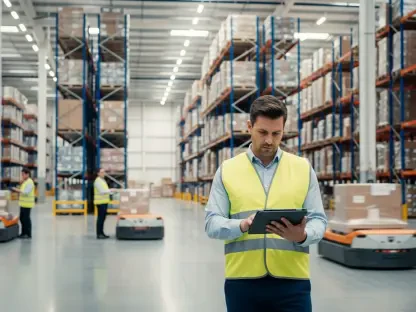
Moreover, AI is serving as a vigilant co-pilot for logistics teams, enabling them to make smarter trade-offs between speed, cost, and service quality. The technology excels at proactive exception identification, flagging potential delays or delivery failures long before they become customer-facing problems. When a risk is detected, the system can recommend or even automate mitigation strategies, such as reassigning a delivery to a closer driver. This decision-making support empowers teams to optimize outcomes for each delivery based on predefined business priorities, transforming reactive problem-solving into a proactive, data-driven workflow.
Gazing into 2026: The Dawn of Agentic Logistics Operations
The next phase of AI in logistics, anticipated to mature by 2026, promises a significant leap from decision support to autonomous action. The industry is on the cusp of the era of “agentic logistics,” where AI will function as a true agent, owning and orchestrating the entire delivery lifecycle. This shift signifies a move toward systems that not only predict outcomes and suggest actions but also make and execute decisions in real time to ensure optimal performance across the entire delivery network.
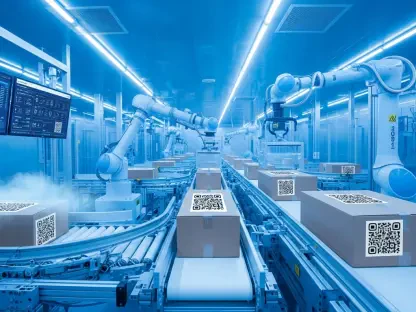
This evolution will be defined by a market-wide move toward unified AI platforms that manage a diverse mix of delivery assets, from owned vehicles to third-party carriers, under a single layer of intelligence. The primary focus of these advanced systems will pivot from simply managing exceptions to actively preventing them. By identifying potential failure points early, AI will autonomously execute corrective measures, such as re-routing vehicles around an emerging traffic jam or reallocating tasks from a delayed driver to one who is ahead of schedule. This creates a self-healing logistics network that ensures smooth operations, often resolving issues before the end customer is even aware a problem existed.
Bridging the Gap: Overcoming Hurdles to AI Implementation
Despite the immense potential of AI, its adoption is not without significant challenges that organizations must navigate carefully. One of the foremost technical hurdles is data integration. Last-mile operations rely on a multitude of disparate systems, including transportation management systems, warehouse management systems, and carrier portals. Aggregating and standardizing data from these siloed sources to feed an AI engine is a complex but essential prerequisite. Additionally, the initial investment in AI platforms and the talent required to manage them can present a substantial financial barrier, particularly for small to mid-sized enterprises.
Beyond the technical and financial considerations, the human element of implementation poses an equally formidable challenge. Successfully transitioning from human-led workflows to AI-orchestrated ones requires robust change management. Building organizational trust in AI-driven recommendations and autonomous decisions is paramount. This involves not only demonstrating the technology’s reliability and value but also retraining teams to shift their focus from manual coordination to strategic oversight. Ensuring a smooth cultural and operational transition is critical to unlocking the full potential of any AI investment.
Navigating the New Rules: Compliance and Regulation in an AI-Driven World
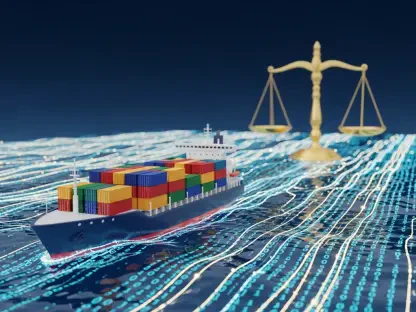
The rapid integration of AI into logistics operations introduces a new layer of complexity concerning regulation and compliance. As AI systems collect and process vast amounts of information, adherence to data privacy laws, such as those protecting customer and driver information, becomes critically important. Furthermore, the rise of automated decision-making raises new questions about liability. Determining accountability when an AI-driven decision results in a service failure, an accident, or a financial loss is a gray area that the legal and regulatory frameworks are still working to address.
The impact of AI extends into labor practices, particularly in the management of large networks of independent drivers and gig workers. AI-powered platforms that automate dispatching, routing, and performance management must be designed and implemented in a way that aligns with evolving labor laws and ethical standards. Enterprises have a responsibility to ensure these systems promote fairness, transparency, and compliance, creating a sustainable and equitable model for both the business and its driver partners.
Beyond Efficiency: The Future of Delivery as a Brand Differentiator
As AI-driven orchestration automates and optimizes logistics, operational efficiency will increasingly become a standard expectation rather than a competitive advantage. This shift will fundamentally reshape the competitive landscape, compelling businesses to differentiate themselves in new ways. The focus will pivot from a singular obsession with cost-cutting to the delivery of a superior, branded, and consistent customer experience. In this new paradigm, the quality of the delivery itself—defined by its speed, predictability, and proactive communication—becomes a core tenet of the brand’s identity.
Ultimately, intelligent last-mile orchestration will evolve into a core strategic asset, directly linking delivery performance to top-line revenue growth. A seamless and reliable delivery experience fosters deep customer trust and loyalty, driving repeat purchases and enhancing lifetime value. Companies that master AI-powered logistics will no longer view delivery as a simple transaction but as their most powerful tool for customer retention. In this future, the businesses that win will not be those with the largest fleets, but those with the smartest and most responsive orchestration.
The Verdict: Forging a Strategic Profit Engine from a Necessary Cost
The comprehensive analysis of AI’s trajectory in logistics revealed that its role has fundamentally transformed. What was once a tool for analysis became an active partner in daily operations, proving its capacity to bring order and intelligence to the traditionally chaotic last mile. The evidence showed that this technology was no longer a future concept but a present-day force capable of turning the most complex part of the supply chain into its most automated and data-driven segment.
For enterprises navigating an intensely competitive market, the adoption of AI orchestration was not merely an option for incremental improvement but a strategic imperative for survival and growth. Embracing this shift allowed businesses to unlock unprecedented levels of service, achieve dynamic control over volatile costs, and ultimately forge a sustainable competitive advantage. This transformation marked the moment the last mile ceased to be a simple cost of doing business and became a powerful engine for profit and brand loyalty.