
Standing on a platform with a parcel in one hand and a timetable in the other, the simplest errand should not require a separate trip across town when a station can serve both mobility and delivery at once, and that is the promise behind turning rail hubs into always-on parcel points powered by their own solar kits. This how-to guide shows how to plan, build, and scale a solar-enabled locker network across Austrian train stations, using an operational site in Leobendorf as the reference case and a nationwide rollout as the objective.
This guide helps decision makers, operators, and municipal partners deliver a fully functional program: selecting the right stations, specifying off-grid hardware, integrating logistics systems, navigating permits, guiding users, and scaling with data. The approach balances commuter convenience with clean infrastructure, so that 24/7 lockers sharpen last‑mile efficiency while strengthening stations as everyday service anchors.
Why solar-powered parcel lockers at ÖBB stations are a timely win for Austria
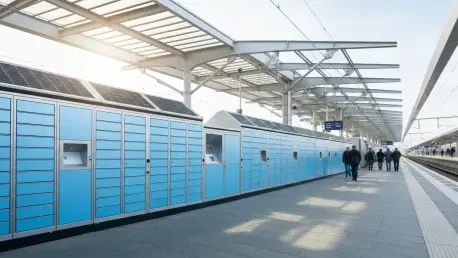
Austria’s rail network already connects daily life with dependable mobility; linking it to e-commerce routines tightens that bond. A joint rollout by Austrian Federal Railways and Austrian Post reframes stations as more than transit nodes, positioning them as trusted places where commuters can pick up or drop off pre-franked parcels whenever it suits them. The Leobendorf site in Lower Austria demonstrates the concept with more than 50 compartments, continuous access, and a self-sufficient solar-battery system that runs day and night.
The benefits compound across the network. Commuters avoid extra detours, traffic sees fewer short parcel trips, and couriers gain predictable, consolidated stops. Moreover, off-grid solar lockers reduce operating emissions and simplify siting, especially near Park & Ride areas where sunlight exposure and user flows are favorable. The following sections detail how to choose stations, design autonomous power systems, manage integration and operations, and scale from a single unit to dozens of sites.
From waiting rooms to service hubs: why station-centric logistics matters
Rail stations already concentrate foot traffic, modal connections, and short-stay parking, which makes them natural interfaces for unattended parcel services. Locating lockers along the paths people already walk—between platforms, entrances, and Park & Ride aisles—turns waiting time and commute transitions into an opportunity to handle deliveries. In dense neighborhoods or suburban edges alike, the same principle holds: more touchpoints where daily mobility and parcel routines intersect.
Unattended, 24/7 parcel lockers cut failed deliveries, support cost control, and meet user expectations formed by e-commerce. When coupled with solar PV and onboard batteries, these units can operate without grid hookups, which speeds deployment and offers resilience during outages. This convergence supports national decarbonization goals while reinforcing stations as modern service hubs that deliver tangible value beyond transport.
How to build a solar 24/7 parcel network across Austrian stations
Step 1 — Pinpoint High-Impact Stations and Optimal Locker Sites
Use commuter data and Park & Ride patterns to prioritize locations
Start with a clear target: the stations that deliver the fastest wins. Prioritize hubs with strong inbound and outbound commuter flows, frequent service intervals, and established Park & Ride use. Blend passenger counts, timetable density, and transfer patterns to identify points where parcels can be handled as part of normal journeys, not special trips.
Then layer in contextual signals. Map residential catchments, proximity to retail streets, and existing parcel demand to forecast likely locker occupancy. Weight sites where passengers already pause—ticket halls, platform approaches, and parking pay points—so that the locker visit fits the choreography of a typical commute.
Validate footfall and safety with on-the-ground observations
Data narrows the field; site walks seal the choice. Observe actual flows across morning and evening peaks, noting where people naturally line up or pause. Check sightlines, lighting, and visibility from staffed areas or CCTV to deter misuse and ensure a comfortable experience at off-hours.
Engage station managers and local security teams to confirm patterns that datasets may miss, such as seasonal events, school routes, or weekend markets. Where perception of safety is uneven, plan improvements—lighting, cameras, or clearer paths—before installation to drive adoption from day one.
Plan for accessibility, lighting, and barrier-free pathways
Make the experience work for everyone. Position lockers on barrier-free routes with curb ramps and adequate maneuvering clearances, and ensure door heights and reach ranges are accessible. Provide weather protection through canopies or overhangs where feasible to improve comfort during pickup.
Lighting matters even for off-grid units. Design for dusk-through-dawn illumination using efficient LEDs powered by the locker’s battery system, and align fixtures to avoid glare. Clear approaches, non-slip surfaces, and generous turning radii complete an environment that signals safety and ease.
Step 2 — Specify Locker Hardware, Capacity, and Energy Design
Right-size compartments and module count for peak parcel volumes
Dimension the hardware to the actual parcel mix. Use carrier data to balance small, medium, and large compartments so that utilization stays high without frequent re-stacking. Model peak holiday periods and promotion-driven spikes to decide base capacity and whether modular expansion is required.
Avoid both scarcity and bloat. Too few compartments strain couriers and frustrate users; too many add idle assets and unnecessary cost. Pilot data from Leobendorf—more than 50 compartments with 24/7 access—offers a reference point, but each station’s volume profile should guide final configuration.
Choose off-grid kits: PV array sizing, battery capacity, charge controllers
Design an energy system that matches loads and climate. Calculate daily consumption for locks, sensors, communications, lighting, and user interfaces, then size rooftop photovoltaic panels and battery storage to cover typical and low-irradiance days. Include efficient charge controllers and robust inverters rated for outdoor service.
Redundancy safeguards reliability. Oversize storage modestly to support nighttime operations and cloudy stretches, and include smart power management that prioritizes core functions. Where shading is unavoidable, consider high-efficiency modules or microinverters to maximize capture from partial sun.
Engineer for Austrian winters: snow load, low-irradiance performance, anti-vandal enclosures
Austrian winters demand sturdy builds. Specify PV mounting systems with certified snow and wind load ratings, and consider steeper tilt angles that shed snow faster. Use components tested for low-temperature performance, including batteries with appropriate thermal management.
Protect the asset and the service. Anti-vandal enclosures, tamper-resistant hinges, and hardened screens reduce downtime and repair costs. Sealed cable runs, gasketed doors, and corrosion-resistant finishes help the units endure freezing cycles and road salt near parking areas.
Step 3 — Integrate with Postal Systems and Station Operations
Sync APIs for tracking, notifications, and secure authentication
Seamless integration underpins a smooth user journey. Connect the locker software with carrier and postal APIs for real-time tracking, status updates, and time-bound pickup codes. Support secure authentication through QR codes, alphanumeric PINs, or app-based tokens.
Reliability builds trust. Implement retries, health checks, and offline queues so that intermittent connectivity does not interrupt service. Ensure encryption in transit and at rest, and align token lifetimes with station security policies to prevent misuse.
Align maintenance, cleaning, and security with station staff workflows
Lockers benefit from daily attention embedded in existing routines. Coordinate cleaning schedules with station staff, define rapid-response procedures for jammed doors or failed compartments, and align with security patrols. Assign a clear escalation path to minimize downtime.
Document roles and response times. A concise playbook—covering minor fixes, spare parts, and remote diagnostics—keeps support predictable and measurable. Integrate incident reporting with station systems so that issues surface quickly and are resolved without handoffs slipping.
Position for quick courier access without disrupting passenger flows
Couriers need speed, passengers need space. Place lockers where vehicles can briefly stop without blocking bus lanes, taxi ranks, or pedestrian crossings. Provide a short, signed access path so couriers can service multiple compartments efficiently.
Test the dance at peak times. Simulate courier visits during morning and evening rushes to confirm that loading activities do not create bottlenecks. Adjust stanchions, markings, or delivery windows if needed to preserve smooth passenger movement.
Step 4 — Handle Permitting, Installation, and Commissioning
Streamline municipal approvals and heritage constraints where relevant
Many stations sit within sensitive urban fabrics. Review municipal codes for signage, lighting, and street furniture, and consult heritage authorities if the station is protected. Prepare concise submittals with visuals showing scale, finishes, and reversible anchoring methods.
Early engagement reduces friction. Share energy autonomy details to address grid concerns, and present safety and accessibility features to demonstrate public benefit. A clear construction timeline and contact list reassures stakeholders that works will be brief and controlled.
Prefabricate lockers for rapid on-site deployment and minimal downtime
Time on the concourse is precious. Favor prefabricated modules that arrive tested, labeled, and ready for plug-and-play assembly. Pre-drill foundations or use ballast systems where drilling is restricted, and stage components to avoid blocking entrances.
A tight choreography keeps the station calm. Schedule deliveries during off-peak hours, coordinate with station operations for crane or lift use, and complete final fit-outs quickly. The goal is a short, quiet installation that passengers barely notice.
Test uptime, power autonomy, and emergency procedures before go-live
Commissioning verifies promises. Run multi-day tests for door cycles, network resilience, and backup routines, and stress-test the solar-battery system through simulated low-sun conditions. Confirm that lighting and interfaces remain responsive throughout the night.
Plan for the unexpected. Validate emergency unlocks, remote disable features, and contact points for public assistance. Only after thresholds for uptime, security, and autonomy are met should the site move from testing to public service.
Step 5 — Educate Users and Launch a Frictionless Experience
Promote 24/7 pickup and pre-franked drop-off through transit channels
Awareness drives adoption. Use in-station signage, platform announcements, and transit apps to explain that parcels can be picked up anytime and that pre-franked items can be dropped off without queueing. Highlight the convenience of combining parcel tasks with routine commutes.
Consistency reinforces habits. Mirror messages across ticket machines, parking receipts, and regional transit newsletters, and emphasize that off-grid solar power keeps service running even when other systems are down. Short, clear phrases outperform complex explanations.
Offer intuitive UX: QR codes, app notifications, multilingual prompts
The best interface gets out of the way. Deliver precise notifications when parcels arrive, provide time-limited QR codes for pickup, and support fallback PINs. Keep screens bright, concise, and responsive, with prompts available in the most common local languages.
Design for inclusivity. Ensure readable fonts, strong contrast, and clear audio cues where appropriate. Offer simple help flows and visible support contacts so first-time users complete tasks without hesitation.
Provide clear wayfinding from platforms and parking areas
People should find lockers on the first try. Place signs along natural paths from platforms and Park & Ride areas, using consistent icons and directional arrows. Add location markers in transit apps and station maps so users can navigate without guesswork.
Wayfinding works best when it anticipates confusion. Avoid placing lockers behind visual barriers or in dead-end corners, and confirm visibility from key entrances. Nighttime visibility, aided by gentle illumination, helps occasional users as much as regulars.
Step 6 — Monitor Performance and Scale the Network
Track occupancy, dwell time, failed deliveries, and energy autonomy
Management begins with measurement. Monitor compartment occupancy, dwell time, first-attempt pickup rates, and the frequency of failed or returned deliveries. Pair these with energy metrics—solar yield, battery state of charge, and periods of autonomy—to understand operational resilience.
Translate data into action. Identify time windows that strain capacity, diagnose compartments that fail more often, and detect sites that require shading mitigation or additional panels. Regular reviews keep service quality high while guiding targeted improvements.
Adjust capacity and add modules based on demand growth
Demand rarely sits still. When occupancy approaches upper thresholds, add modules or rebalance compartment sizes to match parcel mix. Consider seasonal expansions ahead of peak periods, then revert to baseline configurations when traffic normalizes.
Stay nimble but disciplined. Expansion should follow clear triggers tied to performance metrics, not anecdote. This keeps capital efficient while ensuring that couriers and users enjoy consistent service.
Replicate the Leobendorf model at 50+ sites with a standardized playbook
Standardization speeds scale. Use the Leobendorf deployment as a template for siting, hardware specs, energy kits, commissioning tests, and user communications. Package this as a playbook that local teams can follow with minimal customization.
Replication does not mean rigidity. Allow limited, pre-approved variations for site constraints, climate nuances, or municipal requirements. This balances speed with local fit, enabling swift rollout across dozens of stations without sacrificing quality.
Quick recap of the rollout plan
Identify candidate stations using commuter and Park & Ride data, then confirm choices with in-person checks for safety, accessibility, and intuitive paths. Pick visible, barrier-free sites where lockers naturally fit the station’s flow and can be serviced without friction.
Specify locker capacity to match peak volumes and local parcel mixes, and pair units with off-grid solar-battery systems engineered for low-irradiance winters. Integrate APIs for tracking and secure access, align maintenance with station teams, and position lockers for courier efficiency without interrupting passengers.
Navigate permits early, prefabricate for fast installs, and commission thoroughly with stress tests for power autonomy and emergency scenarios. Launch with clear messaging across transit channels, intuitive user interfaces, and consistent wayfinding from platforms and parking.
Monitor operations through occupancy and energy metrics, adjust capacity as demand shifts, and scale with a standardized playbook. Anchor decisions in data so each new site improves upon the last while keeping emissions and costs in check.
Beyond Leobendorf: what this means for last-mile logistics and clean infrastructure
The station is becoming a service node where mobility, retail, and e-commerce collide into a single, convenient routine. By folding unattended lockers into the commute, last-mile delivery aligns with existing travel patterns, cutting redundant trips and smoothing demand for couriers who benefit from consolidated stops and predictable routes.
Off-grid solar lockers also add resilience. When the grid falters or a site lacks an easy connection, rooftop PV and onboard storage keep doors cycling and screens lit. That flexibility opens placements that once seemed impractical, and it reduces operating emissions in a way that is visible to the public and credible to policymakers.
Widespread adoption hinges on a few realities: winter irradiance can be stingy, some sites will face shading and vandalism risks, and data privacy rules require careful handling of identity and notifications. Addressing these challenges through robust hardware, smart siting, and transparent data practices lays the groundwork for inclusive access and durable performance.
The upside extends further. Dynamic courier routing can react to real-time locker capacity, returns can be bundled with pickups, and recycling drop points can share the footprint. With common standards for APIs and cabinets across borders, operators can build a cohesive parcel experience that feels seamless to users traveling between regions.
Final thoughts and next steps for a smarter, cleaner parcel network
The partnership between rail and post showed how to blend convenience, efficiency, and clean power without overhauling the station’s core mission. A single, solar-powered unit with more than 50 compartments in Leobendorf proved the model: 24/7 access, pre-franked drop-off, and dependable autonomy even after sunset. Scaling that template to dozens of sites became a practical path, not an aspiration.
The most effective next steps centered on a disciplined playbook. Teams prioritized high-impact stations, codified off-grid specs for Austrian winters, integrated APIs with hardened security, and streamlined permits through prefabrication and clear timelines. User education, intuitive UX, and visible wayfinding unlocked adoption, while continuous monitoring guided capacity changes and targeted fixes.
From here, the network advanced through steady replication and measured iteration. Community engagement refined siting details, published metrics built public trust, and modest hardware variations adapted lockers to local constraints. The result was a station-centered parcel grid that cut extra trips, boosted satisfaction, and demonstrated how clean infrastructure could deliver everyday value.