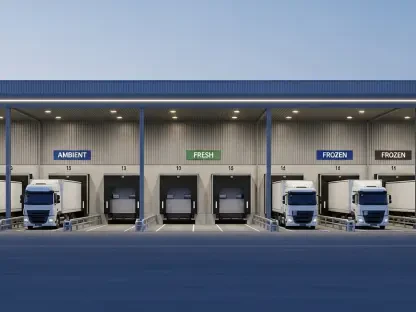

The loading dock has long been the stubborn bottleneck in an otherwise increasingly automated supply chain, a place where efficiency gains often come to a grinding halt. The SlipLift autonomous loading platform represents a significant advancement in logistics and supply chain automation, aiming to solve this persistent challenge. This review will explore the evolution of this technology, its key features, performance metrics, and the impact it has on freight handling operations. The purpose of this review is to provide a thorough understanding of the SlipLift system, its current capabilities, and its potential for future development in the logistics industry.
An Introduction to the SlipLift System
The SlipLift is an autonomous loading and unloading platform developed by Slip Robotics to automate freight handling in sectors previously limited by weight, distance, and dock variability. Its core principle involves a decoupled architecture where a small fleet of mobile robots transports large, pre-loaded platforms, streamlining operations from regional distribution to last-mile delivery. This system emerged to address the need for flexible, high-capacity automation that removes uncertainty and bottlenecks at the loading dock, marking a crucial step forward in logistics technology.
Core Technology and System Features
Decoupled Robot and Freight Platform Design
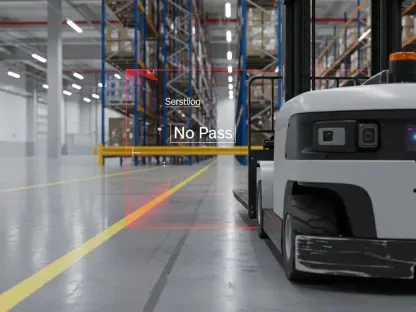
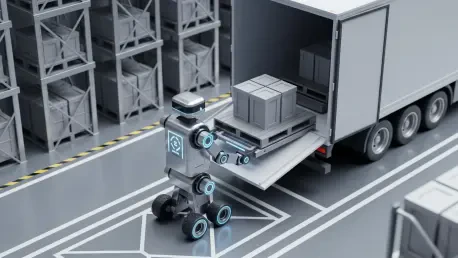
The system’s primary innovation is the separation of the mobile robot, known as the SlipLift, from the freight platform, the SlipCarrier. This design allows a single robot to service multiple dock doors by collecting and positioning pre-loaded SlipCarriers as needed. Consequently, this model eliminates the need for a one-to-one robot-per-door investment, a common barrier to widespread automation adoption.
This architectural choice directly translates into enhanced operational efficiency and resource management. By decoupling the motive power from the cargo-holding unit, facilities can achieve fast, consistent loading times without dedicating expensive robotic hardware to each bay. This approach not only maximizes asset utilization but also introduces a level of flexibility previously unseen in heavy-duty dock automation.
High-Capacity Freight Handling
Engineered to support loads of up to 20,000 pounds, the SlipLift significantly expands the scope of automated loading beyond standard parcel and pallet operations. This substantial capacity makes the system a viable solution for heavy freight industries where manual or semi-automated processes have historically dominated due to the sheer weight and bulk of the goods involved.
The ability to handle such significant weight opens the door to automation for sectors like food and beverage, packaging, paper products, and automotive assemblies. For these industries, the SlipLift offers a pathway to increased throughput and improved worker safety by mechanizing tasks that carry a high risk of injury and are notoriously difficult to perform efficiently by hand.
Human-Supervised Autonomous Operation
The SlipLift operates under the direct supervision of a worker who uses a hand-held controller while remaining safely outside the trailer. This human-in-the-loop approach combines the raw power and precision of robotics with the critical oversight and adaptability of a human operator. The system handles the heavy lifting, while the worker guides its final placement, ensuring both safety and precise control during the loading and unloading process.
This operational model serves as a practical bridge between manual labor and full autonomy, allowing for immediate implementation without the complexities of fully autonomous navigation in dynamic dock environments. It leverages robotic strength for efficiency while retaining human intelligence for situational awareness, striking a balance that enhances productivity and minimizes risk.
Latest Developments and Market Expansion
The official debut of the SlipLift platform marks a major expansion for Slip Robotics, extending its automation capabilities into new and demanding logistics segments. This development strategically addresses the unique requirements of regional and medium-haul distribution networks, as well as the high-velocity environment of last-mile delivery hubs. Early deployments are already underway, with broader commercial availability planned for this year, signaling a confident market entry.
Real-World Applications and Industry Impact
Enhancing Regional Distribution Networks
For regional distribution centers, the SlipLift enables operators to automate loading and unloading across multiple facilities without a prohibitive capital investment in dedicated robots for each dock door. This inherent flexibility allows for a scalable automation strategy that can adapt to fluctuating demand and support network growth over time. Companies can phase in automation door by door, facility by facility, aligning investment with operational needs.
Revolutionizing Last-Mile Logistics
In the fast-paced world of last-mile delivery, the system drastically reduces dock congestion and minimizes driver dwell times, which are critical performance indicators. By allowing freight to be pre-staged on SlipCarriers long before trucks arrive, fleets can be loaded in a matter of minutes during peak morning departures. This efficiency gain maximizes driver time on the road and improves overall delivery capacity.
Challenges and Implementation Considerations
Integration with Existing Warehouse Infrastructure
Adopting the SlipLift system requires careful consideration of existing facility layouts, including dock door specifications, trailer compatibility, and flooring conditions. A successful implementation depends on ensuring seamless integration with current warehouse management systems and operational workflows to avoid creating new bottlenecks while solving old ones. Proper site evaluation is crucial to maximizing the efficiency gains promised by the technology.
Workforce Training and Adoption
While the system is designed for intuitive operation, it necessitates comprehensive training for workers to proficiently use the hand-held controller and supervise the robot’s movements. Overcoming potential resistance to new technology and ensuring that staff are well-versed in safety protocols are key to realizing the platform’s full potential. A well-executed training program is fundamental to achieving both productivity and safety goals.
Future Outlook and Technology Trajectory
The future of the SlipLift platform points toward greater autonomy and deeper data integration. Future iterations may include enhanced sensor suites for fully autonomous navigation without the need for constant human supervision, further reducing labor requirements. Additionally, integration with AI-powered logistics software could enable predictive load staging and dynamic dock scheduling, optimizing the entire workflow. The technology is poised to set new industry standards for speed and safety, with showcases at Manifest and Modex this year signaling its growing market presence and ambitious roadmap.
Summary and Final Assessment
The SlipLift autonomous loading platform has emerged as a transformative solution in logistics automation. Its innovative decoupled design, combined with its high-capacity handling and flexible operational model, effectively addressed long-standing challenges in freight-intensive industries. By reducing reliance on manual labor, increasing throughput, and enhancing safety, the SlipLift demonstrated significant potential to redefine efficiency in regional distribution and last-mile delivery. It stood as a powerful tool for companies that looked to eliminate bottlenecks and bring much-needed predictability to their loading dock operations.