
The Unattended Revolution Redefining the Final Step of Delivery
The explosion of e-commerce has fundamentally reshaped consumer expectations, transforming the final leg of a package’s journey—the last mile—into the most critical and scrutinized stage of the entire supply chain. As parcel volumes surge, traditional doorstep delivery models are buckling under the pressure of inefficiency, security risks, and rising costs. In this high-stakes environment, a new contender has emerged to solve the last-mile puzzle: the smart parcel locker. These automated, secure hubs are rapidly moving from a niche convenience to a critical piece of urban infrastructure. This analysis explores whether smart lockers are not just a temporary fix but the definitive future of last-mile delivery. It dissects the market dynamics, technological drivers, and implementation challenges to understand their transformative potential, underscored by a market projected to triple from a valuation of US$ 1.4 billion in the preceding year to US$ 4.2 billion by 2031.
From Missed Deliveries to Digital Hand-offs a Logistical Evolution
For decades, last-mile delivery was a story of friction and frustration. The ubiquitous “sorry we missed you” slip, the anxiety of packages left vulnerable on porches, and the high operational cost of redelivery attempts defined the customer and courier experience. This system, designed for a lower volume of mail and occasional parcels, was simply not built to handle the deluge of daily online orders. The paradigm shift to digital commerce created an urgent need for a more flexible, reliable, and efficient solution. Consumers began demanding not just speed but also security and convenience that fit their modern, on-the-go lifestyles. This mounting pressure on logistics providers and retailers paved the way for automation, creating the perfect opening for smart parcel lockers to transition from a novel concept to an essential service that bridges the gap between the digital storefront and the physical customer.
Dissecting the Smart Locker Ecosystem Drivers Dynamics and Hurdles
Enhancing Efficiency and Elevating the Customer Experience
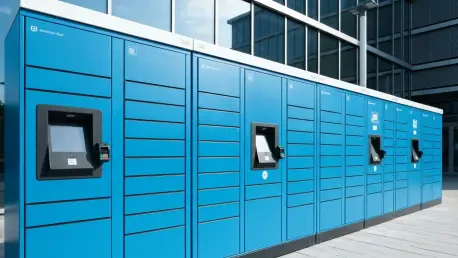
At its core, the value proposition of a smart locker is its ability to solve fundamental problems for both logistics providers and consumers. For couriers, these IoT-enabled systems are a game-changer for operational efficiency. Instead of making dozens of individual stops in a neighborhood or apartment complex, a driver can consolidate deliveries at a single, secure locker bank, dramatically reducing fuel costs, vehicle wear, and time per delivery. This model virtually eliminates failed delivery attempts, a major source of financial loss and logistical complexity. For consumers, the benefits are equally compelling. Smart lockers offer a secure, 24/7 pickup point, freeing them from waiting at home for a delivery and protecting their purchases from theft or weather damage. Access via a simple QR code or PIN on their smartphone provides a seamless, contactless experience that aligns perfectly with modern expectations for digital self-service.
The Intersection of Smart Cities and Technological Innovation
The rise of smart lockers is not happening in a vacuum; it is deeply intertwined with broader trends in urban development and technological advancement. As cities become denser, issues like traffic congestion and air pollution make traditional delivery routes increasingly unsustainable. Smart lockers, strategically placed in residential buildings, transit hubs, and retail centers, help decongest urban arteries by centralizing delivery points. This aligns with smart city initiatives focused on creating more efficient and livable urban environments. Simultaneously, the technology itself is rapidly evolving. Today’s lockers feature cloud-based management platforms for remote monitoring, real-time package tracking, and electronic proof of delivery. Furthermore, innovation is opening new markets, with the development of temperature-controlled compartments designed for groceries, meal kits, and sensitive pharmaceuticals, expanding their utility far beyond standard packages.
Navigating a Global Market and Overcoming Implementation Barriers
While the outlook is overwhelmingly positive, the global adoption of smart lockers is not uniform. North America and Europe currently lead the market, benefiting from mature e-commerce ecosystems and significant investments in smart infrastructure. However, the Asia Pacific region is poised to become the fastest-growing market during the forecast period of 2025–2031, driven by massive urbanization and a booming digital economy in countries like China and India. Despite this momentum, significant hurdles remain. The high initial capital investment for hardware and installation can be a major barrier, particularly for smaller businesses or property managers. Additionally, ensuring locker accessibility and logistical viability in both hyper-dense city centers and remote rural areas presents a persistent challenge. Overcoming these obstacles will require scalable deployment models and strategic partnerships between technology providers, retailers, and logistics networks to build a truly ubiquitous and interoperable system.
The Next Generation of Delivery What Lies Ahead for Smart Lockers
The future of smart lockers points toward greater integration, intelligence, and interoperability. The next major leap will be the creation of open or carrier-agnostic networks, where a single locker bank can be used by multiple delivery companies, maximizing its utility and return on investment. This shift is being driven by strategic partnerships among technology firms, logistics giants, retailers, and even property management companies, all working to build a cohesive ecosystem. We can also expect to see increased use of sustainable materials in locker construction to meet corporate environmental goals. Looking further ahead, the integration of AI and predictive analytics could optimize locker placement based on real-time demand data and forecast parcel volumes, ensuring capacity is always where it is needed most.
Strategic Imperatives for a Locker-Powered Future
To capitalize on this trend, stakeholders across the commerce landscape must adopt a forward-thinking strategy. For logistics companies and retailers, investing in or partnering with smart locker networks is no longer optional—it is a competitive necessity for reducing last-mile costs and boosting customer satisfaction. The key is to focus on creating a frictionless user experience, from notification to pickup. For property managers of residential and commercial buildings, installing smart lockers has become a high-value amenity that attracts and retains tenants. Their focus should be on selecting scalable, secure, and carrier-agnostic systems. Finally, for consumers, embracing this technology means gaining unprecedented control, security, and flexibility over their deliveries, making it a clear win in the evolving world of e-commerce.
Beyond the Box Are Smart Lockers a Cornerstone of Modern Commerce
Smart parcel lockers have decisively proven they are more than a temporary solution; they are a fundamental and enduring component of modern logistics infrastructure. By directly addressing the core last-mile challenges of inefficiency, insecurity, and inconvenience, they create a win-win scenario for businesses and consumers alike. As e-commerce continues its relentless growth and consumer expectations for seamless delivery experiences become the norm, the role of automated, accessible, and intelligent delivery points will only expand. Smart lockers are not just the future of last-mile delivery—they are a cornerstone of the connected, on-demand commercial landscape that will define the decades to come.