
The final, crucial journey a product takes from a distribution hub to a customer’s doorstep represents the most complex, expensive, and reputation-defining stage of the entire supply chain. In an era of instant gratification, the last mile has become a high-stakes battleground where brand loyalty is won or lost. While companies have long struggled to tame this chaotic frontier, a new paradigm is rapidly approaching. By 2026, Artificial Intelligence will graduate from its role as a helpful assistant to become the central orchestrator, conducting a symphony of data, assets, and decisions to deliver not just packages, but a fundamentally transformed customer experience. This report analyzes the trajectory of this shift, outlining the current landscape, the imminent technological tsunami, and the strategic imperatives for businesses aiming to thrive in an era of autonomous delivery.
The Current State a Complex Arena Primed for Disruption
The modern last-mile ecosystem is a patchwork of owned fleets, third-party carriers, and gig economy drivers, creating a fragmented network that often suffers from inconsistent service levels and a frustrating lack of visibility. This operational complexity makes it exceedingly difficult for businesses to guarantee a consistent brand experience, control costs, or respond with agility to unexpected disruptions. For most enterprises, the last mile remains a reactive environment, a persistent cost center managed through manual intervention and best-effort estimations that struggle to keep pace with dynamic real-world conditions.
Within this challenging environment, AI has already established a foothold as a powerful decision-support tool. Current applications are focused on bringing order to the chaos by enhancing visibility, improving predictability, and boosting operational efficiency. Today’s AI-powered logistics platforms work to refine delivery timelines by analyzing variables like traffic patterns and driver performance, offering more reliable ETAs than static models. They also identify potential delivery failures before they happen, alerting human operators to intervene. This existing technological infrastructure, employed by both traditional carriers and technology-first startups, is laying the essential groundwork for a more autonomous future, demonstrating tangible value while simultaneously highlighting the limitations of human-led exception management.
The AI Tsunami Trends and Projections on the Horizon
From Reactive Fixes to Proactive Intelligence
The most significant trend shaping the next two years is the evolution of AI from a system that helps manage exceptions to one that actively prevents them. Instead of merely flagging a potential delay for a human to solve, advanced AI will leverage predictive analytics to foresee disruptions with a high degree of accuracy and automatically implement a solution. This represents a fundamental shift from a reactive posture to a proactive and intelligent operational model, where problems are resolved before the customer is even aware they exist.
This evolution is being fueled by emerging AI capabilities that are moving beyond simple route optimization. These systems are now capable of dynamic ETA refinement in real-time, automated issue mitigation such as reassigning a delivery to a different carrier mid-journey, and managing sophisticated strategic tradeoffs. For instance, an AI orchestrator can decide whether to prioritize speed, cost, or reliability for a specific delivery based on predefined business rules. This transition is further accelerated by shifting consumer expectations; customers now demand unprecedented levels of speed and transparency, creating a powerful market pull for the adoption of AI that can deliver on these promises consistently and at scale.
The Market by the Numbers Forecasting the AI Takeover
Market data indicates a significant acceleration in the adoption of AI within the logistics sector, with projected growth poised to reach a critical mass by 2026. While current implementation is often focused on specific functions, the trend is moving decisively toward end-to-end orchestration platforms. This shift is mirrored in forward-looking performance indicators, where early adopters are already reporting measurable gains. Key metrics such as cost-per-delivery are declining due to automated efficiency, while on-time delivery rates and customer satisfaction scores are climbing as a result of enhanced predictability and proactive communication.
Investment trends are following suit, with venture capital and corporate R&D budgets increasingly flowing away from single-point solutions and toward integrated, AI-native logistics platforms. The market is forecasting a future where a company’s competitive edge is defined not by its physical assets but by the sophistication of its AI orchestrator. Consequently, the market share for these intelligent platforms is expected to expand dramatically, solidifying their role as the indispensable operating system for modern last-mile delivery.
Navigating the Headwinds Challenges on the Path to Orchestration
Despite the promising forecast, the path to full AI orchestration is not without significant challenges. A primary technological hurdle is the problem of data integration. Last-mile operations rely on a multitude of disparate systems, from warehouse management software to carrier telematics and customer relationship platforms. Unifying this data and overcoming the limitations of legacy infrastructure to feed an AI model is a complex and resource-intensive undertaking. Furthermore, ensuring the ongoing accuracy and fairness of AI models requires constant validation and refinement to avoid performance drift or algorithmic bias.
Beyond the technology, there are substantial operational and human challenges to address. The transition from manual workflows to automated, AI-driven processes necessitates a significant investment in workforce reskilling and change management. Logistics planners and dispatchers will need to evolve from tactical decision-makers into strategic supervisors of the AI system. Building trust in AI-driven decisions is another critical step, as human operators must be confident that the system’s recommendations are reliable and aligned with business objectives. These hurdles are compounded by market complexities, such as managing relationships with a diverse carrier network and adapting to the increasingly volatile demand patterns of modern e-commerce.
The New Rulebook Regulation in an Autonomous Delivery World
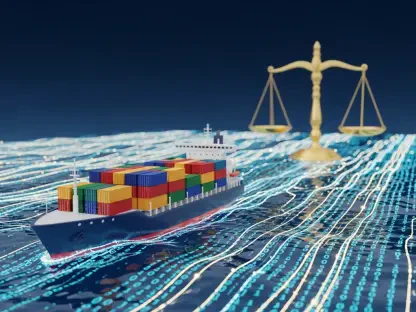
As AI assumes greater control over logistics, it will inevitably draw the attention of regulators, creating a new and evolving legal landscape. A major area of focus will be data privacy. The real-time tracking of vehicles, drivers, and customer locations generates a vast amount of sensitive information, raising important questions about data governance, consent, and security. Policymakers will be tasked with balancing the operational benefits of this data with the fundamental right to privacy for all parties involved.
Liability and accountability frameworks will also require a complete overhaul. When an AI-orchestrated delivery fails—whether due to a missed deadline, damaged goods, or an accident—determining responsibility becomes a complex issue. Is the fault with the software developer, the company that deployed the AI, or the carrier that executed the delivery? Establishing clear lines of accountability will be essential for resolving disputes and maintaining trust in autonomous systems. Moreover, the rise of AI in job allocation and performance management, particularly within the gig economy, will have profound implications for labor laws, forcing a re-evaluation of employment classifications and workers’ rights in an increasingly automated world.
The Dawn of Agentic Logistics a Glimpse into the Future
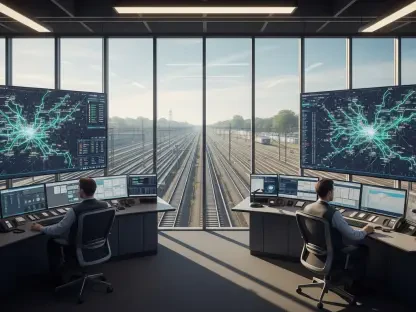
Looking toward 2026 and beyond, the industry is on the cusp of what can be termed “agentic logistics.” In this future state, AI will transcend its role as an assistant and become the primary, autonomous owner of the entire delivery lifecycle. This agentic AI will not just recommend actions but will execute them, continuously learning and self-optimizing across planning, dispatch, in-transit management, and post-delivery analysis without the need for human intervention on a per-delivery basis.
This paradigm will enable the rise of unified, AI-orchestrated networks that manage all delivery assets—owned fleets, third-party carriers, and gig workers—as a single, intelligent, and fluid ecosystem. The AI will make holistic decisions, dynamically assigning the best resource to each job based on a complete, real-time understanding of cost, capacity, performance, and strategic priority. This holistic optimization will unlock unprecedented levels of efficiency and reliability that are simply unattainable in today’s siloed operational models.
Ultimately, this technological evolution will cement the last mile’s position as a primary strategic differentiator. As AI handles the operational complexities of cost and efficiency, the basis of competition will shift decisively to the quality of the delivery experience. The ability to offer superior speed, absolute reliability, and transparent communication will become inextricably linked to core business outcomes, directly influencing brand loyalty, customer lifetime value, and overall revenue growth.
The Strategic Imperative Transforming Cost Centers into Profit Engines
This report has shown that the impending wave of AI orchestration is far more than an operational upgrade; it represents a fundamental transformation of the last-mile business model. The evidence points to an unavoidable conclusion where logistics intelligence becomes the key determinant of market leadership. By automating complex decisions and optimizing resource allocation at a granular level, AI will systematically lower delivery costs and enable businesses to scale their operations without a proportional increase in overhead.
The most profound impact, however, is the redefinition of the last mile itself. It ceases to be a necessary expenditure and becomes a strategic, profit-generating asset. A superior delivery experience, powered by AI, enhances customer satisfaction and builds the brand trust that drives repeat business. To secure a competitive advantage, businesses must act now. The strategic imperative is to begin investing in and integrating advanced AI capabilities, not as a future consideration, but as a present-day priority to build the intelligent, agile, and customer-centric delivery networks that will define the next era of commerce.