
The traditional corporate hierarchy is currently facing a massive and unprecedented disruption as nearly half of the global workforce now chooses to bypass their direct supervisors in favor of artificial intelligence for professional guidance. While the “open-door policy” once served as the gold standard for office communication, today’s employees find more reliable and judgment-free assistance through a chat interface. This shift represents more than just a preference for new gadgets; it signals a fundamental redefinition of the manager-employee relationship.
The Great Workforce Adaptation and the Rise of the Digital Mentor
The migration toward AI tools occurs against a backdrop of declining institutional trust, with confidence in senior leadership dropping from 85% to 73% in just one year. As workers grapple with economic instability and the pressure to increase output, the reliance on AI for troubleshooting has become a survival strategy.
This trend highlights a critical disconnect in the modern office. While technology offers a constant support system, it also exposes a growing gap in how workers and employers perceive the future of labor and job security.
Navigating the Trust Deficit in a High-Tech Landscape
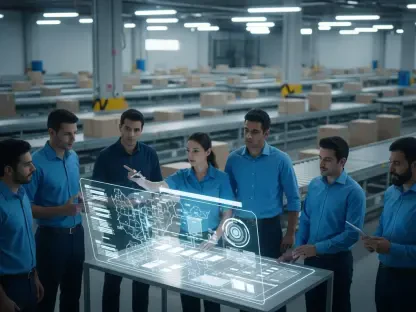
Workers in fast-paced sectors like logistics and manufacturing utilize AI for real-time problem-solving to avoid the delays often associated with human hierarchies. Furthermore, employers and employees hold vastly different views on automation, with leadership predicting the rapid disappearance of entry-level roles while workers remain skeptical of their total displacement.
Economic pressures also play a significant role, as work-life balance now outweighs pay as a primary reason for retention. Employees use AI to streamline tasks and manage increased workloads resulting from side hustles or extended hours.
Factors Driving the Preference for AI Over Human Oversight
Despite the frequent use of AI, worker confidence in mastering new technologies recently dipped, suggesting that the turn to algorithms is driven by necessity rather than total digital fluency. This paradox creates a workforce that is technically proficient yet psychologically taxed.
The demand for immediacy has made the traditional middle manager appear as a bottleneck rather than a resource. When an algorithm provides a solution in seconds, the half-day wait for a supervisor’s email response becomes an unacceptable barrier to productivity.
Insights from the Randstad Workmonitor 2026 Report
The latest industry research underscores a dramatic shift in worker sentiment, revealing that the adaptation is reshaping the very fabric of team cohesion. Experts noted that when workers stopped looking to their managers for technical advice, the role of the frontline supervisor became increasingly obsolete.
The data suggested that unless managers evolved into coaches who provide emotional intelligence and strategic vision, they risked being relegated to mere administrative bystanders. This transition forced a rethink of how leadership is measured in a digital-first environment.
Strategies for Reintegrating Human Leadership into an Automated Workflow
Organizations refocused management on soft skills by shifting supervisor roles toward mentorship, career development, and emotional support. Leadership initiated transparent dialogues regarding the impact of automation on specific job roles to align worker perceptions with company-wide technological roadmaps.
Collaborative systems were implemented to prevent the formation of information silos when individuals worked exclusively with personal AI tools. Companies also prioritized tech-resiliency training to boost worker confidence and reduced the anxiety associated with rapid digital transformation. These actions helped bridge the expectation gap and fostered a more cohesive environment.