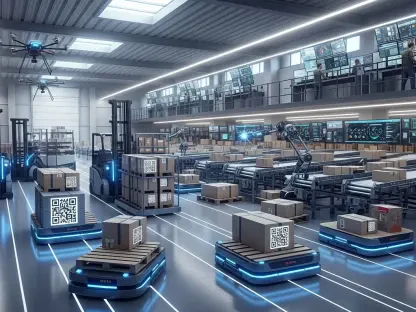

The persistent gap between digital inventory records and the physical reality of a warehouse floor has long been a source of inefficiency and risk for logistics operators, creating a clear need for more dynamic and accurate oversight. The technology of Warehouse Data Intelligence represents a significant advancement in the logistics and supply chain sector. This review will explore the evolution of this technology, focusing on Dexory’s latest innovations, its key features, performance metrics, and the impact it has on warehouse operations. The purpose of this review is to provide a thorough understanding of Dexory’s new offerings, their current capabilities, and their potential for future development in enhancing warehouse efficiency and safety.
The Emergence of Next-Generation Warehouse Intelligence
At the Manifest 2026 conference, Dexory unveiled a new approach to warehouse management centered on creating a trusted, real-time digital twin of the physical environment. This marks a strategic shift from periodic data collection to continuous, autonomous monitoring. The core principle is to provide operators with a completely accurate and up-to-the-minute reflection of their facility, eliminating the guesswork that often leads to operational bottlenecks and safety hazards.
This new level of operational visibility is built upon two foundational components. The first is an advanced autonomous robot designed for high-frequency data capture, and the second is an AI-powered software feature named Storage Health. Together, these technologies work in concert to scan, analyze, and report on the state of the warehouse, transforming raw data into actionable insights that empower managers to make informed decisions confidently and proactively.
Core Technology and Key Features
The Advanced Autonomous Scanning Robot
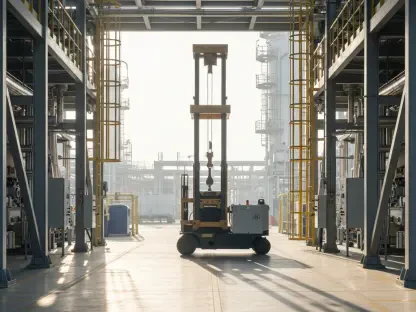
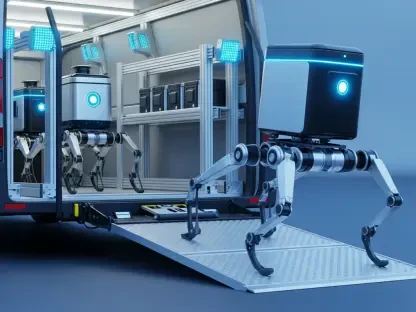
The primary data-capture unit in Dexory’s system is its next-generation autonomous robot, a significant evolution from models that have been active in warehouses since 2023. Engineered for enhanced speed and efficiency, this unit operates seamlessly alongside human workers and other machinery without disrupting workflows. Its function is to continuously gather high-resolution imagery and spatial data, feeding a constant stream of information into the DexoryView digital twin platform.
Key upgrades have substantially improved its capabilities. The robot’s scanning range has expanded from 40 to 60 feet, enabling it to process more data at a faster rate and cover larger areas more quickly. This enhancement ensures consistent visibility across complex and diverse storage configurations, including challenging environments like double-deep racking and unstructured block storage. This comprehensive data capture provides a reliable, real-time operational view that is critical for modern logistics.
The AI-Powered Storage Health Feature
Complementing the advanced hardware is Storage Health, a critical inspection layer powered by sophisticated artificial intelligence and computer vision algorithms. This software feature runs in the background during every scan, meticulously analyzing the high-resolution images captured by the robot. Its purpose is to serve as an ever-vigilant digital inspector, identifying and flagging safety and hygiene issues that are often missed during infrequent manual checks.
The true value of Storage Health lies in its proactive risk detection. The system is trained to identify specific hazards such as damaged racking, defective pallets, or unstable stock that could pose a collapse risk. Furthermore, it can detect issues like hanging shrink wrap, which can create fire or obstruction dangers, and damaged goods that negatively impact inventory control. By catching these problems early, particularly in hard-to-reach high or deep rack locations, it allows teams to intervene before minor issues escalate into costly accidents or compliance violations.
Innovations and Industry Advancements
Dexory’s latest offerings are indicative of a broader trend within the logistics industry toward continuous, autonomous monitoring. The traditional model of relying on periodic manual audits is increasingly seen as inadequate for the pace and complexity of modern warehouse operations. This move toward automation is not just about replacing manual labor but about achieving a level of data frequency and accuracy that is humanly impossible to replicate.
This shift underscores the growing importance of digital twin technology as a cornerstone of real-time decision-making and strategic planning. By maintaining a live, accurate virtual model of the warehouse, managers can simulate changes, optimize layouts, and forecast needs with greater precision. This capability transforms the warehouse from a reactive space, where problems are addressed as they arise, into a proactive environment where potential issues are anticipated and prevented.
Real-World Applications and Impact
The practical deployment of Dexory’s technology in live warehouse environments has yielded tangible benefits across key functional teams. For operations managers, the real-time visibility into stock location and availability streamlines picking and put-away processes, directly improving throughput. Safety teams benefit from the proactive hazard detection of the Storage Health feature, which allows them to address risks before they lead to incidents.
The impact is further quantified by impressive performance metrics reported by early adopters. Businesses using the system have seen an 80% reduction in the time required for stock audits, freeing up valuable human resources for more complex tasks. Moreover, a 20% improvement in overall throughput demonstrates how accurate, real-time data can significantly enhance operational efficiency and productivity.
Implementation Challenges and Mitigation
Adopting any advanced warehouse intelligence system presents potential challenges, including the initial investment costs, integration with existing Warehouse Management Systems (WMS), and the cultural shift required for seamless human-robot collaboration. These hurdles can deter some operators from embracing new technologies, despite the long-term benefits.
However, Dexory’s technology is designed with these concerns in mind. The system features a modular, future-proof architecture that simplifies integration and allows for phased implementation. This design also ensures that new capabilities, such as pick face analysis or temperature monitoring, can be easily added as operational needs evolve. This approach mitigates the risk of technological obsolescence and provides a scalable platform that can grow with the business.
Future Outlook for Warehouse Intelligence
The trajectory for warehouse intelligence points toward increasingly sophisticated and integrated systems. Future developments will likely involve the integration of more advanced predictive analytics, not only for inventory management but also for equipment maintenance and labor allocation. By analyzing historical data on machine performance and wear, these systems could predict maintenance needs before a breakdown occurs, minimizing downtime.
Ultimately, the long-term impact of this technological evolution is the transformation of warehouses into fully proactive, data-driven environments. In such a facility, decisions are guided by predictive insights rather than reactive responses, leading to unprecedented levels of efficiency, safety, and resilience. This vision represents the next frontier in supply chain management, where technology empowers human operators to achieve optimal performance.
Concluding Assessment
Dexory’s new warehouse data intelligence solutions represented a significant step forward in logistics technology. The combination of an advanced autonomous robot and the AI-driven Storage Health feature provided a powerful tool for creating a reliable, real-time digital twin of warehouse operations. The technology successfully bridged the gap between digital records and physical reality, offering a new level of visibility. Its ability to enhance safety, reduce audit times, and improve throughput demonstrated its immediate value. The system’s modular design and potential for future integration with predictive analytics positioned it as a foundational platform for the data-driven warehouse of the future, making a compelling case for its role in shaping the next generation of supply chain management.