
In the fast-paced world of global logistics, the final few feet inside a delivery truck have long represented one of the most significant and stubborn challenges to full-scale automation. The process of manually unloading tightly packed, floor-loaded trailers—a physically demanding task involving countless packages of varying shapes, sizes, and weights—has remained a persistent bottleneck, reliant on human strength and endurance. Addressing this critical operational hurdle, United Parcel Service has announced a transformative step forward by committing approximately US$120 million to acquire and deploy 400 advanced robotic systems. This strategic investment in technology from Massachusetts-based startup Pickle Robot aims to automate one of the most labor-intensive aspects of the supply chain. The initiative is not merely an upgrade but a fundamental rethinking of how goods are handled at the point of entry into a sorting facility, promising to enhance speed, efficiency, and worker safety on an unprecedented scale across the company’s vast network.
A New Frontier in Warehouse Automation
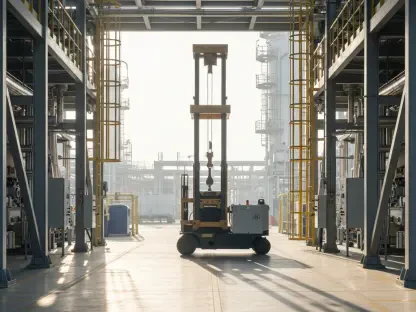
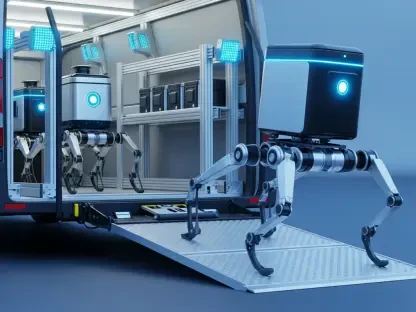
The core of this significant technological leap lies in the specialized capabilities of the Pickle Robot systems, which are specifically engineered to navigate the confined and unpredictable environment of a shipping container or trailer. These mobile robots are equipped with a sophisticated robotic arm and a powerful suction-based gripper, allowing them to carefully lift and transfer parcels weighing up to 50 pounds. Once a package is secured, the system smoothly places it onto an adjacent conveyor belt, seamlessly integrating it into the facility’s sorting workflow. This process is remarkably efficient, with a single robot capable of unloading an entire standard truck in approximately two hours. The throughput varies depending on the complexity of the freight mix, ranging from 400 to 1,500 cases per hour. This technology directly confronts the long-standing challenge of handling floor-loaded freight, where packages are stacked from floor to ceiling without pallets, creating a complex three-dimensional puzzle that has traditionally defied automated solutions and required intensive manual labor.
The deployment marks a pivotal moment for the logistics industry, which has long considered the automation of trailer unloading a “holy grail” due to its inherent complexity. Unlike standardized, palletized loads, floor-loaded trailers present a chaotic and highly variable environment where no two shipments are alike. Packages can shift during transit, come in an infinite variety of shapes, and range from lightweight boxes to heavy, awkward items. Developing a system that can perceive, grasp, and move these items without damage has been a formidable engineering challenge. The successful implementation of the Pickle robots on such a large scale suggests that the industry is turning a corner, moving beyond pilot programs and controlled tests into widespread, practical application. This advancement signals a new era where intelligent robotics can handle tasks that require not just strength but also a degree of adaptability and finesse previously exclusive to human workers, paving the way for more resilient and efficient supply chains.
Strategic Integration and Economic Impact
This US$120 million investment is a cornerstone of UPS’s much broader and more ambitious ‘Network of the Future’ modernization plan, a comprehensive strategy designed to overhaul its operations for the next generation of logistics. The company has dedicated a substantial US$9 billion over a four-year period to inject advanced automation and cutting-edge technology into more than 60 of its key facilities across the United States. The integration of the 400 Pickle robots is a targeted move within this larger framework, aimed squarely at boosting productivity, streamlining operations, and driving down unit costs. By automating the arduous unloading process, UPS anticipates a significant increase in the speed and reliability of its sorting operations, which in turn reduces vehicle turnaround time and optimizes the flow of goods through its hubs. Ultimately, this and other automation projects are central to the company’s financial goal of realizing US$3 billion in cost savings by the year 2028, demonstrating a clear link between technological innovation and long-term economic performance.
The Evolving Role of Labor in Logistics
Following a rigorous period of testing and refinement, the full-scale deployment of the robotic systems was scheduled to commence in the second half of 2026 and continue into 2027. Throughout the initiative’s development, UPS consistently framed the introduction of this technology as a direct benefit to its human workforce. The company emphasized that the primary goal of the automation was not to replace employees but to alleviate them from some of the most physically strenuous and repetitive jobs within its facilities. Unloading trucks is a demanding task that carries a risk of physical stress and injury over time. By assigning this work to robots, the company aimed to create a safer work environment and redeploy its employees to more complex, value-added roles that require human oversight, problem-solving, and customer interaction. This strategic move signaled a significant shift in the narrative around automation in the workplace, positioning it as a collaborative tool that enhanced human capabilities and promoted long-term employee well-being rather than simply a means of reducing headcount.