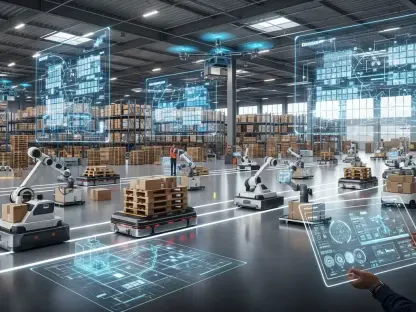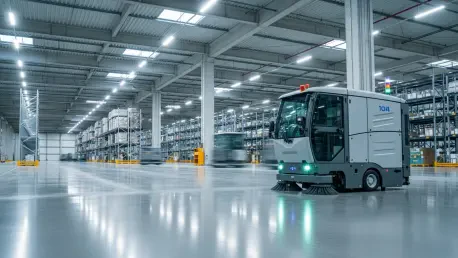

The familiar hum of manual floor scrubbers and the sight of workers pushing heavy brooms through sprawling warehouses are rapidly becoming relics of a bygone era in the industrial world. As logistics centers and manufacturing plants grow in scale and complexity, the sheer volume of floor space has outpaced the capabilities of traditional janitorial methods. The introduction of the Tennant X16 SWEEP marks a definitive shift in how global enterprises approach the fundamental task of keeping their environments clean. This autonomous robotic sweeper is not merely a tool for tidying surfaces; it represents a sophisticated integration of heavy-duty mechanical engineering and high-level artificial intelligence designed to serve as a cornerstone of modern facility infrastructure.
The transition from manual labor to a fully automated cleaning ecosystem is driven by the realization that industrial floor care is no longer a peripheral janitorial task but a critical operational requirement. In an age where supply chains operate with razor-thin margins and extreme precision, the condition of a facility floor directly influences the performance of every other system within it. The X16 SWEEP acts as a bridge between the physical demands of debris removal and the digital requirements of the modern smart warehouse. By automating the most labor-intensive aspects of maintenance, organizations are able to stabilize their cleaning outcomes and ensure that their environments remain ready for high-speed commerce at all times.
Moving Beyond the Broom: A New Era of Industrial Cleanliness
Traditional sweeping methods have long struggled with the paradox of industrial growth: as facilities expand to meet global demand, the labor required to maintain them becomes increasingly difficult to source and manage. This challenge has pushed the industry toward a new era where cleanliness is viewed as a vital utility rather than a periodic chore. The evolution of industrial floor care has mirrored the broader trend of factory automation, where tasks that are dull, dirty, or dangerous are handed over to specialized robotic units. The X16 SWEEP is the culmination of this evolution, offering a solution that provides consistent results without the variability inherent in human-operated machinery.
Integrating autonomous sweeping into a facility transforms the maintenance schedule from a series of reactive events into a proactive, continuous cycle. Instead of waiting for dust to accumulate to a noticeable level, autonomous units work alongside active production lines to prevent buildup before it becomes a hazard. This move toward a “clean as you go” model ensures that the facility baseline remains high, regardless of the time of day or the intensity of current operations. By establishing this high-functioning cleaning ecosystem, businesses can protect their investments in flooring and inventory while creating a safer and more professional environment for their workforce.
The significance of the X16 SWEEP also lies in its ability to handle the “heavy lifting” of debris management that smaller, consumer-grade robots simply cannot touch. Industrial environments generate unique types of waste—ranging from fine concrete dust to wood splinters and packaging scraps—that require robust mechanical power to collect. By combining the physical strength of Tennant’s industrial hardware with the cognitive capabilities of advanced navigation software, this machine effectively bridges the gap between traditional mechanical durability and modern digital intelligence. It allows managers to deploy a high-performance asset that understands its surroundings just as well as it understands the mechanics of sweeping.
Why Floor Maintenance Is Now a Strategic Priority
In the high-stakes world of modern logistics and manufacturing, the hidden costs of dust and debris can be staggering. Fine particulates on a warehouse floor do more than just make the space look untidy; they create a slippery surface that increases the risk of forklift accidents and pedestrian falls. Moreover, dust is an abrasive agent that accelerates the wear and tear on expensive equipment, from conveyor bearings to the wheels of autonomous mobile robots. By elevating floor maintenance to a strategic priority, companies are recognizing that a clean floor is a prerequisite for long-term mechanical reliability and overall operational efficiency.
The impact of cleanliness extends deep into the world of advanced automation, where other robotic systems like Automated Guided Vehicles (AGVs) and sorting bots rely on sensitive optical sensors to function. Dust and debris can interfere with these sensors, causing navigation errors, unnecessary emergency stops, and decreased throughput. If a million-dollar fleet of AGVs is forced to slow down or recalibrate because of floor-level obstructions, the economic loss can quickly exceed the cost of a comprehensive cleaning solution. The X16 SWEEP addresses this by providing a reliable environment where other automated assets can operate at their peak design speeds without interference.
Furthermore, the shift toward a 24/7 continuous maintenance model is a direct response to the non-stop nature of global shipping and production cycles. In a facility that never sleeps, there is no “after-hours” window for a janitorial crew to sweep the entire floor. Maintenance must happen concurrently with operations. Autonomous sweepers provide the flexibility to maintain cleanliness throughout the day, following dynamic paths that avoid active picking zones while targeting high-traffic areas during lulls in activity. This constant state of readiness ensures that the facility remains optimized for performance every hour of every day, matching the pace of the global economy.
Engineering for the Industrial Reality
At the core of the X16 SWEEP is a sophisticated brain developed in collaboration with Brain Corp, a leader in AI-driven navigation software. The BrainOS platform allows the sweeper to function with an “eyes-on, hands-off” approach, navigating complex and crowded environments without the need for constant human supervision. Using SelfPath technology, the machine can learn a facility’s layout and then autonomously calculate the most efficient path to cover the entire area. This is not a simple pre-programmed loop; the AI possesses the visual intelligence to identify objects, people, and changing inventory layouts, allowing it to adapt its route in real-time to avoid collisions and ensure thorough coverage.
One of the most impressive technical feats of this machine is how it handles the harsh conditions inherent in high-dust industrial environments. The DustShield technology is specifically designed to protect the machine’s critical “vision” components, such as its LiDAR sensors, from being obscured by the very debris it is trying to clean. Maintaining a clear line of sight is essential for any autonomous vehicle, yet in a warehouse, dust is an ever-present threat to sensor accuracy. By employing a dual-layered approach that effectively collects debris while sealing off sensitive internal components, the engineering team has ensured that the X16 SWEEP can operate reliably for hours on end without needing a sensor wipe-down or experiencing a system failure due to environmental contamination.
Operational continuity is further maximized through features like the Smart-Sense Hopper and autonomous charging capabilities. The Smart-Sense Hopper uses real-time feedback to monitor debris levels, informing the fleet management system exactly when the machine is full and needs attention. This prevents the inefficiency of a machine continuing to run with a full hopper, which would otherwise result in “phantom cleaning” where no debris is actually being removed. Additionally, the ability to return to a charging dock autonomously allows the unit to manage its own energy levels. This high degree of self-sufficiency means that labor can be reallocated from the repetitive task of pushing a broom to higher-value activities, such as managing the overall logistics flow or performing complex equipment repairs.
Expert Insights and Organizational Evolution
The launch of the X16 SWEEP coincides with a major internal evolution at Tennant Company, specifically the formation of a dedicated robotics division. This organizational move signals that the company is no longer just a manufacturer of cleaning machines but a technology provider focused on long-term autonomous solutions. By centralizing its robotics expertise, the company can provide more robust support for the software, data analytics, and fleet management tools that are essential for successful robotic deployment. This strategic shift reflects a broader market trend where industrial leaders are moving away from the “experimentation phase” and toward treating robotics as a foundational necessity for any modern enterprise.
Industry leaders increasingly view autonomous assets not as a replacement for human workers, but as a way to address the chronic labor shortages that plague the warehousing and manufacturing sectors. Finding and retaining staff for physically demanding, repetitive janitorial work has become a major pain point for facility managers. By delegating floor maintenance to the X16 SWEEP, companies can ensure predictable, repeatable cleaning results regardless of labor market fluctuations. This reliability is particularly valuable during peak seasons when human labor is better utilized in order fulfillment or production roles. The data generated by these machines also provides a level of transparency and accountability that was previously impossible, allowing managers to verify exactly when and where the facility was cleaned.
Market trends suggest that the demand for enterprise-grade robotic integration will only continue to rise as organizations seek to “future-proof” their operations. The consensus among technology experts is that the industrial sector is entering a period of rapid adoption for service robots that are built for the specific, messy realities of the real world. The X16 SWEEP is positioned at the forefront of this movement, offering a solution that is rugged enough for a factory floor but intelligent enough to navigate a crowded fulfillment center. As more companies witness the tangible benefits of autonomous sweeping—ranging from improved safety to higher operational uptime—the expectation for automated cleanliness will likely become the standard for the entire industry.
Implementing Autonomous Sweeping in Your Facility
Successfully integrating an autonomous sweeper like the X16 SWEEP requires a thoughtful assessment of facility readiness. While the machine is designed to be highly adaptive, its effectiveness is maximized when the environment is optimized for robotic workflows. This involves evaluating aisle widths, docking station locations, and the types of debris most common in the space. Transitioning from an intermittent manual cleaning model to a data-driven robotic model is a strategic move that pays dividends in consistency, but it requires a change in mindset from the facility management team. Instead of managing a “cleaning crew,” they are now managing a “fleet of autonomous assets” that provide continuous service and valuable operational data.
Best practices for managing a hybrid workforce—where robots and humans operate in the same space—rely on clear communication and defined roles. The X16 SWEEP is engineered to work safely around people, using its suite of sensors to yield to foot traffic and forklifts. However, human workers should be trained to understand how the robot operates, how to empty the hopper, and how to interpret the machine’s status indicators. When humans are relieved of the monotony of sweeping, they can be redirected to detail-oriented cleaning tasks or more complex maintenance duties that require human judgment. This synergy between man and machine creates a more productive and satisfied workforce, as employees are freed from the most backbreaking parts of their daily routines.
Finally, the shift to autonomous sweeping allows for a more analytical approach to facility maintenance. The software associated with the X16 SWEEP provides detailed reporting on cleaning coverage, operational hours, and performance metrics. Facility managers can use this data to identify “hot spots” where debris accumulates more quickly or to adjust cleaning schedules to better align with production surges. By treating floor care as a data-driven process, organizations can achieve a level of precision and efficiency that manual methods could never match. The implementation of enterprise-grade robotic sweeping is more than an upgrade in equipment; it is an upgrade in the overall intelligence and resilience of the facility’s operational strategy.
As the industrial landscape evolved, the integration of the X16 SWEEP into daily operations provided a clear pathway toward a more efficient future. The adoption of this technology allowed facilities to overcome the persistent challenges of labor shortages and inconsistent maintenance standards. Strategic planners who prioritized these autonomous systems observed a measurable improvement in both floor safety and the performance of other automated warehouse technologies. By treating cleanliness as a foundational infrastructure requirement, organizations successfully fortified their facilities against the wear and tear of high-volume production. The move toward robotic floor care proved that sophisticated AI could handle even the grittiest realities of the factory floor. Ultimately, the successful deployment of these units demonstrated that the future of industrial maintenance resided in the seamless collaboration between rugged engineering and intelligent automation. Managers who embraced this shift early found themselves better positioned to meet the rigorous demands of an increasingly automated global market. Moving forward, the lessons learned from integrating these robotic assets will likely inform the next generation of industrial innovations, ensuring that cleanliness remained a constant in an ever-changing world.