
The persistent gap between a robot’s computational intelligence and its physical clumsiness has long been the primary barrier to true automation, a challenge that new sensory technologies are finally beginning to address. The uSkin 3D tactile sensor represents a significant advancement in the robotics and automation sectors. This review will explore the evolution of this technology, its key features, performance metrics, and the impact it has had on enabling human-like dexterity in robots. The purpose of this review is to provide a thorough understanding of the technology, its current capabilities as demonstrated at CES 2026, and its potential for future development.
An Introduction to Human-like Robotic Touch
For decades, the goal of achieving human-level dexterity in robotics has remained elusive, primarily due to the difficulty of replicating the sense of touch. Advanced tactile sensing aims to bridge this gap by providing robots with rich, real-time feedback about physical interactions. This technology is foundational for tasks that require nuance, gentleness, and adaptability, moving beyond simple pick-and-place operations.
At CES 2026, XELA Robotics showcased its uSkin 3D sensor as a breakthrough solution poised to enable a new level of “physical AI.” By giving machines a sophisticated sense of touch, this technology allows them to understand and interact with their environment with unprecedented precision. This capability is increasingly vital in industrial automation, where robots must handle a variety of delicate or irregularly shaped objects, and is a cornerstone for the next generation of advanced humanoid robotics.
Core Technology and System Components
Sensor Hardware and Material Innovation
The physical design of the uSkin sensor is central to its effectiveness. Constructed from a flexible elastomer, the sensor skin can conform seamlessly to complex surfaces and object shapes, mimicking the adaptability of human skin. This material choice not only provides flexibility but also ensures durability in demanding industrial environments.
Furthermore, the hardware features a compact design that allows for integration into a wide range of robotic hands and grippers without adding prohibitive bulk or weight. XELA Robotics also emphasizes the potential for customization, allowing the sensor’s form factor to be tailored for specific applications, from intricate assembly tasks to robust material handling.
Real-Time Data and Software Intelligence
Hardware alone is insufficient; the intelligence of the uSkin system lies in its sophisticated software. The platform processes a continuous stream of raw sensor data, translating it into actionable insights that a robot’s control system can understand and use. This process occurs in real time, which is critical for dynamic and responsive manipulation.
The software’s ability to interpret subtle changes in pressure and distribution allows a robot to perceive an object’s shape and the precise contact forces being applied. This data-rich feedback enables the execution of complex tasks, such as adjusting grip strength to handle a delicate item or reorienting an object within the hand without dropping it.
Innovations in Sensory Coverage and Data Richness
A significant trend in tactile sensing is the evolution from simple, single-point fingertip sensors toward comprehensive surface-area coverage. Early-generation sensors often provided limited data, akin to touching an object with only the very tip of a finger. This approach lacks the holistic information humans gain from their entire hand.
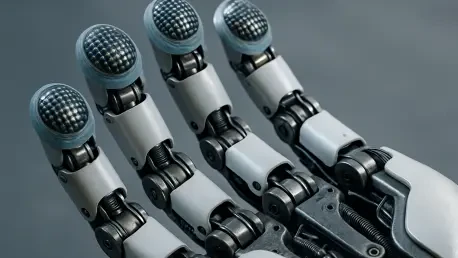
XELA Robotics distinguishes its technology by pioneering this move toward more extensive coverage. By integrating sensors not just on the fingertips but also over the phalanges and palm, the uSkin system creates a much richer and more complete sensory map. This method more closely mimics the holistic nature of human touch, providing the robot with a deeper understanding of an object’s position, orientation, and stability within its grasp.
Applications and Commercialization Strategy
The uSkin technology is already finding its footing in both academic research and commercial deployments, where it is used to test new manipulation algorithms and improve automation processes. The practical benefits are evident in scenarios that demand a high degree of sensitivity and control.
The company is pursuing what CEO Alexander Schmitz describes as an “agnostic” commercialization strategy. This flexible approach involves offering the uSkin sensors as standalone components for custom integration or as part of fully integrated solutions, such as the Tesollo DG-5F anthropomorphic hand. This strategy is designed to make the durable, compact, and cost-effective technology accessible to a broad range of developers and end-users.
Current Limitations and Ongoing Development
Despite significant progress, the field of advanced tactile sensing still faces technical hurdles. Perfecting a robot’s ability to handle unexpected events, such as an object beginning to slip, remains a key challenge for the entire industry.
XELA Robotics is actively addressing this by focusing on key enhancements to its software intelligence. A forthcoming slippage detection feature is currently in development and promises to be a major milestone. This capability will enable a robot to sense the minute vibrations and shear force changes that precede a loss of grip, allowing it to make micro-adjustments to maintain a stable hold.
Future Outlook and Industry Impact
Advanced tactile sensors are set to fundamentally reshape the future of automation and human-robot interaction. As this technology matures, robots will become capable of performing tasks that were previously impossible to automate due to their reliance on fine motor skills and delicate touch.
The long-term impact of this “physical AI” will be felt across numerous sectors. In manufacturing and logistics, robots will be able to handle a wider array of products with greater care and efficiency. In healthcare, tactile-enabled robots could assist with patient care or perform delicate procedures, opening new frontiers for technology to improve human well-being.
Concluding Assessment
The uSkin 3D tactile sensor, as demonstrated at CES 2026, represented a compelling step forward in closing the dexterity gap in robotics. Its innovative combination of flexible hardware and intelligent, real-time software provided a clear vision for how machines can achieve a human-like sense of touch. The company’s strategy of expanding sensory coverage and pursuing an accessible commercialization model positioned the technology for broad adoption. While developmental challenges like perfected slippage detection remained, the uSkin sensor ultimately proved to be a pivotal technology with the clear potential to redefine what is possible in modern automation.