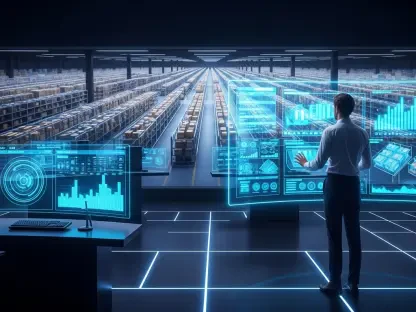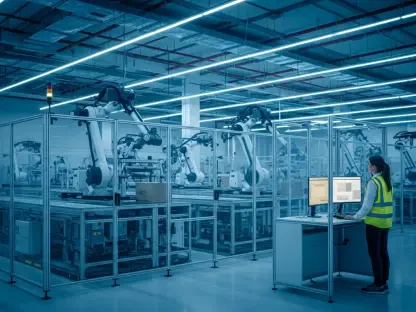

The relentless pressure of same-day delivery mandates has pushed traditional warehouse management beyond its breaking point, necessitating a radical shift from simple mechanical storage to autonomous systems that can think for themselves. Modern logistics no longer relies solely on the physical speed of a conveyor belt or the sheer volume of a storage rack. Instead, the industry has pivoted toward a decision-centric model where software orchestration dictates the efficiency of every move. This evolution represents a departure from the rigid, asset-heavy automation of the past decade, replacing it with agile, data-driven frameworks that prioritize adaptability over raw force.
By integrating high-level artificial intelligence with high-density hardware, these systems address the fundamental bottleneck of modern commerce: the inability of static infrastructure to handle unpredictable demand spikes. The transition into this intelligent era signifies that fulfillment is no longer just a secondary backend process but a primary competitive advantage. As warehouses become increasingly complex, the role of human intervention is shifting from manual labor to high-level oversight, enabled by platforms that can sense environmental changes and respond without pre-programmed instructions.
The Evolution of Decision-Centric Fulfillment
The current technological landscape has moved decisively away from the era of “dumb” automation, where robots followed fixed paths regardless of operational friction. In the contemporary context, fulfillment intelligence is defined by its ability to process massive datasets in real-time to adjust workflows dynamically. This shift is rooted in the realization that hardware alone cannot solve the problem of diminishing returns; adding more robots to a grid often led to congestion rather than increased throughput. Consequently, the focus has shifted to the “brain” of the warehouse, creating a layer of digital intelligence that sits above the physical assets.
This evolution is particularly relevant as global supply chains face labor shortages and rising real estate costs. The emergence of decision-centric fulfillment allows operators to maximize the utility of existing footprints by using predictive modeling to arrange inventory. Unlike older iterations of automated storage and retrieval systems, these modern ecosystems are designed to be “aware” of the entire fulfillment lifecycle. They connect disparate points—from the moment an order is placed to the final staging for delivery—ensuring that every robotic movement is part of a calculated, global optimization strategy.
Core Components of the Intelligent Ecosystem
The CubeVerse Cloud-Based Platform
At the center of this transformation lies a unified cloud-based environment that manages the entire lifecycle of the robotic system. This platform acts as a digital thread, connecting the initial design phase with daily live operations to ensure consistency across various geographic sites. By centralizing data, it eliminates the silos that previously existed between different warehouse functions, allowing for a more holistic view of performance. This cloud-centricity is a significant differentiator from legacy systems that relied on localized, on-premise servers which were difficult to scale or update.
Furthermore, this infrastructure enables seamless updates and remote monitoring, which reduces the need for specialized technical staff at every facility. The platform provides a single source of truth, meaning that if a performance bottleneck is identified in one warehouse, the insights can be applied instantly to others within the network. This level of interconnectivity ensures that the system is not just a collection of machines but a coherent, evolving entity that benefits from the collective data of all its components.
AutoStore Intelligence and AI Orchestration
The true performance engine of the modern fulfillment center is the AI orchestration suite, which utilizes proprietary machine learning models to manage complex traffic patterns. In high-density storage grids, robots can easily become obstacles to one another if their routing is not perfectly synchronized. The intelligence layer solves this by creating optimized “highways” within the grid, dynamically adjusting paths based on real-time task priority and current robot locations. This goes beyond simple collision avoidance; it is a sophisticated form of spatial management that anticipates where robots will be needed next.
Moreover, this orchestration extends to inventory slotting, where the system identifies which items are “hot” and moves them to the top of the grid for faster access. This self-organizing behavior means the system becomes more efficient as it processes more data. By delegating these micro-decisions to an AI agent, the facility can maintain peak performance even during extreme volume fluctuations. This capability is what separates modern intelligent systems from traditional competitors, as it allows for a much higher ratio of robots to grid space without a corresponding drop in efficiency.
CubeStudio and Simulation Tools
Digital twin technology has become an indispensable part of the implementation process, allowing for rigorous testing before any physical hardware is installed. These simulation tools enable engineers to run “what-if” scenarios, testing the impact of different grid configurations or robot counts on projected throughput. This data-led approach significantly reduces the risks associated with large capital expenditures, as businesses can verify that a specific design will meet their unique operational requirements.
The value of these simulations persists long after the initial setup. By running parallel to live operations, the digital twin can be used to experiment with potential process improvements or to predict how a new product launch will impact system performance. This foresight allows managers to make proactive adjustments, ensuring that the fulfillment center remains optimized as the business evolves. It transforms the warehouse from a static asset into a flexible tool that can be reconfigured virtually before any physical changes are made.
Latest Developments in Robotic Intelligence
The most recent breakthroughs in the field involve the integration of prescriptive analytics, which allow systems to move from “knowing” to “acting.” While descriptive analytics merely report on what has already happened, prescriptive models analyze current trends to suggest—or automatically implement—the best course of action. This includes predicting potential mechanical failures before they occur or identifying subtle inefficiencies in the order picking sequence. The ability to sense and decide in real-time is the hallmark of this new generation of robotic fulfillment.
Another significant advancement is the shift toward decentralized decision-making at the robot level. While a central controller still oversees the operation, individual robots are increasingly equipped with enough local intelligence to make split-second adjustments to their paths or tasks. This reduces the latency between a detected issue and its resolution, making the entire grid more resilient. These developments indicate a broader trend where intelligence is distributed throughout the entire ecosystem, creating a more robust and responsive supply chain.
Real-World Applications and Industrial Impact
Autonomous Piece Picking and Order Preparation
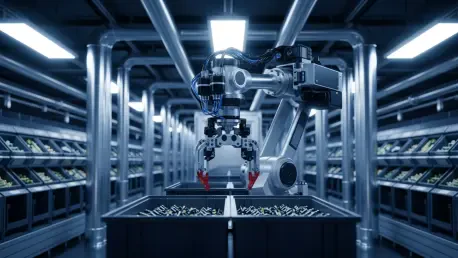
Advanced vision technology combined with robotic arms has finally bridged the gap between storage and order preparation. In the past, human workers were required to pick individual items from bins, but modern systems can now handle piece picking with a high degree of precision. These robotic picking stations use sophisticated AI to recognize objects of varying shapes, sizes, and textures, allowing them to grasp items as delicate as a cosmetic tube or as heavy as a hand tool. This automation enables 24/7 operations, providing a level of consistency that is impossible to achieve with a purely manual workforce.
The impact of this technology is most visible in order consolidation and staging. Robots can now coordinate the assembly of complex orders, ensuring that items from different parts of the grid arrive at the packing station simultaneously. This synchronization reduces the time an order spends in progress and minimizes the physical footprint required for staging areas. By automating these labor-intensive tasks, companies can significantly lower their cost per order while maintaining high accuracy rates, even during peak shopping seasons.
Versatile Grid Adaptations in Retail and E-commerce
The inherent flexibility of modern robotic grids allows them to thrive in environments with rapidly changing SKU profiles. In the retail sector, where seasonal trends can completely shift inventory requirements within weeks, the ability to adapt without physical expansion is a major advantage. Intelligent fulfillment systems can accommodate various bin sizes and configurations, allowing them to store everything from small electronics to larger apparel items within the same high-density structure.
Furthermore, modular workstation layouts allow businesses to scale their output by simply adding more ports or robots as demand increases. This “pay-as-you-grow” model is particularly beneficial for e-commerce companies that experience unpredictable growth trajectories. Instead of building a massive facility designed for five-year projections, they can start with a compact footprint and expand vertically or horizontally. This adaptability ensures that the technology remains a viable solution for a wide range of industries, from grocery and pharmaceuticals to high-tech manufacturing.
Implementation Challenges and Technical Hurdles
Despite the clear benefits, the deployment of intelligent fulfillment is not without significant technical challenges. The computational demands of running dozens of AI models in real-time require high-performance industrial hardware that can withstand the rigors of a warehouse environment. Processing the vast amounts of data generated by thousands of sensors requires substantial bandwidth and low-latency connectivity, which can be a hurdle for older facilities. Upgrading the underlying infrastructure to support these “smart” features often represents a hidden cost of modernization.
Integration with legacy Warehouse Management Systems (WMS) also remains a complex undertaking. Many existing software platforms were not designed to communicate with highly autonomous robotic grids, leading to data bottlenecks or synchronization issues. To address this, the industry is moving toward standardized API ports and modular software interfaces that simplify the connection between the warehouse floor and the corporate office. While these integration efforts are ongoing, the complexity of bridging the gap between old and new technology continues to be a primary concern for many logistics providers.
The Future of Autonomous Supply Chains
The trajectory of this technology points toward a future of fully self-optimizing warehouses that require minimal human intervention for daily management. We are moving toward a state where the supply chain is no longer a series of discrete steps but a continuous, flowing process managed by a global network of intelligence. As these systems become more accessible, we will likely see a democratization of high-level automation, allowing smaller enterprises to compete with global giants on fulfillment speed and accuracy.
In the long term, the focus will shift from making machines faster to making them smarter and more resilient. The ability of a fulfillment center to automatically reroute resources in response to a global shipping delay or a sudden local surge in demand will become a standard expectation. This shift will redefine productivity in the logistics sector, moving away from labor-centric metrics toward data-centric ones. The ultimate goal is a supply chain that is not just efficient but genuinely autonomous, capable of maintaining global commerce through any disruption.
Final Assessment of Intelligent Fulfillment
The review of current intelligent fulfillment systems revealed a fundamental shift in how the logistics industry perceives value. It was clear that the transition from hardware-centric storage to intelligent orchestration provided the only viable path for scaling operations in a volatile market. The implementation of cloud-based platforms and AI-driven routing successfully lowered the total cost of ownership by maximizing existing assets and reducing the reliance on manual labor. While the technical hurdles of integration and computational power remained relevant, the benefits of increased throughput and predictive maintenance outweighed the initial complexities.
The assessment indicated that the move toward “sensing and deciding” capabilities transformed the warehouse into a proactive participant in the supply chain. Businesses that adopted these ecosystems reported a significant increase in operational resilience, as the systems were able to self-correct and optimize in real-time. Moving forward, the industry appeared set to embrace even higher levels of autonomy, where simulation and reality blurred into a single, continuous optimization loop. This strategic evolution ensured that fulfillment remained a driver of growth rather than a logistical bottleneck.