
The journey of a single product from a delivery truck to a warehouse shelf is a complex ballet of human and machine effort, a process now on the verge of a dramatic re-choreographing. In a move that signals a major shift in the logistics landscape, AI robotics firm Symbotic has announced its acquisition of autonomous forklift provider Fox Robotics. This fusion of two distinct automation specialists raises a critical question: is this simply business consolidation, or the first step toward a fully integrated, autonomous warehouse ecosystem?
A Strategic Union of Dock and Aisle
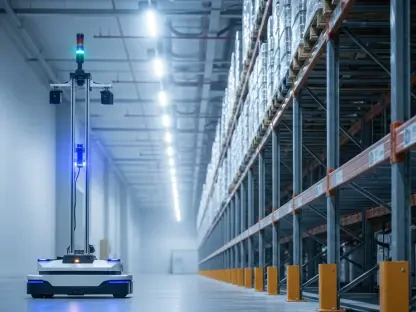
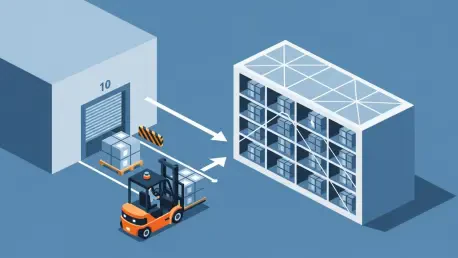
Symbotic has established its dominance in the intricate world of high-density storage and retrieval, using AI-powered gantry robots to manage inventory with remarkable speed and precision deep within a warehouse. In contrast, Fox Robotics has focused its expertise on the warehouse’s front door, developing autonomous forklifts that master the demanding task of unloading pallets directly from trucks. The acquisition bridges the operational gap between these two critical functions.
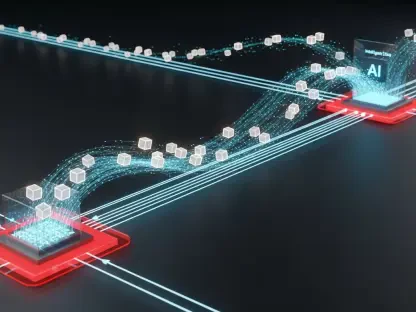
This is not merely a combination of hardware but a strategic play to create a seamless, uninterrupted flow of goods. The vision is clear: a future where a pallet is autonomously unloaded by a Fox machine and then seamlessly handed off to the Symbotic system for storage, all orchestrated by a single intelligent platform. This integration aims to eliminate the bottlenecks and manual handoffs that currently exist between the receiving dock and the storage aisles.
Connecting the Dots in a Disjointed System
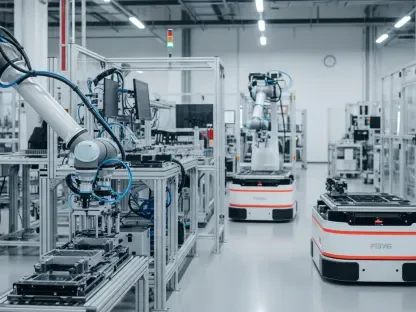
For years, warehouse automation has been a fragmented affair. Operators often assemble a patchwork of technologies from various vendors, leading to a collection of disconnected systems that struggle to communicate effectively. This disjointed approach creates operational inefficiencies and data silos, hindering the potential for true end-to-end optimization.
The timing of this acquisition is critical, as it responds directly to immense market pressures. Persistent labor shortages, ever-increasing consumer expectations for rapid delivery, and the demand for more resilient supply chains have exposed the weaknesses of the fragmented model. Symbotic is positioning itself not just as a provider of a single solution, but as the master architect of the entire warehouse automation ecosystem.
More Than a Merger a Three Pronged Strategy
The true value of this deal extends far beyond the physical robots. The core strategic objective is to integrate Fox’s autonomous forklift technology into Symbotic’s overarching AI software platform. By doing so, Symbotic can create a unified “brain” to orchestrate every movement, optimizing the flow of goods from the moment they arrive at the dock door.
Furthermore, the acquisition provides an immediate avenue for market expansion. Fox Robotics brings with it an established base of 25 customers, presenting Symbotic with instant cross-selling opportunities and an entry point into new sectors, such as CPG manufacturing, where heavy pallet movement is a fundamental part of the operation. This instantly broadens Symbotic’s addressable market.
A deeper analysis reveals a shared foundation built around a key partner: Walmart. Both companies have cultivated deep relationships with the retail giant, with Fox having deployed its forklifts in Walmart distribution centers in 2024. This acquisition follows Symbotic’s purchase of Walmart’s own robotics business in 2025, indicating a pattern of consolidation around a primary client’s needs.
The Architect’s View of a Unified Future
Symbotic’s leadership has been vocal about its grand vision. CEO Rick Cohen framed the acquisition as a pivotal step toward “orchestrating robotic systems from the warehouse dock door to the final customer order.” The goal is not just to sell more robots but to provide a comprehensive, intelligent system that manages the entire lifecycle of inventory within a facility.
The strategy involves leveraging Fox’s technology to build credibility with its existing customer base. By enhancing the performance of Fox’s forklifts and demonstrating the power of an integrated system, Symbotic aims to convert these clients into full-fledged customers of its broader automation platform, solidifying its role as an indispensable partner in their supply chain operations.
The Blueprint for a New Industry Standard
This move sends a clear message to competing automation firms: offering standalone products is no longer enough. The industry is shifting toward integrated, end-to-end solutions, and companies will be under pressure to either develop their own comprehensive platforms or form strategic alliances to remain competitive.
For warehouse operators, the prospect of a single-vendor solution offers simplified procurement, streamlined operations, and a single point of accountability. However, it also introduces the risk of reduced vendor optionality and potential dependence on a single ecosystem. This trade-off between simplicity and flexibility will become a central consideration in future automation investments.
Ultimately, the successful integration of these technologies set a new benchmark for operational efficiency in the supply chain. A fully connected system promised faster order fulfillment, near-perfect inventory accuracy, and an unprecedented level of operational insight, redefining what was possible within the four walls of the warehouse.