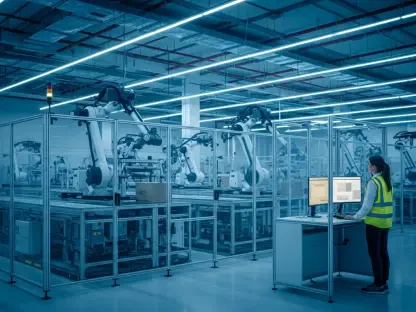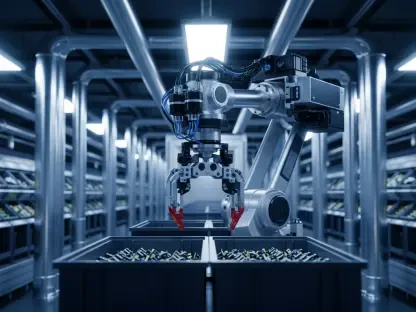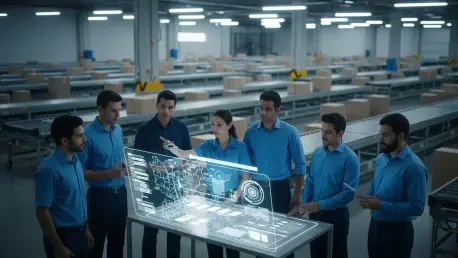

The global supply chain no longer relies solely on the physical strength of its laborers but increasingly on the digital agility of its entire workforce to maintain a competitive edge. As the backbone of international commerce, modern logistics faces a paradigm shift where human capital must evolve alongside the rapid integration of machine learning and automated systems. FedEx is currently navigating this transformation by launching an unprecedented initiative to upskill 400,000 employees, moving beyond the traditional reliance on specialized IT departments. This massive operation acknowledges that artificial intelligence has transitioned from a niche experimental tool to the foundational infrastructure of delivery services worldwide.
Major market players are recognizing that traditional automation is no longer sufficient to meet the demands of a hyper-connected global economy. By focusing on intelligent augmentation, FedEx is attempting to bridge the gap between human intuition and algorithmic precision. The goal is to ensure that every individual, from those managing complex warehouse hubs to those handling the final delivery, understands how to leverage data-driven insights. This strategic move is not merely about staying current; it is an essential transition required to survive in an industry where speed and accuracy are increasingly dictated by a company’s collective digital IQ.
Navigating the Shift Toward a Tech-Literate Workforce
Emerging Trends in Universal AI Literacy and Professional Democratization
The transition from high-level executive strategy to frontline application marks a new era of professional democratization within the logistics sector. FedEx is shifting the narrative from labor replacement to a human-in-the-loop model, where technology acts as a force multiplier for the individual worker. By training package handlers and route planners as AI practitioners, the organization is empowering its staff to make more informed decisions in real time. This approach addresses the growing demand for promotion-ready technological training, as employees increasingly expect their employers to provide the tools necessary for career longevity in a digital world.
Generative AI and predictive analytics are no longer abstract concepts confined to corporate headquarters; they are becoming daily tools for the entire workforce. For instance, a delivery driver might use predictive tools to anticipate traffic patterns or weather disruptions, while a warehouse manager utilizes generative models to optimize inventory placement. This shift ensures that technology does not just happen to the workforce, but is actively wielded by it. This strategy creates a culture of continuous improvement where the barrier between technical and operational roles begins to dissolve.
Market Projections and the ROI of Workforce Transformation
Current data-driven forecasts suggest that global spending on AI software will continue to climb, potentially reaching hundreds of billions of dollars over the next few years. For a giant like FedEx, the return on this investment is measured through significant productivity gains and a more resilient supply chain. By investing in large-scale enterprise upskilling, the company aims to minimize the errors associated with manual data entry and inefficient routing. These performance indicators will serve as a benchmark for the success of the educational rollout, proving that a tech-literate workforce is a tangible financial asset.
Moreover, the long-term value of this transformation lies in the reduction of turnover and the creation of a more adaptable staff. As the logistics landscape shifts, a workforce that is already familiar with the basics of machine learning can pivot more quickly to new software or hardware implementations. This flexibility reduces the lag time typically associated with industrial transitions. By treating education as a capital investment rather than a peripheral cost, FedEx is positioning itself to capture a larger share of the global logistics market through sheer operational efficiency.
Overcoming the AI Adoption Gap and Organizational Resistance
A significant hurdle in any digital transformation is the adoption gap, where expensive software sits underutilized because the staff lacks the proficiency to use it. FedEx is addressing this by implementing a standardized curriculum tailored to a global, multilingual workforce. This strategy requires solving the logistical nightmare of delivering consistent training across different time zones and varying levels of initial digital literacy. Without a clear and accessible educational path, even the most advanced AI tools fail to deliver their promised value, leading to wasted resources and stagnant growth.
Transparency serves as a critical tool for mitigating workforce anxiety regarding job displacement. By clearly communicating that AI is intended to augment roles rather than eliminate them, leadership can foster an environment of trust rather than fear. Addressing the technical complexities of such a rollout involves more than just translating manuals; it requires a fundamental shift in corporate communication. By focusing on how these tools make daily tasks less strenuous and more rewarding, the organization can turn potential resistance into active participation and advocacy.
The Regulatory Landscape and the Ethics of Workplace AI
As AI becomes more integrated into performance monitoring, navigating the complex web of data privacy laws and labor regulations becomes paramount. FedEx must ensure that its AI-driven evaluations are free from algorithmic bias, maintaining a fair environment for its diverse global staff. Compliance is not just a legal requirement but a strategic necessity to prevent reputational damage and legal challenges. Ethical AI usage involves strict oversight of how employee data is collected and utilized, ensuring that the push for efficiency does not come at the cost of worker rights or privacy.
Furthermore, protecting proprietary logistics data in an increasingly connected environment requires robust security measures and a workforce trained in cyber hygiene. As more employees interact with AI systems, the surface area for potential security breaches expands. A unified global training initiative must therefore include modules on data protection and the ethical implications of automated decision-making. By aligning its training with international labor standards, FedEx can create a cohesive corporate policy that respects local regulations while maintaining a consistent global standard of excellence.
The Future of Logistics in an AI-Driven Global Economy
The next wave of market disruptors will likely include fully autonomous last-mile delivery systems and self-optimizing warehouses that adjust to global demand shifts in seconds. This looming shift has sparked a talent arms race, forcing competitors like UPS and Amazon to accelerate their own investments in human capital to keep pace. Professional identity is evolving to a point where AI proficiency is viewed as a fundamental skill, as essential as basic literacy was in previous generations. This evolution will lead to hyper-personalized customer experiences, driven by a workforce that knows how to interpret complex data signatures.
Growth areas in predictive logistics will rely heavily on the ability of the workforce to act on insights generated by machine learning models. As these technologies mature, the role of the human worker will increasingly focus on oversight, exception handling, and high-level strategic coordination. The focus will shift toward creating a seamless interface between digital intelligence and physical execution. This synergy will define the leaders of the next industrial era, where the speed of thought and the speed of delivery become one and the same.
Synthesizing the FedEx Blueprint for Industrial Evolution
The strategic necessity of universal AI literacy was demonstrated through the comprehensive integration of educational programs across all levels of the FedEx organization. By providing clear incentives for learning, the company successfully created a resilient corporate culture that viewed technological change as an opportunity for advancement. Other capital-intensive industries followed this model, recognizing that the human element remained the most critical component in the successful deployment of emerging technologies. The shift toward a more tech-literate workforce ultimately redefined professional standards and operational expectations across the global economy.
Actionable steps for other organizations involved prioritizing transparent communication to ensure that employees felt supported rather than replaced during the transition. Future considerations for industry leaders now focus on maintaining the momentum of these training initiatives to prevent skill stagnation. New insights suggested that the most successful transformations occurred when companies treated their staff as active partners in the digital journey. This approach ensured that the integration of artificial intelligence served to enhance human capability, leading to a more sustainable and efficient industrial future.