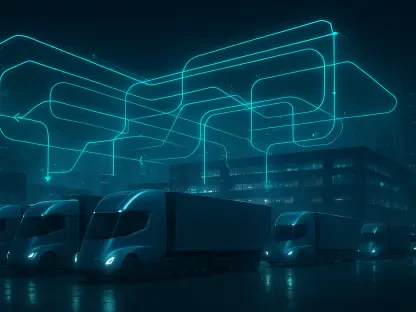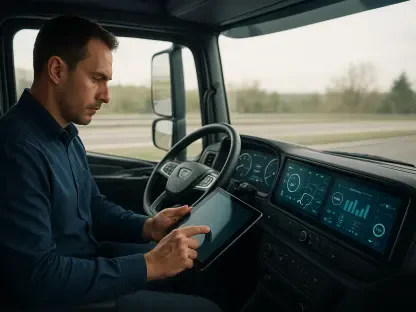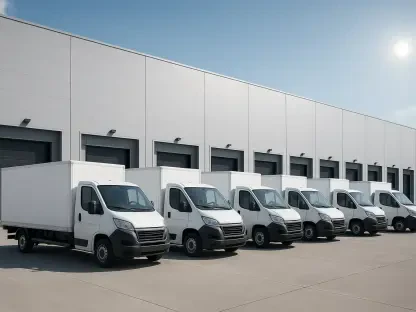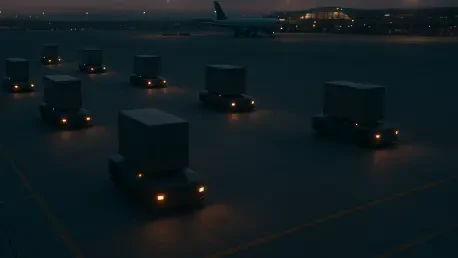

Deep learning algorithms allow autonomous agents to make split-second navigational decisions based on the proximity and priority of other assets within a facility. This capability is no longer a futuristic aspiration but a core operational requirement in an age where global supply chains face unprecedented volatility and pressure. As consumer expectations for rapid delivery reach new heights and global trade routes become increasingly complex, industrial operators in ports, airports, and distribution centers are finding that their foundational logic must evolve to survive. Traditional logistics models, which rely heavily on manual driving and fragmented, siloed data systems, are increasingly identified as the primary bottleneck in modern industrial throughput. The challenge has moved beyond the simple physical movement of goods from one point to another; it now involves the intelligent, real-time coordination of thousands of discrete actions that must be synchronized perfectly. In this high-stakes environment, automated vehicles (AVs) have emerged as the definitive cornerstone of industrial transformation. By integrating autonomous driving with advanced artificial intelligence, the industry is shifting toward a connected logistics model where the goal is a synchronized, predictable, and resilient operational ecosystem.
Defining the Scope of Industrial Automation
The Technology of Specialized Environments
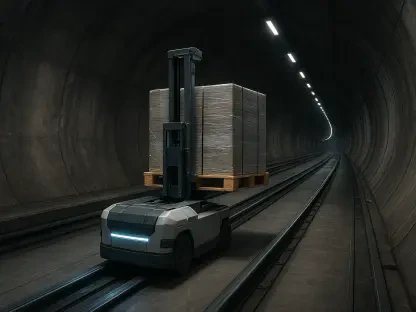
Industrial automated vehicles represent a highly specialized subset of autonomous technology designed specifically for controlled and structured environments. Unlike the self-driving cars that must navigate the chaotic variability and unpredictable behavior of public roads, industrial AVs operate within defined parameters where the environment can be managed. These machines rely on a sophisticated stack of sensors, including Lidar, radar, and computer vision, to map their surroundings with centimeter-level precision. In settings such as container terminals or airport cargo zones, these vehicles perform specialized tasks like hauling heavy containers between quay cranes and storage yards or moving high-value freight between hangars. Because these environments have established traffic rules and pre-mapped routes, they serve as the perfect proving ground for high-level automation. The lack of random pedestrian crossings or unregulated traffic allows these systems to achieve higher levels of operational uptime than their road-going counterparts, effectively turning a logistics hub into a predictable, machine-driven grid where every movement is accounted for.
Implementation of Heavy-Duty Autonomous Chassis
The physical manifestation of this technology often takes the form of autonomous terminal tractors, automated guided vehicles (AGVs), and autonomous mobile robots (AMRs). These are not merely standard trucks with sensors attached; they are purpose-built autonomous chassis designed to interface with existing industrial infrastructure. For instance, in a busy maritime port, an autonomous terminal tractor must be capable of precision docking under a crane that is moving at high speed. This requires the vehicle to possess advanced control systems that translate digital commands into physical movements with a degree of accuracy that human drivers often struggle to maintain over a twelve-hour shift. The integration of these heavy-duty assets into the daily workflow of a facility allows for a significant increase in the density of operations. By removing the need for cabin space and traditional manual controls, manufacturers can optimize the vehicle’s footprint, allowing for tighter turning radii and more efficient use of space within the yard or warehouse.
Onboard Computing and Local Intelligence
At the heart of every industrial AV is a high-performance onboard computing system that processes massive amounts of sensor data in real-time. This local intelligence is crucial because it allows the vehicle to react to immediate obstacles without waiting for instructions from a central server, which might be delayed by network latency. This edge computing approach ensures that if a pallet falls or a human worker enters a restricted zone, the vehicle can execute an emergency stop or a bypass maneuver instantly. The sophistication of these systems has reached a point where they can distinguish between different types of obstacles, prioritizing safety protocols based on the level of risk. This technological maturity is what has enabled the transition from early, rail-guided AGVs to the modern, free-roaming autonomous robots that dominate the landscape today. These units are capable of discovering their own paths within a facility, adapting to changes in the layout without requiring the installation of magnetic tape or physical beacons, which drastically reduces the cost of deployment and maintenance.
Strategic Drivers and Operational Benefits
Mitigation of Repetition and Continuous Demand
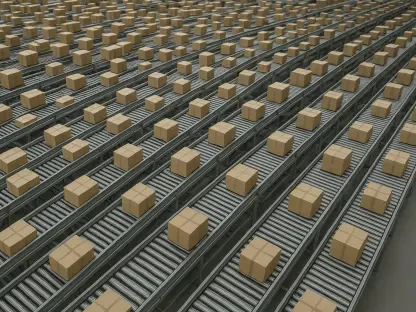
A primary driver for the adoption of automation is the mitigation of repetitive horizontal transport tasks that are inherent to industrial logistics. Moving goods from a loading dock to a storage rack or from a crane to a stack is a highly repetitive process that, when performed by human drivers, often leads to fatigue and a subsequent decline in attention. In a 24/7 operational environment, the risk of accidents increases during late-night shifts or in extreme weather conditions. Automation ensures that these movements are executed with mathematical consistency regardless of the time of day. By delegating these repetitive tasks to automated systems, the human workforce can transition into more complex supervisory or problem-solving roles, such as remote fleet management or technical maintenance. This shift not only improves operational efficiency but also enhances worker satisfaction by removing the most monotonous and physically demanding aspects of the job, allowing employees to focus on higher-value activities that require human intuition and creativity.
Safety Enhancement and Risk Management
Industrial sites are inherently high-risk zones where heavy machinery, oversized cargo, and pedestrians frequently converge in confined spaces. While no technology can eliminate all risks, automation introduces a level of predictability and adherence to protocol that manual operations often lack. Automated vehicles utilize geofencing and strict programmed safety protocols to adhere to speed limits and right-of-way rules without exception. They do not get distracted, they do not suffer from “blind spots” in the same way humans do, and they do not take shortcuts to meet tight deadlines. This level of disciplined movement is particularly valuable in airport environments where the presence of expensive aircraft and sensitive equipment makes the cost of a single collision astronomical. By implementing a fleet of autonomous baggage and cargo towers, airport authorities can significantly reduce the incidence of ground-handling accidents. The data collected by these vehicles also provides a comprehensive audit trail, allowing safety managers to analyze near-miss events and refine traffic patterns to prevent future incidents.
Resource Optimization and Fleet Efficiency
Resource utilization is greatly improved through the intelligent coordination provided by automated fleet management software. In traditional manual fleets, vehicles often suffer from “deadhead” miles—the distance traveled while empty—or excessive idling due to poor dispatching and communication gaps. Automated systems eliminate these inefficiencies by ensuring that the right vehicle is assigned to the right task based on its current proximity, its battery status, and the priority of the cargo. This optimization reduces energy waste and ensures that every asset in the fleet is used to its maximum potential. Furthermore, because automated vehicles drive in a more controlled and consistent manner, the wear and tear on tires, brakes, and mechanical components are significantly reduced. This leads to longer intervals between maintenance cycles and a lower total cost of ownership over the vehicle’s lifespan. The ability to monitor the health of the entire fleet in real-time also allows for predictive maintenance, where a vehicle can be pulled from service for a minor adjustment before a major failure occurs.
Comparative Dynamics and Intelligence
The Shift from Reactive to Proactive Fleets
The transition to automation represents a fundamental shift in operational philosophy from reactive to proactive management. Traditional transportation is decentralized, relying on the individual judgment of drivers and manual communication via radio or paper-based systems. While this offers some flexibility in a crisis, it lacks the predictability required for high-volume, modern industrial operations. In contrast, automated fleets are proactive and centralized, operating as part of a digital grid that creates a reliable “rhythm” in the supply chain. This rhythm allows managers to forecast throughput with extreme accuracy, as every movement is timed and documented. When a fleet operates with such precision, the entire facility can be optimized around it. Loading docks can be scheduled more tightly, and inventory can be moved just-in-time, reducing the need for large, expensive buffer zones. The shift toward a proactive model means that potential delays are identified and mitigated by the system long before they manifest as a physical bottleneck in the yard.
Hybrid Models in Mixed Environments
Most forward-thinking organizations are currently adopting a hybrid model as they bridge the gap between traditional manual operations and full automation. In these scenarios, automated vehicles handle the high-volume, predictable “trunk” routes where consistency and speed are paramount. Meanwhile, human-driven vehicles are reserved for “edge” cases, such as irregular or oversized deliveries, complex loading scenarios, or navigating areas with underdeveloped infrastructure that the automated system is not yet equipped to handle. Successfully managing a mixed-traffic environment requires a sophisticated orchestration layer that can coordinate both human and machine agents. This involves clear signaling, designated lanes for autonomous traffic, and wearable safety devices for human workers that communicate their position to the automated fleet. The hybrid approach allows companies to realize the benefits of automation immediately while maintaining the flexibility to handle the unpredictable nature of global trade, providing a scalable pathway toward full-site automation in the coming years.
Artificial Intelligence as the Operational Brain
Artificial Intelligence serves as the central brain that transforms a programmed machine into an truly intelligent agent. This AI is not just a single algorithm but a complex ecosystem of models that handle everything from computer vision to predictive analytics. On a macro level, the AI manages the entire fleet as a single organism rather than a collection of isolated units. It accounts for the real-time status of loading docks, temporary obstructions, and facility-wide traffic congestion to recalculate paths for every vehicle simultaneously. This prevents the “clumping” of vehicles at certain points and ensures a smooth flow of traffic throughout the site. Deep learning also allows the vehicles to learn from their environment over time; for example, if a certain corner frequently has debris or puddles that affect traction, the system can learn to adjust the speed of all vehicles approaching that coordinate. This continuous learning cycle ensures that the system becomes more efficient and safer every day it is in operation, far surpassing the capabilities of static, rule-based software.
Connectivity and Environmental Sustainability
Creating a Synchronized Logistics Ecosystem
A recurring theme in modern industrial analysis is that the vehicle itself is only one part of the equation; true transformation occurs through deep connectivity. An autonomous truck must be fully integrated into a Connected Logistics System to offer its full value. For instance, in a maritime port environment, the vehicle must “talk” directly to the Terminal Operating System (TOS) to know exactly when a crane is ready to drop a container. If the vehicle arrives too early, it causes unnecessary congestion in the quay area; if it arrives too late, the expensive crane sits idle, costing the operator thousands of dollars per hour. This level of synchronization ensures that information moves as fast as the physical cargo. By connecting vehicle telemetry with the facility’s broader software infrastructure, the entire logistics chain becomes a frictionless flow. This connectivity is further enhanced by the deployment of private 5G networks, which provide the high bandwidth and low latency required for hundreds of autonomous assets to share data in real-time without interference.
Advancing the Green Transition via Electrification
As global regulations on carbon emissions tighten and corporate social responsibility becomes a priority, automated vehicles are playing a key role in the decarbonization of the logistics sector. The vast majority of modern industrial AVs are built on pure electric platforms. By eliminating internal combustion engines in confined spaces like warehouses and manufacturing plants, companies significantly improve local air quality and reduce noise pollution, creating a better working environment for their human staff. Furthermore, the efficiency gains provided by automation directly translate into energy savings. An automated vehicle accelerates and brakes with optimal efficiency, avoiding the aggressive driving patterns that waste battery power. The transition to electric autonomous fleets allows organizations to report significant reductions in their Scope 1 emissions, helping them meet modern environmental standards and qualify for green certifications. This alignment of operational efficiency and environmental goals is a powerful incentive for investors and stakeholders who are increasingly focused on sustainable business practices.
Intelligent Energy and Battery Management
Sustainability in an automated fleet is further enhanced through intelligent energy management and advanced charging strategies. Automated systems do not require a driver to remember to plug them in; instead, they can utilize opportunity charging during low-demand periods or autonomously navigate to battery-swapping stations. Battery swapping is particularly effective for high-intensity operations like ports, as it allows a vehicle to return to full power in minutes, rather than waiting hours for a traditional charge. The fleet management system monitors the state of charge for every vehicle and schedules charging cycles to avoid straining the local power grid during peak times. This load balancing can even include returning energy to the grid during periods of high demand if the facility is equipped with vehicle-to-grid (V2G) technology. This level of energy orchestration ensures that the fleet remains operational 24/7 while minimizing its impact on the environment and reducing overall energy costs through smarter consumption patterns and peak-shaving.
Implementation Hurdles and Financial Reality
Overcoming Technical and Infrastructure Barriers
Despite the clear advantages, the path to full automation involves significant practical and technical hurdles that must be addressed with careful planning. Organizations must provide the necessary physical and digital infrastructure, including highly accurate digital twins of their environments and robust 5G or industrial Wi-Fi connectivity. One of the most significant technical barriers is making the new autonomous software compatible with legacy Warehouse Management Systems (WMS) or Enterprise Resource Planning (ERP) tools. Without seamless data exchange, the automation remains a siloed and underutilized tool that cannot react to broader business needs. Furthermore, implementing AVs requires a total overhaul of site safety rules and the development of new operational protocols. This transition does not simply replace jobs but evolves them, requiring heavy investment in retraining staff to become automation technicians and remote supervisors. Companies that succeed are those that view automation as a holistic change management project rather than a simple hardware purchase, ensuring that their people and processes are ready for the technology.
Evaluating ROI and Total Cost of Ownership
While the initial capital expenditure for automated systems—including the vehicles, sensors, software licenses, and infrastructure upgrades—is significantly higher than that of traditional fleets, a comprehensive analysis reveals significant long-term value. Businesses evaluate the Return on Investment (ROI) by looking at the Total Cost of Ownership (TCO) over a five-to-ten-year horizon. Savings are found in reduced labor costs for repetitive shifts, lower energy consumption, and decreased maintenance costs due to the smoother driving patterns of automated systems. However, the most significant financial gain often comes from increased throughput and reliability. A facility that can move 15% more cargo per hour because of superior coordination and zero downtime will see the technology pay for itself much faster than one focused solely on labor replacement. In the highly competitive global market, the ability to process goods more efficiently and reliably provides a strategic advantage that allows companies to win more business and maintain higher margins in the face of rising costs elsewhere.
Workforce Evolution and Systems Integration
The successful integration of automated vehicles depends heavily on the evolution of the human workforce and the creation of a culture of collaboration between humans and machines. As low-skill driving tasks are automated, a new class of high-skill roles emerges, focused on the maintenance of sensors, the management of AI systems, and the oversight of complex logistical flows. Organizations must proactively address the fears of job displacement by providing clear pathways for career advancement and technical training. Furthermore, systems integration extends beyond software to include the physical design of the workplace. Modern facilities are being designed with “autonomous-first” layouts that prioritize clear sightlines for sensors and optimized charging zones. This synergy between the physical environment, the digital systems, and the human workforce is what ultimately defines the success of an automation project. When these elements are aligned, the result is a highly resilient and scalable logistics operation that is capable of adapting to the rapidly changing demands of the global economy.
Strategic Paths for Autonomous Integration
The transition toward automated industrial logistics has moved past the experimental phase and entered the stage of large-scale deployment. Organizations that successfully integrated these systems recognized early that the primary value was not found in the vehicles themselves, but in the data-driven synchronization of the entire facility. They moved away from viewing automation as a standalone solution and instead treated it as a core component of their digital transformation strategy. By doing so, they created operations that were not only more efficient but also significantly more resilient to the labor shortages and global disruptions that defined the previous decade. The shift to electric autonomous platforms also provided a clear pathway to meeting aggressive sustainability targets, proving that operational excellence and environmental responsibility are mutually reinforcing goals.
As the industry looks forward, the focus has shifted toward inter-site connectivity and the standardization of autonomous protocols. To maintain a competitive edge, logistics leaders began investing in modular automation solutions that could be scaled across different geographic locations with varying infrastructure levels. They prioritized interoperability, ensuring that fleets from different manufacturers could be managed through a single, unified interface. This approach reduced vendor lock-in and allowed for a more flexible response to changing market conditions. The most successful implementations were those that focused on the long-term total cost of ownership rather than immediate savings, acknowledging that the real profit lay in the ability to move goods with a level of precision and speed that was previously impossible.