
As modern robots break free from their traditional cages to navigate complex human environments, the very definition of safety is being rewritten, forcing a fundamental reconsideration of standards that were never designed for intelligent, autonomous systems. Dynamic robotic safety represents a significant advancement in the robotics and automation sector. This review will explore the evolution of safety standards from static, physically-caged models to adaptive, software-defined systems. The purpose of this review is to provide a thorough understanding of the technology’s current capabilities, the inadequacy of legacy standards for modern robotics, and its potential future development.
The Legacy of Static Safety Paradigms
Traditional robotic safety principles were forged in an era of predictable, repetitive automation. These principles were defined by fixed industrial arms operating in highly structured, caged environments, where human interaction was minimized and treated as an exception. This paradigm established a clear, physical boundary between human and machine, ensuring safety through spatial separation. The core logic was simple yet effective for its time: pair a reprogrammable device, the robot, with non-programmable physical infrastructure like fences and light curtains.
This model is codified in cornerstone standards like ISO 10218, which has long governed the safety of industrial robots. These standards were built on the assumption of a static work cell and predictable, pre-programmed robotic movements, allowing for risk assessments based on fixed worst-case scenarios. However, this entire framework is being challenged. The rapid evolution toward dynamic, autonomous, and mobile robots reveals a growing disconnect between these rigid safety models and the fluid, unpredictable nature of modern automation, rendering the old paradigms a significant bottleneck to progress.
Critical Gaps in Current Safety Standards
AI-Driven Behavior vs. Static Risk Assumptions
The integration of foundational AI models has enabled robots to learn complex skills and adapt to unstructured environments, but this capability introduces a fundamental challenge to traditional safety. The behavior of an AI-driven system is inherently stochastic, or non-deterministic, meaning its actions are not guaranteed to be perfectly repeatable. This variability directly conflicts with conventional risk assessment methods, such as those detailed in ISO 12100, which rely on predictable paths and reasonably bounded worst-case scenarios to ensure safety.
To bridge this gap, the industry is shifting from fixed worst-case definitions to dynamic safety models. This emerging approach replaces the static exclusion zone with an adaptive safety envelope, or “virtual cell,” that contracts and expands in real time. This envelope is continuously recalculated based on the robot’s capabilities, its intended path, and the motion vectors of people and objects in its vicinity. This software-defined boundary is essential for enabling safe and efficient operation in dynamic settings like warehouses and factory floors.
Inadequacy for Emerging Robotic Form Factors
The robotics landscape is no longer dominated by stationary industrial arms. Mobile platforms and dynamically stable legged robots, such as humanoids and quadrupeds, are becoming increasingly common in logistics, manufacturing, and public spaces. While standards like ISO 3691-4 address some safety aspects of driverless industrial trucks, they are insufficient for the unique challenges posed by these newer, more agile form factors.
Legged robots introduce novel hazards that do not map cleanly onto existing “robot cell” or “driverless truck” models. These include complex fall dynamics, balance recovery maneuvers that may involve sudden and wide-ranging movements, unpredictable interactions with varied terrain, and the potential for whole-body contact during locomotion. The fact that a specific standard for these systems, ISO/WD 25785-1 for dynamically stable industrial mobile robots, remains a working draft is clear evidence that technological advancement is far outpacing the development of harmonized safety regulations.
From Component Certification to System-Level Redundancy
Historically, functional safety has often relied on using expensive, individually “safety-rated” components within rigid, inflexible system architectures. This approach can inflate costs, limit design freedom, and constrain a robot’s overall performance by forcing designers to use over-specified parts. While effective, this component-centric model is becoming less practical for complex, integrated systems.
A more modern and pragmatic approach is now emerging, one centered on achieving safety through system-level redundancy. Instead of depending on a single, high-cost certified component, safety functions can be realized by intelligently combining an array of diverse, lower-cost sensors and validating the system as an engineered whole. This methodology aligns with established machinery safety principles, such as those in ISO 13849-1, which provide a robust framework for designing and verifying the reliability of safety-related control systems, including their increasingly critical software components.
The Imperative for Determinism in AI-Powered Systems
While AI excels at perception, learning, and high-level decision-making, its underlying neural models are not inherently deterministic and can be prone to failures or “hallucinations,” where the system produces an unexpected or incorrect output. A robust safety architecture cannot place its full trust in this probabilistic layer. The risk of an AI-driven perception system failing necessitates a reliable fail-safe.
The solution lies in a functionally safe architecture where a deterministic safety kernel operates independently of the high-level AI. This kernel must behave predictably, ensuring that even if the AI perception layer fails, the robot defaults to a known safe state. This concept falls squarely within the domain of functional safety, governed by standards like IEC 61508. These frameworks provide the principles for creating safety-related electronic control systems that act as the ultimate failsafe, guaranteeing predictable behavior regardless of the AI’s output.
Emerging Trends: The Rise of Software-Defined Safety
The limitations of physical barriers have catalyzed a paradigm shift toward a “virtual, programmable cage”—a dynamic safety envelope that can be reconfigured in software as fluidly as the robot’s tasks. This software-defined safety model represents a move from a static, hardware-based approach to a flexible, intelligent one that adapts to the robot, its task, and its environment in real time.
This new safety model is enabled by innovations in several key areas. Advanced sensor fusion combines data from multiple sources, such as LiDAR, cameras, and IMUs, to create a rich, redundant perception of the environment. This data feeds into real-time motion planning and adaptive control systems that can predict potential collisions and adjust the robot’s trajectory or speed to maintain a safe state. Together, these technologies allow the safety system to be as dynamic as the robot itself.
Real-World Applications and Implementations
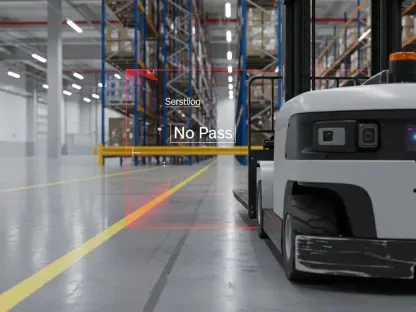
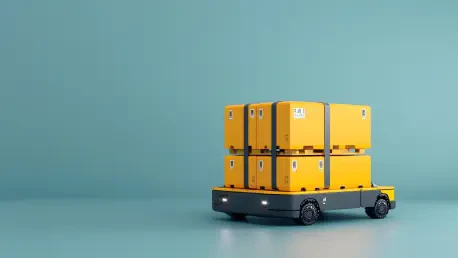
The deployment of dynamically safe robots is already transforming industries that operate in unstructured environments. In warehousing and logistics, mobile robots navigate busy aisles, working alongside human employees to pick, pack, and transport goods. In advanced manufacturing, collaborative robot arms can now operate without physical fences, allowing for more flexible production lines and closer human-robot partnerships.
These use cases, where mobile and legged robots work in close proximity to people, are made possible only through adaptive safety systems. A humanoid robot stocking shelves or a quadruped performing inspections in a crowded facility cannot be confined to a cage. Its safety depends on its ability to perceive, predict, and react to its surroundings dynamically, a capability that legacy safety standards simply do not accommodate.
Challenges and Regulatory Hurdles
Despite the clear benefits, the transition to dynamic safety is not without its obstacles. A primary technical challenge lies in validating complex, AI-driven safety systems to a certifiable standard. Proving that a non-deterministic system will reliably perform its safety function under all possible conditions is a significant engineering hurdle that requires new testing and verification methodologies.
Furthermore, there is a notable regulatory lag, where the pace of technological advancement outstrips the development of harmonized standards. As seen with the working draft status of ISO/WD 25785-1 for dynamically stable robots, regulatory bodies are struggling to keep up with new robotic forms and capabilities. This gap creates uncertainty for manufacturers and can slow the adoption of innovative technologies.
Future Outlook: The Next Generation of Robotic Collaboration
As dynamic safety systems mature and become standardized, they will unlock unprecedented possibilities for human-robot interaction. Robots will increasingly move from structured industrial settings into public, commercial, and even domestic spaces, performing tasks ranging from last-mile delivery to assistive care. This deeper integration of robotics into society will depend entirely on the public’s trust in their safety.
Potential breakthroughs in provably safe AI and formal verification methods could one day allow for the certification of learning-based systems, further accelerating this trend. In the long term, the widespread adoption of dynamic safety is expected to have a profound impact on productivity, operational efficiency, and, most importantly, workplace safety, enabling a future where humans and intelligent machines collaborate seamlessly and securely.
Conclusion: A New Paradigm for a New Era of Robotics
This review established that static, cell-based safety standards, born from an era of predictable industrial automation, are no longer adequate for modern intelligent robots. The analysis highlighted the critical disconnect between these legacy frameworks and the realities of AI-driven, mobile, and dynamically stable systems.
Ultimately, the investigation underscored the urgent need for the industry to adopt dynamic, software-defined safety principles. A successful transition required a move toward adaptive risk definitions, the development of new standards for emerging robotic form factors, and the implementation of architectures that fuse advanced AI perception with a deterministic, functionally safe control kernel. Embracing this new paradigm proved essential to safely and effectively deploying the next generation of robotics.