
In a market where traditional logistics often buckle under the weight of unpredictable consumer demands, the arrival of CubeVerse represents a fundamental shift from simple mechanical motion toward deep algorithmic intelligence. The industry has long relied on the brute force of hardware—more robots, larger grids, and faster conveyors—to solve the problem of scaling fulfillment. However, the current landscape of 2026 suggests that physical expansion has reached a point of diminishing returns. The CubeVerse Fulfillment Platform emerges not as another piece of hardware, but as an ecosystem designed to harmonize the chaotic variables of modern commerce through unified digital control.
The Evolution of Intelligent Fulfillment: From Assets to Decisions
The narrative of warehouse automation is moving beyond the era of asset-centric models where the primary goal was simply to replace manual labor with robotic movements. Historically, automation systems were rigid, requiring extensive downtime for reconfigurations and struggling to adapt to the “spiky” demand patterns seen in e-commerce. CubeVerse addresses this by introducing a decision-centric architecture. It shifts the focus from the robot itself to the intelligence that directs it, ensuring that every movement is the result of a calculated, global optimization strategy rather than a reactive local command.
This evolution is particularly relevant given the increasing complexity of global supply chains. As organizations manage thousands of Stock Keeping Units (SKUs) across diverse locations, the ability to centralize logic while decentralizing execution becomes a competitive necessity. The platform acts as a bridge, allowing legacy warehouse structures to inherit the capabilities of modern machine learning. By prioritizing the flow of data alongside the flow of goods, it transforms the warehouse from a storage cost center into a dynamic, responsive engine for growth.
Core Components: The Technical Architecture of CubeVerse
The CubeVerse Unified Environment: A Singular Entry Point
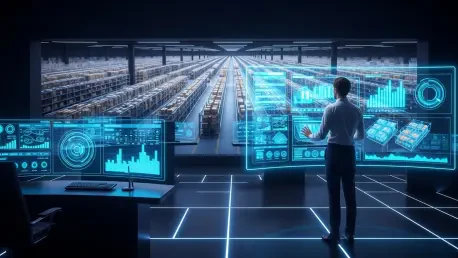
At the heart of the system lies a unified cloud-native environment that serves as the single source of truth for design, deployment, and daily operations. Unlike fragmented legacy systems where design tools are disconnected from operational software, this platform provides a continuous loop. Engineers can simulate a grid layout in a digital twin and then push that exact configuration to the live environment without the typical friction of manual data migration. This integration ensures that the operational reality always reflects the initial performance goals.
Furthermore, the unified environment simplifies the management of multi-site operations. Instead of disparate software versions at different facilities, a centralized interface allows for global updates and standardized performance monitoring. This approach significantly reduces the overhead associated with maintaining complex IT infrastructure. By abstracting the complexity of the underlying hardware, the platform allows logistics managers to focus on throughput and efficiency targets rather than troubleshooting individual robot communication protocols.
AutoStore Intelligence: The Orchestration of Real-Time Robot Movements
The operational “brain” of the platform is driven by a suite of more than twenty proprietary AI models designed to manage high-density robot fleets. In traditional systems, robots often follow pre-defined paths that do not account for real-time congestion or changing priorities. The orchestration layer in CubeVerse, however, uses predictive modeling to identify potential bottlenecks before they occur. It dynamically reroutes robots to ensure that high-priority orders are prioritized while maintaining an even distribution of wear and tear across the fleet.
This level of intelligence is what separates modern fulfillment from older “grid-and-bin” solutions. By analyzing the historical movement of bins and the real-time velocity of incoming orders, the system continuously rearranges the grid for maximum efficiency. It effectively learns which items are frequently bundled together, positioning them closer to ports to reduce travel time. This autonomous self-healing capability minimizes the need for human intervention, allowing the system to maintain peak performance even during the most demanding shifts.
CubeAnalytics: Turning Operational Data Into Prescriptive Actions
While many platforms offer descriptive data that shows what happened in the past, CubeAnalytics focuses on prescriptive insights that dictate what should happen next. The technical infrastructure monitors millions of data points every second, from robot battery health to motor torque and bin positioning. By applying machine learning to this telemetry, the system identifies patterns that precede equipment failure or throughput degradation. This proactive approach allows for maintenance to be scheduled during natural lulls in operation, preventing costly unplanned downtime.
The unique value of this implementation lies in its ability to aggregate data across a global community of users. When a specific type of traffic pattern is found to cause a delay in one warehouse, the system can apply that learning to all other connected grids. This collective intelligence creates a feedback loop that constantly refines the operational parameters. Consequently, users benefit from a system that grows more capable over time, far exceeding the static capabilities of traditional Warehouse Management Systems (WMS).
VersaAI: The Integration of Robotic Piece Picking
The final frontier of the automated warehouse has always been the delicate task of piece picking, and VersaAI addresses this through vision-based machine learning. By integrating sophisticated cameras and neural networks, the system can identify and grasp a wide variety of items without the need for manual teaching. This technology bridges the gap between the storage grid and the final shipping container, automating the most labor-intensive part of the fulfillment process. The implementation is unique because it is fully integrated into the robot’s routing logic, ensuring that picking speed and bin delivery are perfectly synchronized.
Emerging Trends: The Industry Shift Toward Intelligent Orchestration
The broader logistics sector is currently experiencing a massive shift toward “intelligent orchestration,” where the goal is the total synchronization of complex supply chains. The industry consensus has moved away from isolated “islands of automation” toward a more holistic view where every component of the warehouse talks to every other component. CubeVerse is at the center of this trend, providing the connective tissue that allows robots, human operators, and management software to function as a single, coherent organism.
Real-World Applications: High Density and Scalable Growth
High-Density Retail: Supporting 24/7 Operations
In the retail and e-commerce sectors, where volume is high and the margin for error is low, the platform has proven its ability to handle continuous throughput. The density of the cube storage system, combined with the AI-driven routing, allows retailers to pack more inventory into smaller footprints. This is particularly valuable in urban fulfillment centers where real estate is expensive. The platform’s ability to maintain high speeds during 24/7 operations ensures that next-day and same-day delivery promises remain achievable without ballooning labor costs.
Scaling Infrastructure: Extracting More From Existing Hardware
Perhaps the most compelling use case is the ability to scale capacity without adding physical robots or extending the grid. Because the software identifies and eliminates inefficiencies, companies have found that they can increase their throughput by double digits simply by updating their intelligence layer. This software-driven scaling provides a much higher return on investment compared to traditional capital expenditures. It allows businesses to grow incrementally, testing the limits of their current hardware before committing to expensive physical expansions.
Challenges and Limitations: The Hurdles of Digital Transformation
Despite the advancements, integrating cloud-based intelligence with legacy WMS remains a technical challenge. Many older facilities operate on proprietary or outdated software that does not easily support the high-frequency data exchange required by CubeVerse. Bridging this gap often requires significant middleware development and a shift in internal IT strategy. Furthermore, while the AI reduces the need for manual troubleshooting, it increases the demand for high-level technical expertise to manage the digital ecosystem, a skill set that is currently in short supply.
Future Outlook: The Path Toward Full Autonomy
Looking ahead, the trajectory of this technology points toward deeper self-optimization and eventually, full autonomy within logistics networks. Future iterations are expected to include machine learning models that can predict seasonal shifts months in advance, automatically restructuring entire grids to prepare for peak demand. As the cost of sensing and computing continues to drop, the total cost of ownership for these advanced systems will likely decrease, making high-tier automation accessible to a much wider range of mid-sized enterprises.
Final Assessment: A Significant Step Toward Smarter Fulfillment
The review of the CubeVerse ecosystem revealed a platform that was fundamentally more adaptive and predictable than its predecessors. By moving the complexity of fulfillment into a unified AI-driven environment, the system successfully addressed the bottlenecking and rigidity that had plagued previous generations of warehouse automation. The integration of prescriptive analytics and vision-based picking created a comprehensive solution that covered the entire lifecycle of an order.
The transition toward this intelligence-centric model proved to be a decisive factor in helping organizations manage the escalating demands of the modern market. While the integration with legacy systems presented some initial hurdles, the long-term benefits of performance predictability and operational longevity outweighed the technical friction. Ultimately, the platform established a new benchmark for how data and robotics should interact, moving the industry closer to a future where logistics networks are not just automated, but truly autonomous.