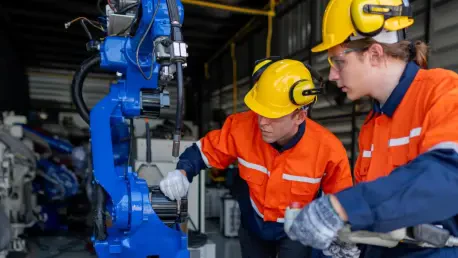

With decades of experience navigating the complexities of the supply chain and logistics industries, Rohit Laila has developed a keen eye for technological innovation. As the Dallas-Fort Worth manufacturing hub grapples with a booming economy and a shrinking labor pool, he offers his perspective on how automation can bridge this critical gap. We sat down with him to discuss the persistent hiring challenges facing local manufacturers and how targeted solutions, like those being showcased at the upcoming “Build Your Automation Roadmap” event, can empower businesses to not just survive, but thrive. Our conversation explores the practical steps for adopting robotics, the power of seeing technology in action, and how the right tools can transform a company’s competitive edge.
Many Dallas-Fort Worth manufacturers report strong order books but persistent labor shortages. How do these challenges specifically impact sectors like metal fabrication and aerospace, and what practical first steps can attendees learn at your upcoming event to begin addressing them?
The strain is immense, and you can almost feel the tension on the factory floors. In sectors like metal fabrication and aerospace, the problem isn’t just a lack of bodies; it’s a critical shortage of candidates with the right technical skills. You can’t just pull someone off the street to operate a complex CNC machine or perform a precise quality inspection on a critical aerospace component. This creates a bottleneck where companies have the orders to grow but are forced to turn down work. The first practical step attendees at our event will learn is that you don’t have to automate your entire facility overnight. They will see a FANUC robot performing a machine-tending task, a common pain point, and realize they can start by targeting one single, repetitive, and often undesirable job. This approach minimizes risk and shows an immediate impact, which is crucial for building momentum.
Your event aims to move manufacturers from “curiosity to confident implementation.” Can you walk us through how a live demonstration of a machine tending or assembly application will help a hesitant business owner overcome their specific concerns about integration and ROI?
There’s a world of difference between watching a polished video online and standing a few feet away from a robot in motion. A hesitant business owner is often worried about the hidden complexities and the true cost. When they see a robot arm seamlessly loading and unloading parts from a machine, they can witness its speed and precision firsthand. They can ask our on-site experts pointed questions like, “How long did it take to program that?” or “What happens if a part is misaligned?” Seeing an expert answer not with a sales pitch, but by actually tweaking the system on the spot, makes the entire process feel accessible. This direct interaction transforms the concept of ROI from a number on a spreadsheet into a tangible reality they can envision on their own production line, making the leap to confident implementation feel much smaller and safer.
The roadmap event targets a wide range of industries, from food & beverage to CNC machining. How will your on-site experts tailor their advice for such diverse operational needs, and what are some common, initial automation mistakes they help manufacturers avoid?
While the end products are vastly different, the core manufacturing processes—like material handling, assembly, or packaging—share fundamental principles. Our on-site experts are trained to focus on the application itself rather than just the industry. They’ll ask a food producer about payload and cycle time for a packaging task, using the same logic they’d apply to a CNC machining shop discussing a material handling application. The most common mistake we see is manufacturers trying to automate their most complex, problematic process first. It’s a recipe for frustration. Our experts guide them away from that pitfall, helping them identify a simple, high-volume task first. Automating that “low-hanging fruit” builds internal expertise and delivers a quick win, which generates the confidence and capital to tackle more complex challenges down the line.
Given the focus on FANUC robots and OnRobot end-of-arm tooling, what makes this combination particularly effective for common applications like packaging or quality inspection? Please provide a specific example of how this partnership simplifies the automation process for a first-time user.
The synergy between FANUC and OnRobot is all about lowering the barrier to entry. It’s a powerful combination of a robust, reliable robot and intelligent, user-friendly tooling. For a first-time user, this partnership removes a massive layer of complexity. Imagine a small company wanting to automate quality inspection. In the past, they’d have to source a robot, then a gripper, then a vision system, and then find an integrator to make them all communicate, which could be a nightmare of custom coding. With this combination, the OnRobot gripper or vision camera plugs directly into the FANUC controller. The software is designed to work together, so programming becomes a much more intuitive, graphical process. It turns a complex integration project into a near plug-and-play experience, dramatically reducing setup time and the need for specialized engineering talent.
Beyond filling vacant roles, manufacturers face rising wage pressures and increased competition for skilled labor. How can implementing the right tooling and software help a company not just maintain output, but also improve its competitive edge and scale operations effectively?
This is the bigger picture that often gets missed. Automation isn’t just about plugging a labor gap; it’s a strategic tool for growth. When you implement the right tooling, you free up your most valuable asset: your skilled people. Instead of having a talented machinist spend eight hours a day loading and unloading a machine, you can have that person overseeing three or four automated cells, focusing on quality control, and programming new jobs. This elevates their role, increases their value, and makes the job more engaging, which helps with retention. This increased efficiency and output per employee directly improves your competitive edge. You can bid more aggressively on contracts, promise faster turnaround times, and scale your operations without being limited by the local hiring market.
What is your forecast for automation adoption among small and medium-sized manufacturers in the North Texas region over the next five years?
I predict we are on the cusp of a significant acceleration. For years, automation was seen as something reserved for massive corporations, but the technology has become more affordable, flexible, and easier to implement. Given the persistent labor shortages and rising wage pressures that are particularly acute in the booming North Texas economy, automation is shifting from a luxury to a necessity for survival and growth. Over the next five years, I expect to see small and medium-sized shops move beyond isolated robotic cells and begin implementing more integrated solutions. They won’t just be automating single tasks but will start thinking about how to connect those automated processes, leading to smarter, more resilient, and highly productive manufacturing operations across the region.