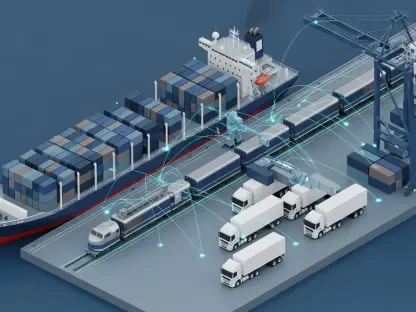

Global supply chain networks have reached a critical inflection point where the sheer velocity of market disruptions has consistently outpaced the ability of human operators to react using traditional methods. For decades, the industry relied on a “break-fix” mentality, treating logistical bottlenecks or raw material shortages as isolated incidents rather than symptoms of a fundamentally fragile system. This legacy of reactive management is now being challenged by a landscape where volatility is the only constant, rendering static spreadsheets and historical forecasting models largely irrelevant. To move beyond this state of chronic instability, organizations are forced to reconsider the very architecture of their operations, shifting toward an “anti-fragile” framework. This evolution requires more than just faster software; it demands a wholesale transition toward intelligence-driven systems that prioritize foresight and agility. By placing decision-making at the center of the technological stack, businesses can finally close the gap between identifying a problem and executing a profitable solution, turning systemic pressure into a source of competitive advantage in an era defined by rapid change.
The Failure of Legacy Systems and Rigid Architectures
The foundational weaknesses of modern supply chain management are deeply rooted in the technological constraints of the late 1990s, when software architecture was primarily designed for data storage rather than active intelligence. During this formative era, Enterprise Resource Planning (ERP) systems were built as digital ledgers, focusing on recording transactions in silos that rarely communicated in real time. These legacy systems relied on batch processing and static snapshots, which worked sufficiently during periods of global economic stability but lacked the elasticity required for a more interconnected world. Because these tools were designed to tell managers what happened last week or last month, they naturally fostered a culture of looking backward. This historical baggage has left many contemporary enterprises tethered to rigid frameworks that cannot ingest the firehose of live data generated by modern global trade, resulting in a permanent state of information latency that cripples effective response times.
Despite organizations funneling more than $200 billion into supply chain technologies over the last twenty years, the return on this massive capital expenditure remains remarkably low in terms of operational resilience. Industry data suggests that the average corporation continues to lose approximately 8% of its annual revenue to avoidable disruptions, while catastrophic events can erase nearly half of a decade’s worth of profit. This financial hemorrhaging persists because the vast majority of technology spending has been directed toward refining old processes rather than reimagining them. Instead of breaking the cycle of reactive “firefighting,” these investments often just provided faster ways to view obsolete data. When a crisis hits, planners are still forced to export data into external spreadsheets to perform the complex modeling their core systems cannot handle. This disconnect between high-tech investment and low-resilience outcomes proves that simply digitizing a flawed, record-centric process is no longer a viable strategy for survival.
Transitioning to a Decision-Centric Operating Model
The transition to a decision-centric operating model represents a fundamental departure from the administrative-heavy workflows that have dominated logistics for the past quarter-century. In this new paradigm, the primary objective of technology is not merely to store data or generate reports, but to serve as a high-velocity engine for enterprise-wide decision-making. By treating “the decision” as a core capability, organizations can move away from manual intervention and toward automated, intelligent execution. This approach leverages advanced algorithms to sift through the noise of global data, identifying subtle shifts in supply or demand before they manifest as critical failures. When the system is designed to prioritize outcomes rather than just tracking movements, human experts are liberated from the drudgery of data entry and reconciliation. Instead, they act as strategic orchestrators who fine-tune the parameters of an adaptive network that learns and evolves with every market fluctuation it encounters.
Building this decision-centric architecture requires a total overhaul of how departments interact, moving from isolated functions to an interconnected web of intelligence. In a traditional setup, procurement, manufacturing, and logistics often operate with different sets of goals and data, leading to friction and delayed responses when disruptions occur. A decision-centric model eliminates these barriers by providing a unified digital thread that connects every node in the supply chain. This connectivity ensures that a delay in raw material shipping automatically triggers an optimization routine that adjusts production schedules and updates customer delivery expectations simultaneously. By removing the need for sequential, human-led meetings to solve every minor deviation, the organization gains the ability to operate at the speed of the market. This shift doesn’t just improve efficiency; it fundamentally changes the company’s posture from defensive and reactive to proactive and resilient, allowing it to absorb shocks that would cripple less integrated competitors.
The Pillars of Intelligence and Data Centralization
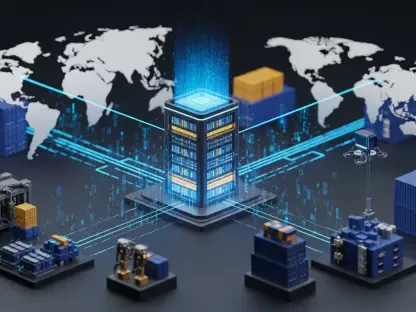
The structural integrity of a resilient supply chain rests entirely on the elimination of fragmented data sources through the implementation of a unified platform. Artificial intelligence and advanced optimization tools are only as effective as the data they consume; if they are fed incomplete or contradictory information from disparate spreadsheets, the resulting insights will be flawed. To achieve a “single version of the truth,” organizations must integrate every data point—from Tier 2 supplier capacities to final-mile delivery metrics—into a centralized, vertical architecture. This consolidation allows AI models to observe the entire value chain in context, identifying correlations that would be invisible in a siloed environment. When data is centralized, the system can perform holistic impact analysis, understanding how a localized labor strike in one region might cascade through the entire global network. This foundational visibility is the prerequisite for any meaningful automation, as it provides the clean, high-fidelity fuel required for sophisticated machine learning algorithms.
Once a unified data foundation is established, the focus shifts to deploying Generative AI and machine learning to transform that raw information into precise, actionable interventions. Modern supply chain managers are often overwhelmed by the sheer volume of variables involved in global trade, from fluctuating fuel costs to complex tariff structures. Decision-centric tools allow these professionals to query their entire operation using natural language, asking complex questions like “How will a two-week delay at the Port of Long Beach affect our Q4 margins for consumer electronics?” The system can then simulate thousands of permutations in seconds, providing a ranked list of the most cost-effective alternatives. This level of augmented intelligence allows for real-time root-cause analysis, moving beyond simply identifying that a shipment is late to explaining exactly why it happened and how to prevent it in the future. By offloading these high-complexity, multi-variable calculations to AI, human teams can focus on high-level strategy and relationship management.
Predictive Planning and the Power of Simulation
The ultimate evolution of supply chain resilience is found in the move from historical forecasting to active “demand sensing” through the use of sophisticated predictive modeling. Rather than looking at what was sold during the same month last year, AI-driven systems now ingest vast arrays of external signals, including geopolitical shifts, real-time weather patterns, and social media trends, to anticipate shifts in consumer behavior before they hit the order books. This forward-looking approach allows companies to pre-position inventory and adjust manufacturing cycles with a level of precision that was previously impossible. By anticipating the “why” and “when” of demand shifts, businesses can avoid the twin traps of costly overstock and brand-damaging stockouts. This predictive capability turns the supply chain from a back-office cost center into a strategic weapon that can capitalize on emerging market opportunities faster than any competitor relying on traditional, lagging indicators of performance.
To institutionalize this foresight, leading organizations are now deploying “digital twins,” which are high-fidelity virtual replicas of their entire physical supply chain. These AI-powered simulations allow executives to stress-test their operations against hypothetical “black swan” events, such as sudden trade embargoes or major infrastructure failures, without any risk to actual assets. By running these scenarios, leadership can quantify the financial impact of various strategic choices and identify hidden vulnerabilities in their sourcing or logistics networks. This move toward simulation-based planning ensures that when a real-world disruption occurs, the company already has a pre-validated playbook ready for execution. Moving forward, the most successful enterprises will be those that stop treating the future as an unknowable threat and start treating it as a series of manageable probabilities. The next logical step is to integrate these digital twins into daily operations, allowing for continuous, automated recalibration of the supply chain in response to every minor tremor in the global economy.