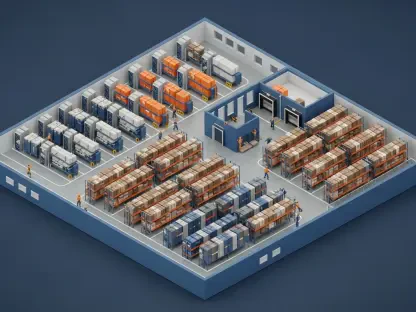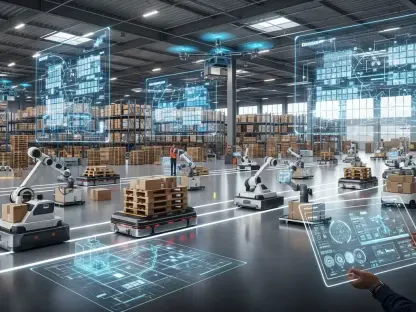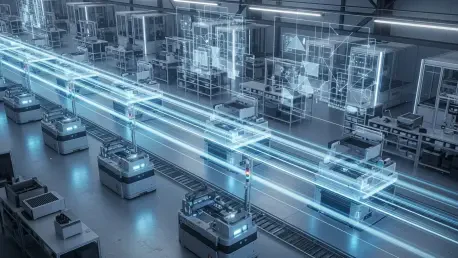

Modern industrial floors are no longer defined by stationary assembly lines, but by a fluid dance of intelligence where material movement serves as the central nervous system of the factory. As global manufacturing pivots toward higher customization and lower lead times, the transition from fragmented automation to holistic, end-to-end platforms has become the industry standard. This evolution represents a fundamental shift in philosophy, moving away from isolated robotic tasks toward a unified ecosystem where every component communicates in real time to optimize throughput.
Historically, material handling was treated as a secondary logistical concern, often decoupled from the core production process. However, the rise of integrated autonomous systems has elevated these tasks to a critical driver of factory-wide performance. By treating the movement of parts as an extension of the manufacturing process itself, facilities can eliminate the traditional “stop-and-go” inefficiencies that plagued earlier automation attempts.
Evolution of Integrated Material Handling Systems
The journey toward autonomous production logistics began with a realization that siloed hardware creates digital bottlenecks. In the past, companies might have automated a single conveyor or a specific palletizing station, but these islands of automation required human intervention to bridge the gaps between them. The current technological landscape has matured into sophisticated platforms that manage the entire lifecycle of a material’s journey across the floor.
This transition matters because it addresses the complexity of modern supply chains. By integrating hardware and software into a single operational layer, manufacturers can ensure that material flow is proactive rather than reactive. This shift transforms logistics from a cost center into a strategic asset that directly influences the agility and responsiveness of a commercial enterprise.
Core Pillars of the Autonomous Logistics Ecosystem
Digital Twin Simulation: Testing the Virtual Factory
Before a single robot moves on a physical floor, digital twin technology like Emulate3D allows for comprehensive workflow modeling. This process is not merely a visual representation; it is a high-fidelity simulation that uses real-world physics and operational data to predict how systems will interact. By identifying potential collisions or throughput constraints in a virtual environment, engineers can refine logistics strategies without risking expensive hardware downtime.
Unified Orchestration: Software and Mobile Robotics
The actual execution of material movement relies on the synergy between purpose-built orchestration software and Autonomous Mobile Robots (AMRs). Unlike traditional Automated Guided Vehicles that follow fixed paths, these AMRs utilize advanced sensors to navigate dynamic environments. The orchestration layer acts as a conductor, managing a fleet of robots to ensure they arrive exactly when needed, thereby minimizing idle time for high-value machinery.
Strategic Consulting: Frameworks for Massive Scalability
Scaling a pilot project into a facility-wide operation remains one of the greatest hurdles in industrial tech. Strategic consulting services play a vital role here, providing the roadmaps necessary to transition from a proof-of-concept to a fully autonomous site. This framework focuses on identifying high-impact automation opportunities, ensuring that the technology deployment aligns with broader business objectives and long-term capital investments.
Industry Trends and Market Trajectory
Current market data indicates a massive surge in robotics adoption, with implementation rates expected to climb from 41% to 83% over the next five years. This is not just a trend of increasing volume but a shift in perception. Industry leaders no longer view autonomous logistics as an experimental luxury; it is now recognized by over 60% of executives as the primary driver of competitive advantage in a volatile global market.
Moreover, the behavior of the market is shifting toward interoperability. Companies are prioritizing platforms that can bridge the gap between Information Technology and Operational Technology. This demand for a “single pane of glass” view of operations is driving vendors to consolidate their offerings, moving away from niche hardware toward comprehensive digital-first solutions.
Practical Applications and Performance Benchmarks
The effectiveness of these systems is best observed in the automotive sector, where major OEMs have deployed integrated logistics to manage thousands of parts. In these complex environments, the ability to automate the delivery of sub-assemblies directly to the line has resulted in documented production increases of 20%. Such benchmarks prove that autonomous systems can handle the high-mix, high-volume demands of modern manufacturing.
Beyond sheer speed, these systems enhance operational resilience. When a specific production cell faces a delay, the autonomous network can dynamically reroute material to other areas or adjust the pace of delivery. This level of adaptability ensures that a single point of failure does not result in a total factory standstill, which is a common risk in legacy, rigid automation setups.
Technical Hurdles and Implementation Obstacles
Despite the progress, integrating new autonomous platforms with legacy digital systems and aging hardware remains a significant challenge. Many factories still operate on older infrastructure that lacks the connectivity required for real-time orchestration. This creates a “fragmentation gap” where the latest robotics must be manually integrated with decades-old enterprise resource planning software.
Development efforts are currently focused on reducing these barriers through improved APIs and standardized communication protocols. The goal is to lower the technical debt associated with upgrading a facility. Until interoperability becomes universal, the initial cost and complexity of deployment will continue to be a primary concern for smaller manufacturers looking to compete with larger, tech-heavy rivals.
The Future of Autonomous Facility Management
Looking forward, the industry is moving toward fully autonomous ecosystems that require almost no human intervention for routine material movement. The next breakthrough lies in AI-driven orchestration, where the system can predict maintenance needs and supply chain disruptions before they occur. This will fundamentally change labor dynamics, shifting human roles toward high-level system oversight and creative problem-solving rather than physical labor.
This transition will also redefine global competitiveness. As autonomous logistics lower the “cost-to-serve,” the geographical location of a factory may become less important than its digital sophistication. Factories that master autonomous material flow will be able to produce goods closer to the consumer with higher efficiency, effectively localized production on a global scale.
Final Assessment of Autonomous Logistics Systems
The shift from disconnected pilot projects to unified operational platforms represented a point of no return for the industrial sector. Early adopters successfully demonstrated that integrating material movement into the digital core of the factory was the only way to achieve sustainable throughput gains. The technology moved beyond the hype cycle and proved its value as a foundational element of modern manufacturing.
Future strategies must focus on workforce reskilling and the aggressive removal of data silos to fully capitalize on these autonomous gains. While the technical hurdles of legacy integration were significant, the long-term potential for increased agility and resilience made the transition inevitable. Ultimately, these systems established a new benchmark for what it means to be a truly modern, competitive manufacturing enterprise.