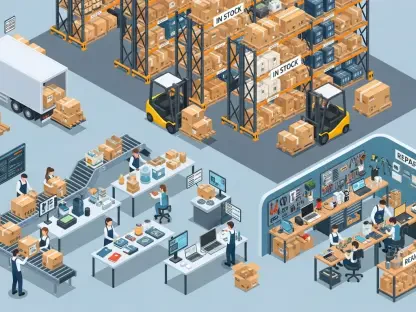

The struggle to maintain accurate stock levels in a high-velocity global supply chain has historically forced companies to choose between operational speed and data integrity. Modern autonomous inventory systems have emerged to resolve this tension by replacing manual, error-prone processes with tireless robotic precision. These systems function as a centralized intelligence layer, providing a real-time digital twin of the physical facility.
The Shift Toward Autonomous Inventory Intelligence
The core of this transition lies in the move from reactive counting to proactive visibility. By deploying mobile hardware equipped with deep-learning algorithms, warehouses no longer rely on sporadic human audits that provide only a snapshot of the past. Instead, the technology offers a continuous stream of data that ensures the physical reality of the racks matches the digital records in the cloud.
Core Components of Aerial Warehouse Robotics
AI-Driven Computer Vision and Navigation
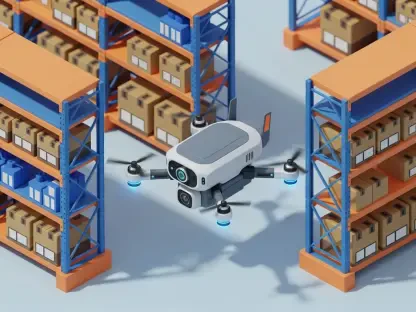
Unlike traditional automated guided vehicles that require expensive floor markers or magnetic strips, these drones utilize advanced SLAM algorithms to map their surroundings dynamically. This onboard intelligence allows the units to navigate through narrow aisles and around unexpected obstacles without any human intervention. The AI treats the warehouse as a fluid 3D space, ensuring every pallet position is scanned with millimeter accuracy.
Seamless Systems Integration
The hardware serves as a data collection node that feeds high-resolution imagery and barcode data directly into existing warehouse management systems. This direct link eliminates the lag typically found in manual reporting, allowing for immediate reconciliation. Moreover, the API-first architecture ensures that logistics managers can access insights across different geographic locations from a single, unified dashboard.
Evolution of Modern Logistics Technology
The industry has moved beyond the limitations of monthly or quarterly cycle counts toward a model of constant monitoring. This shift represents a fundamental change in how labor is perceived, moving from a focus on repetitive data entry to high-level strategic oversight. By automating the visual verification of stock, organizations now identify discrepancies at the moment they occur.
Real-World Applications and High-Throughput Environments
In high-stakes sectors like skincare manufacturing, the deployment of this technology at Dermalogica’s California headquarters proved transformative. Where manual counts previously took two months to complete, autonomous drones facilitated 52 full inventory passes per year, a 600 percent increase in frequency. This granularity is vital for companies operating with lean inventory and tight sales forecasts.
Navigating Adoption Hurdles and Technical Constraints
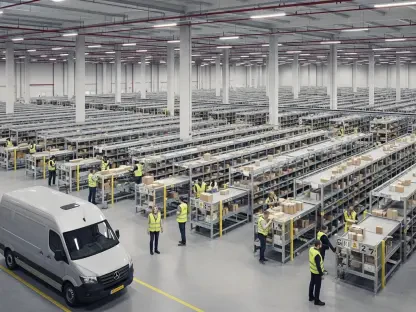
Despite the clear benefits, integrating autonomous flight into a busy warehouse involves overcoming signal interference and lighting challenges in high-density racks. However, ongoing improvements in low-light imaging and decentralized edge computing are helping these systems maintain reliability. Battery density remains a focus, as longer flight times are required to cover massive regional distribution centers.
Future Projections and Specialized Environment Expansion
The technological frontier is now moving into extreme conditions, such as freezer environments as cold as minus-20 degrees Fahrenheit. These specialized spaces were previously considered too harsh for sensitive electronics, yet they are where human labor is most difficult to retain. Future systems will likely manage entire “lights-out” facilities where human presence is minimal and efficiency is absolute.
Final Assessment of Autonomous Inventory Solutions
The implementation of aerial robotics proved to be a decisive shift toward proactive logistics intelligence. Organizations that adopted these systems reclaimed hundreds of labor hours while achieving near-perfect stock accuracy. This evolution solidified autonomous inventory management as a competitive necessity for any global distribution network that operated in a modern, high-throughput market.