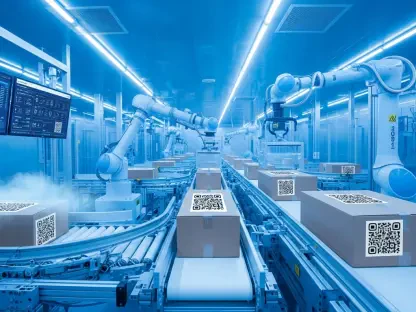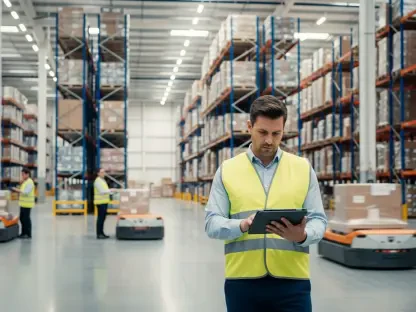

The long-held vision of autonomous, bipedal robots working alongside humans in complex industrial environments is rapidly transitioning from science fiction to operational reality. A landmark collaboration between the UK-based AI and robotics firm Humanoid and the global technology leader Siemens has culminated in a successful proof of concept, demonstrating that humanoid robots can not only perform but also excel at practical logistics tasks within a live factory setting. This achievement marks a significant inflection point, suggesting that the era of adaptable, intelligent robotic co-workers is no longer on the distant horizon but at the factory doorstep. The project, which saw a humanoid robot seamlessly integrate into a production workflow, offers a compelling glimpse into the future of manufacturing and supply chain management, where automation is not just about brute force but also about finesse, flexibility, and intelligent decision-making in environments designed for people. This development could fundamentally reshape how industries approach efficiency, safety, and workforce allocation in the years to come.
A New Paradigm in Industrial Automation
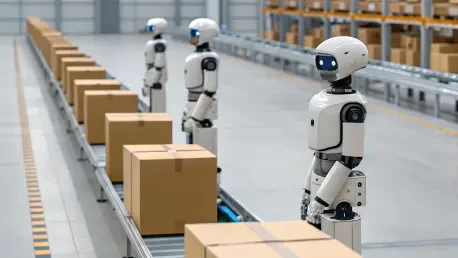
The core of this groundbreaking trial centered on deploying Humanoid’s HMND 01 wheeled Alpha robot to tackle a common yet critical logistics challenge at a Siemens facility. The robot was tasked with a repetitive tote-to-conveyor destacking process, a function essential for maintaining the flow of materials in a busy production line. In this specific use case, the robot autonomously identified and retrieved totes of two different sizes from a storage stack, navigated to a nearby conveyor system, and precisely placed them at a designated point for human workers to access. This cycle was repeated continuously until the entire stack was depleted, showcasing the robot’s stamina and consistency in handling monotonous but physically demanding duties. The ability to manage variability—in this case, different tote dimensions—without reprogramming or human intervention highlights a key advantage of advanced robotics over traditional, fixed automation systems. The successful execution of this task in a real-world setting underscores the potential for humanoid robots to fill crucial gaps in factory logistics, freeing human employees for more complex, value-added responsibilities.
The trial’s success was underpinned by a meticulously structured two-phase methodology designed to bridge the gap between laboratory development and real-world industrial application. The initial phase involved extensive in-house testing and optimization at Humanoid’s facilities, where engineers utilized a physical twin to refine the robot’s algorithms and physical movements in a controlled environment. This crucial step ensured the robot was fully prepared before entering the dynamic factory floor. Following this, the project moved to its second phase: a two-week on-site deployment at the Siemens Electronics Factory in Erlangen, Germany. Operating within an active production setting, the robot was rigorously assessed against a set of demanding performance metrics. It successfully met all targets, achieving a throughput of 60 tote moves per hour, demonstrating continuous autonomous operation for over 30 minutes at a time, and maintaining an operational uptime of more than 8 hours. Critically, the robot achieved an overall pick-and-place success rate exceeding 90%, confirming its high degree of reliability and effectiveness for industrial-scale deployment.
Forging Strategic Alliances for a Robotic Future
This successful proof of concept is viewed by both organizations as far more than a simple technical trial; it represents the foundational step in a long-term strategic partnership aimed at revolutionizing industrial automation. Artem Sokolov, CEO of Humanoid, emphasized that his company’s primary focus is commercial, concentrating on the development of robots that provide tangible, measurable value in real-world operational settings. This pragmatic approach is perfectly complemented by Siemens’ role as a “customer zero,” as described by company representative Stephan Schlauss. Siemens is actively pursuing advancements in production automation and is keen to explore the full potential of humanoid robotics across its extensive network of factories. This collaboration creates a powerful feedback loop: Humanoid provides cutting-edge robotic technology, while Siemens offers an ideal testbed and a direct path to industrial-scale application. The shared vision is to expand beyond this initial use case, with plans to explore a broader rollout of humanoid robots across more Siemens facilities in the near future, accelerating the adoption curve for this transformative technology.
The successful pilot program with Siemens, which followed another conclusive proof of concept that Humanoid completed with the technology company Schaeffler in late 2023, confirmed a clear and accelerating trend toward the practical validation of humanoid robots within key industrial sectors. These trials were not isolated experiments but part of a deliberate strategy to demonstrate that advanced robotics could deliver immediate operational benefits. The positive outcomes from these deployments provided definitive evidence that the technology had matured beyond the conceptual stage and was ready to tackle real-world challenges in logistics and manufacturing. The partnerships established through these projects laid the groundwork for future integration, creating a clear roadmap for scaling the technology from single-task demonstrations to widespread deployment. This string of successes effectively validated the commercial viability of humanoid robots, shifting the industry conversation from “if” to “when” these intelligent machines will become a standard feature on the factory floor.Fixed version:
The long-held vision of autonomous, bipedal robots working alongside humans in complex industrial environments is rapidly transitioning from science fiction to operational reality. A landmark collaboration between the UK-based AI and robotics firm Humanoid and the global technology leader Siemens has culminated in a successful proof of concept, demonstrating that humanoid robots can not only perform but also excel at practical logistics tasks within a live factory setting. This achievement marks a significant inflection point, suggesting that the era of adaptable, intelligent robotic co-workers is no longer on the distant horizon but at the factory doorstep. The project, which saw a humanoid robot seamlessly integrate into a production workflow, offers a compelling glimpse into the future of manufacturing and supply chain management, where automation is not just about brute force but also about finesse, flexibility, and intelligent decision-making in environments designed for people. This development could fundamentally reshape how industries approach efficiency, safety, and workforce allocation in the years to come.
A New Paradigm in Industrial Automation
The core of this groundbreaking trial centered on deploying Humanoid’s HMND 01 wheeled Alpha robot to tackle a common yet critical logistics challenge at a Siemens facility. The robot was tasked with a repetitive tote-to-conveyor destacking process, a function essential for maintaining the flow of materials in a busy production line. In this specific use case, the robot autonomously identified and retrieved totes of two different sizes from a storage stack, navigated to a nearby conveyor system, and precisely placed them at a designated point for human workers to access. This cycle was repeated continuously until the entire stack was depleted, showcasing the robot’s stamina and consistency in handling monotonous but physically demanding duties. The ability to manage variability—in this case, different tote dimensions—without reprogramming or human intervention highlights a key advantage of advanced robotics over traditional, fixed automation systems. The successful execution of this task in a real-world setting underscores the potential for humanoid robots to fill crucial gaps in factory logistics, freeing human employees for more complex, value-added responsibilities.
The trial’s success was underpinned by a meticulously structured two-phase methodology designed to bridge the gap between laboratory development and real-world industrial application. The initial phase involved extensive in-house testing and optimization at Humanoid’s facilities, where engineers utilized a physical twin to refine the robot’s algorithms and physical movements in a controlled environment. This crucial step ensured the robot was fully prepared before entering the dynamic factory floor. Following this, the project moved to its second phase: a two-week on-site deployment at the Siemens Electronics Factory in Erlangen, Germany. Operating within an active production setting, the robot was rigorously assessed against a set of demanding performance metrics. It successfully met all targets, achieving a throughput of 60 tote moves per hour, demonstrating continuous autonomous operation for over 30 minutes at a time, and maintaining an operational uptime of more than 8 hours. Critically, the robot achieved an overall pick-and-place success rate exceeding 90%, confirming its high degree of reliability and effectiveness for industrial-scale deployment.
Forging Strategic Alliances for a Robotic Future
This successful proof of concept is viewed by both organizations as far more than a simple technical trial; it represents the foundational step in a long-term strategic partnership aimed at revolutionizing industrial automation. Artem Sokolov, CEO of Humanoid, emphasized that his company’s primary focus is commercial, concentrating on the development of robots that provide tangible, measurable value in real-world operational settings. This pragmatic approach is perfectly complemented by Siemens’ role as a “customer zero,” as described by company representative Stephan Schlauss. Siemens is actively pursuing advancements in production automation and is keen to explore the full potential of humanoid robotics across its extensive network of factories. This collaboration creates a powerful feedback loop: Humanoid provides cutting-edge robotic technology, while Siemens offers an ideal testbed and a direct path to industrial-scale application. The shared vision is to expand beyond this initial use case, with plans to explore a broader rollout of humanoid robots across more Siemens facilities in the near future, accelerating the adoption curve for this transformative technology.
The successful pilot program with Siemens, which followed another conclusive proof of concept that Humanoid completed with the technology company Schaeffler in late 2023, confirmed a clear and accelerating trend toward the practical validation of humanoid robots within key industrial sectors. These trials were not isolated experiments but part of a deliberate strategy to demonstrate that advanced robotics could deliver immediate operational benefits. The positive outcomes from these deployments provided definitive evidence that the technology had matured beyond the conceptual stage and was ready to tackle real-world challenges in logistics and manufacturing. The partnerships established through these projects laid the groundwork for future integration, creating a clear roadmap for scaling the technology from single-task demonstrations to widespread deployment. This string of successes effectively validated the commercial viability of humanoid robots, shifting the industry conversation from “if” to “when” these intelligent machines will become a standard feature on the factory floor.