
The rapid acceleration of consumer demand and the shrinking availability of urban industrial space have forced modern logistics providers to reconsider the very foundations of pallet storage and retrieval. Static systems and rigid automation are no longer sufficient for businesses that must pivot as quickly as the markets they serve. The AgileStore ASRS, born from the strategic partnership between Swisslog and Eurofork, emerges as a sophisticated response to this volatility, signaling a shift from permanent hardware installs toward modular, evolving ecosystems.
This technology departs from traditional automated storage by prioritizing flexibility over fixed capacity. By integrating Eurofork’s mechanical expertise with Swisslog’s global system experience, the platform addresses the “Ready For the Next” philosophy. This approach acknowledges that a warehouse configuration today might be entirely obsolete within two years, providing a framework that allows for organic growth and rapid re-parameterization of the storage grid.
Technical Architecture and Core System Components
Four-Way Roaming Shuttle Mechanics
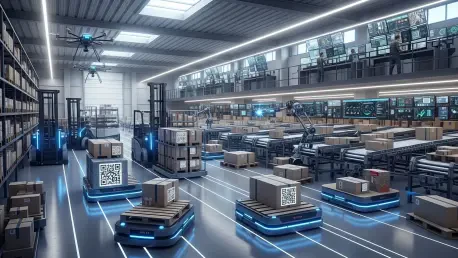
At the heart of the hardware layer is the four-way roaming shuttle, a device that redefines the limits of horizontal and vertical travel within a high-density rack. Unlike conventional shuttles that are tethered to a single aisle or two directions of movement, these units navigate forward, backward, and laterally across multiple lanes. The inclusion of integrated lifts allows the shuttles to transition between different levels autonomously, effectively eliminating the need for dedicated conveyor systems at every tier.
This multi-directional capability is more than a mechanical convenience; it is a strategy for space reclamation. By allowing shuttles to move anywhere within the grid, the system can support ultra-deep storage configurations that were previously inaccessible to standard cranes. However, this complexity requires a robust rail design and precision alignment to ensure that the hand-off between lateral tracks and vertical lifts remains seamless during high-velocity operations.
SynQ Software Orchestration Platform
The physical agility of the roaming units would be wasted without the SynQ software platform, which functions as the system’s central nervous system. SynQ breaks down the traditional silos between Warehouse Management Systems (WMS) and Warehouse Control Systems (WCS). By unifying these layers, the platform can perform real-time path planning for every shuttle, ensuring that a unit on the fifth level is coordinated with the arrival of a pallet at the induction station on the ground floor.
This orchestration is critical for managing the traffic density that comes with a fleet of roaming shuttles. The software utilizes predictive algorithms to prevent bottlenecks, repositioning inventory based on expected order waves. It offers a transparent view of the entire operation, allowing managers to adjust priorities on the fly. While the integration of such a comprehensive software stack can be a significant undertaking, the resulting visibility provides a level of operational control that standalone hardware simply cannot match.
Emerging Trends in Adaptive Warehouse Automation
The industry is currently moving away from massive, monolithic automation projects that take years to commission and decades to pay off. Instead, the trend favors modularity, where capacity can be added incrementally by simply introducing more shuttles into the existing grid. This “shuttle-as-a-service” mindset allows companies to scale up during peak seasons and scale back without being burdened by idle, expensive infrastructure.
Furthermore, the integration of roaming pallet technology reflects a broader move toward decentralized intelligence. As facilities become more complex, the ability for individual components to make micro-decisions—such as choosing the most efficient path to a pick station—reduces the burden on central processing. This shift toward autonomy ensures that the system remains resilient even if one component fails, as other shuttles can dynamically reroute to maintain throughput.
Real-World Applications and Sector Deployment
AgileStore finds its most impactful applications in the food and beverage and retail sectors, where high-density, deep-lane storage is a necessity for managing large volumes of SKU-specific pallets. In these environments, the ability to reclaim vertical space in existing brownfield facilities is a game-changer. Rather than building a new warehouse, companies can implement this modular ASRS within their current footprint, significantly increasing pallet positions without a structural expansion.
Beyond simple storage, the technology excels in dynamic routing scenarios, such as buffer zones for e-commerce fulfillment. It allows for the staging of orders in a way that aligns with outbound transportation schedules, a process known as sequence-based dispatching. This capability is particularly useful for companies struggling with labor constraints, as it automates the most repetitive and physically demanding aspects of pallet movement, allowing human workers to focus on higher-value tasks.
Challenges and Implementation Obstacles
Despite its versatility, the deployment of a roaming shuttle system is not without hurdles. The orchestration of dozens of autonomous units requires a sophisticated network infrastructure and a high level of software maturity. The initial capital investment for the integrated software platform and the precision-engineered racking can be substantial, making the business case more difficult for smaller operations with lower throughput requirements.
Moreover, while the system is highly scalable, it can encounter throughput bottlenecks in extremely high-volume environments if the ratio of lifts to shuttles is not perfectly optimized. There is a technical complexity in managing the vertical transitions, which remain the slowest part of the cycle. Continuous development is focused on improving lift speeds and battery charging efficiencies to ensure that the shuttles spend more time moving goods and less time in transit or at charging stations.
Future Outlook and the Path to Autonomous Logistics
Looking ahead, the evolution of this technology will likely be driven by AI-enhanced predictive maintenance. By analyzing the wear patterns and sensor data from the roaming shuttles, the system will eventually predict failures before they occur, scheduling its own repairs during low-activity periods. This transition from reactive to proactive maintenance will be a cornerstone of the sustainable, “dark” warehouse of the future.
Additionally, improvements in battery chemistry and wireless power transfer are expected to increase the duty cycles of these units. As global supply chains become more integrated, the data captured by modular ASRS units will play a larger role in end-to-end visibility. This will allow manufacturers to synchronize production schedules directly with warehouse capacity, creating a truly fluid link between the factory floor and the final delivery point.
Final Assessment of AgileStore Performance
The collaboration between Swisslog and Eurofork successfully demonstrated that hardware modularity and software intelligence are inseparable in the modern intralogistics landscape. The review found that the system’s ability to navigate in four directions provided a distinct advantage over legacy bi-directional systems, particularly in facilities where space was at a premium. The unified software approach effectively mitigated the risks of complex traffic management, offering a scalable path for businesses facing unpredictable growth.
Ultimately, the technology proved to be a robust solution for industries requiring high-density storage and rapid adaptability. While the initial technical requirements remained high, the long-term benefits of space reclamation and labor reduction offered a clear value proposition. This shift toward agile, roaming automation established a new benchmark for how facilities can remain functional and competitive amidst the ongoing evolution of global commerce.