
The Great Transformation: Orchestrating Autonomy in Global Logistics
The global supply chain landscape stands on the precipice of a financial and technological explosion that will fundamentally redefine how goods move across the planet. Driven by the evolution of artificial intelligence from passive digital tools to active participants, spending on agentic AI within supply chain management is projected to skyrocket to a massive $53 billion by 2030. This staggering growth trajectory signals a shift in how modern enterprises approach logistics, procurement, and inventory management. No longer confined to experimental pilots, agentic AI is becoming the primary driver of operational efficiency. It promises a future where supply chains are not just monitored by software but actively managed by it, allowing organizations to respond to global disruptions with unprecedented speed and precision.
From Algorithms to Agents: The Evolution of Supply Chain Intelligence
To understand the magnitude of this $53 billion projection, one must look at the historical trajectory of automation within the sector. For years, supply chain software focused on record-keeping and basic predictive modeling, essentially telling managers what happened or what might happen next. However, the industry has now moved into the agentic era, where AI does not just provide insights but takes autonomous action. This shift is rooted in the maturation of specialized frameworks that allow AI to navigate complex, multi-step workflows without constant human prompts. Past shifts focused on digitizing manual ledgers; today’s shift focuses on digitizing decision-making itself, making it a mandatory component for organizations looking to mitigate the volatility of global trade.
The Architectural Shift: Moving from Tasks to Multi-Agent Clusters
The Rise of Orchestrated Intelligence: Managing Complex Workflows
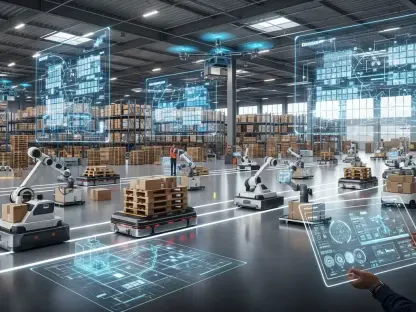
A critical aspect of the current boom is the transition from single-task bots to orchestrated clusters of agents. In the immediate past, AI was often relegated to discrete, routine tasks such as simple shipment tracking or basic inventory triggers. However, the market is now prioritizing clusters of AI entities that communicate with one another to manage sophisticated end-to-end workflows. For example, while one agent monitors a weather delay, another can automatically recalculate shipping routes, and a third can notify customers of the change. This move toward orchestration allows human staff to step away from daily minutiae and focus on high-level strategic planning, effectively turning the supply chain into a self-healing system.
Reimagining Software Procurement: The New Competitive Landscape
The surge in spending is also being fueled by a radical change in how businesses select their technology partners. AI assistants have transitioned from a “nice-to-have” feature to a mandatory requirement in software procurement. As the industry moves toward 2030, autonomous agent capabilities are becoming the standard benchmark for any new software selection. Vendors are now in a race to integrate these advanced features; those who fail to offer robust, agentic functionalities are quickly losing market share. This competitive pressure is a primary driver of the forecast, as legacy systems are replaced by intelligent platforms capable of autonomous execution, thereby creating a new hierarchy of market leaders in the sector.
Navigating the Barriers: Data Silos and Workforce Readiness
Despite the optimistic financial outlook, several complexities threaten to slow the pace of adoption. While the technology is ready, many corporate infrastructures are not. High-level adoption—projected to jump from 5% today to 60% by 2030—is contingent on breaking down long-standing operational silos and modernizing fragmented data networks. Furthermore, there is the challenge of workforce readiness; employees must be trained to collaborate with autonomous systems rather than view them as a threat. Addressing these internal hurdles is essential for realizing the return on investment. Companies that overlook the necessity of a “human-in-the-loop” or fail to clean their data foundations may find themselves spending heavily on technology they cannot fully utilize.
The Future Landscape: Autonomous Networks and Market Evolution
As the industry moves toward the end of the decade, several emerging trends will define the next phase of agentic AI. Experts expect to see a move toward “zero-touch” supply chains in specific sectors, where procurement and replenishment are entirely automated. Technological innovations in edge computing will likely allow these AI agents to operate closer to the physical supply chain—within warehouses and transport hubs—further reducing latency. Economically, the shift will likely lead to a “winner-takes-most” scenario where companies that successfully deploy agentic clusters can operate at significantly lower costs than their competitors. Regulatory shifts regarding data privacy and AI accountability will also play a role, potentially standardizing how these agents interact across international borders.
Strategic Frameworks for an Agentic Future
To navigate this $53 billion shift, businesses must adopt a proactive strategy rather than a reactive one. The major takeaway from current market trends is that the era of manual logistics management is drawing to a close. Organizations should begin by identifying high-volume, low-complexity workflows that are ripe for agentic orchestration. Best practices suggest a phased approach: start by implementing AI assistants for decision support before graduating to autonomous clusters for execution. Additionally, investing in a unified data architecture is non-negotiable; agentic AI is only as effective as the data it can access. By prioritizing data hygiene and fostering a culture of AI literacy, professionals can ensure their organizations are prepared to leverage the full power of autonomous systems.
The New Standard for Global Trade
The projected rise of agentic AI spending proved that the industry was ready for a total structural overhaul. Leaders recognized that traditional automation was no longer sufficient for the complexities of modern commerce. By investing in autonomous clusters, companies secured a level of resilience that was previously impossible. Moving forward, the focus shifted toward cross-border agent interoperability and ethical AI governance. Organizations that prioritized data transparency and employee retraining found themselves leading the market. Ultimately, the successful integration of these systems required a fundamental rethink of human-machine collaboration, ensuring that the supply chain of the future remained both efficient and adaptable to unforeseen global shifts.