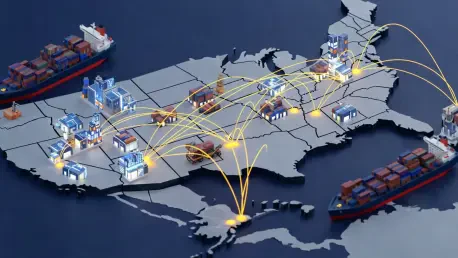

The landscape of American commerce is undergoing a fundamental transformation as massive container ships increasingly bypass traditional California gateways in favor of the Atlantic and Gulf coasts. This geographical pivot represents a departure from the long-standing West Coast monopoly, signaling a new age where reliability and regional proximity outweigh the historical advantage of trans-Pacific speed. While California ports still handle immense volumes, they no longer dictate the rhythm of the entire national supply chain.
The Great Port Pivot: Beyond the Pacific Gateway
The current shift toward the East and Gulf coasts suggests that the “fastest route” is no longer the “best route” for many American importers. For decades, the massive ports of Los Angeles and Long Beach were the undisputed entry points for Asian goods, but recent years have shown that bottlenecks and labor disputes can quickly paralyze these hubs. Consequently, logistics managers are prioritizing consistency, moving their cargo through more predictable Eastern maritime channels to ensure shelves remain stocked.
High-volume records in California, while still impressive, have become less representative of the broader health of American trade. In 2026, the industry has realized that a balanced distribution of freight is the only way to safeguard against localized disruptions. This evolution marks the end of the Pacific gateway’s singular dominance as the East and Gulf ports capture an ever-increasing share of the nation’s total logistics pie, creating a more resilient and decentralized network.
Analyzing the Drivers of Geographical Logistics Migration
One of the primary catalysts for this movement is the “tariff front-loading” effect, which saw businesses rushing imports into the country early in the year to beat anticipated trade policy changes. This surge created massive volatility at West Coast terminals, leading many shippers to seek the relative calm of Atlantic waters. By spreading freight across different coastlines, companies are effectively utilizing a diversified gateway strategy to mitigate the risks of single-point failures and seasonal congestion.
Beyond policy concerns, the migration is deeply rooted in shifting demographics, as cargo increasingly flows toward the booming consumer markets of the American Southeast. Aligning shipping destinations with population centers reduces the complexity and cost of domestic distribution. Instead of hauling goods across the entire continent from a California dock, businesses are finding it far more efficient to land products directly in the regions where their customers actually live and work.
Regional Success Stories: Rise of Integrated Infrastructure
The Port of Savannah stands as a primary example of this successful transition, having reached a milestone of 5.7 million TEUs while maintaining a steady growth trajectory. This success is not merely a result of its coastal location but stems from massive investments in inland connectivity. By focusing on a holistic infrastructure model, the Georgia Ports Authority has positioned itself as a premier destination for global shippers who demand more than just a place to dock a ship.
Strategic developments like the Blue Ridge Connector in Gainesville are revolutionizing how cargo moves from the water to the warehouse. This facility provides a direct rail link that bypasses the need for expensive long-haul trucking, offering a seamless transition to the interior. By implementing 24/5 rail services, these regional hubs are proving that efficiency on the land side is just as critical as deep-water berths, allowing the Southeast to compete directly with the historical giants of the West.
Expert Perspectives: The Evolving Supply Chain Landscape
Industry analysts have observed that the metrics for logistics success are shifting from sheer volume to the quality of inland access and terminal efficiency. Recent reports highlight that the “volatility hedge” has become a standard business practice; importers are now willing to accept longer transit times via the Panama Canal if it means avoiding the unpredictable surges common in Southern California. This trade-off emphasizes a move toward structural stability over short-term speed.
Long-term sentiment among logistics professionals suggests that this migration to the Gulf and Southeast is a permanent change rather than a temporary trend. Experts point out that once supply chains are rerouted and new distribution centers are built near Eastern ports, the freight is unlikely to return to the West. The current market reflects a sophisticated understanding of risk management, where logistical flexibility is valued as a competitive advantage in a world of constant geopolitical and economic shifts.
Navigating the New Map: Strategies for Modern Shippers
To thrive in this decentralized environment, businesses should adopt a multi-coastal port strategy that provides a buffer against regional labor disruptions and shifting tariff landscapes. Relying on a single entry point is no longer a viable long-term plan in a volatile global market. By spreading inventory across multiple regions, companies can maintain a continuous flow of goods regardless of local challenges, ensuring that their delivery promises to consumers remain unbroken.
Leveraging inland ports and rail-linked facilities is also essential for reducing the carbon footprint and the rising cost of “last mile” delivery. Modern shippers must assess their warehousing needs near high-growth hubs like Savannah to optimize their inventory distribution. Investing in facilities near these integrated rail networks allowed forward-thinking organizations to bypass traditional bottlenecks, ultimately creating a more agile and cost-effective supply chain that thrived under the new geographical reality.