
A sharp, unsettling signal is emanating from the heart of the global economy, as a recent survey from the Chartered Institute of Procurement & Supply (CIPS) reveals professional anxiety has soared to a two-year high. This unease is more than just a measure of sentiment; it serves as a critical barometer for global economic health, directly impacting everything from manufacturing output to the prices consumers pay at the checkout. This analysis dissects the primary drivers of this volatility, explores the adaptive strategies procurement leaders are deploying in response, and examines the long-term implications for the future of global supply chains.
The Anatomy of Modern Supply Chain Stress
Data Driven Disruption: The Core Volatility Factors
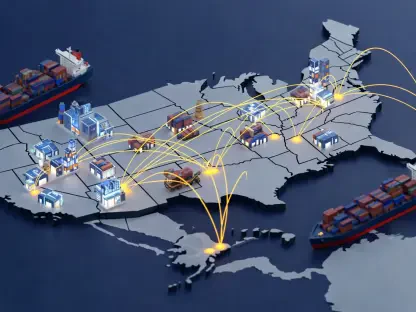
The latest CIPS data paints a clear picture of mounting pressure, with record levels of professional anxiety directly linked to tangible market forces. At the forefront is the relentless trend of escalating costs. Prices for shipping, logistics, and essential raw materials continue their upward climb, making stable, long-term contracts increasingly difficult to secure. This financial unpredictability is compounded by the growing fragility of supplier networks, which remain vulnerable to geopolitical shifts and persistent global trade uncertainty.
Consequently, the strategic focus for procurement teams has evolved dramatically. While post-pandemic efforts centered on gaining basic supply chain visibility, this is no longer sufficient. The urgent priority has shifted toward active cost control, shoring up supplier reliability, and restoring confidence in long-range planning. Procurement departments find themselves in a challenging position, needing to manage immediate cost pressures while simultaneously building more resilient systems for the future.
Volatility in Practice: How Industries Are Impacted
This volatility is not an abstract concept; it has severe, real-world consequences for sectors heavily reliant on global sourcing. Consider the automotive industry, where a sudden spike in ocean freight costs for a single container of microchips or a critical component failure from a key supplier can halt an entire production line. These disruptions ripple outward, causing manufacturing delays, lost revenue, and eventually, stock shortages for consumers.
Procurement teams are the first to detect these tremors long before they register as seismic events on the factory floor or in retail inventories. Through daily contract negotiations, supplier communications, and price monitoring, they spot the early warning signs of instability. Their insights are pivotal, providing the initial intelligence that allows an organization to react to market shifts before they escalate into full-blown crises.
Insights from the Procurement Frontline
Expert commentary within the CIPS report confirms a broad consensus: the twin pressures of cost volatility and supplier instability are creating an environment of unprecedented stress. Professionals on the ground report that the traditional playbook for managing risk is proving inadequate. The current landscape is defined not by single, isolated disruptions but by a series of constant, overlapping crises that demand a new level of agility and foresight.
This reality reinforces the critical role of procurement professionals as the “canaries in the coal mine” for the broader economy. Their struggle to secure stable pricing and reliable supply chains is a leading indicator of wider economic turbulence. The prevailing opinion is that previous risk management models, built for a more predictable world, are no longer sufficient. They were designed to handle discrete events, not the perpetual state of flux that now characterizes global trade.
The Strategic Pivot: Building Resilience for the Future
In response, procurement teams are moving from a reactive to a proactive stance. A key strategy involves a fundamental reassessment of global sourcing footprints, with many organizations actively diversifying their supplier bases to mitigate the risks associated with single-point-of-failure dependencies. This often includes exploring regionalized supply networks to shorten lead times and reduce exposure to international shipping volatility.
This strategic pivot also extends to the very nature of supplier agreements. There is a marked shift toward more flexible and adaptive contract terms designed to absorb sudden market shocks rather than break under pressure. Looking ahead, this trend will likely accelerate, with greater investment in predictive analytics to forecast disruptions and enhanced collaboration between procurement, logistics, and internal planning departments. The challenge lies in balancing the costs of building this redundancy against the long-term competitive advantage that a truly resilient supply chain provides.
Conclusion: Thriving in an Era of Perpetual Uncertainty
The evidence shows that global procurement is now defined by a new norm of volatility, driven by a relentless combination of rising costs, supplier fragility, and persistent trade tensions. Passive monitoring and legacy risk models have been rendered obsolete by the speed and complexity of modern disruptions. Instead, proactive, agile, and data-driven strategies are essential for both survival and competitive success in this challenging environment. The organizations that thrive will be those that empower their procurement teams to operate in a state of constant alert, building resilient systems designed not just to weather storms, but to navigate them with confidence.