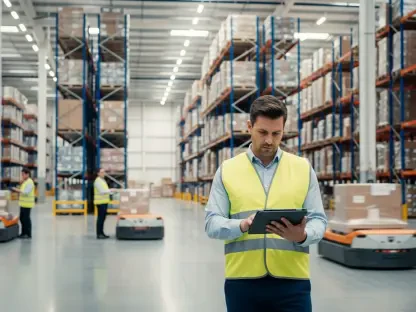

A relentless wave of protectionist trade policies is sending shockwaves through the American economy, forcing companies to make difficult decisions that reverberate from the factory floor to the consumer’s wallet. This ongoing trade friction is not merely a line item on a balance sheet; it represents a fundamental challenge to the operational stability and financial health of the nation’s most critical commercial arteries. The cascading effects are now clear, manifesting as widespread job losses and mounting inflationary pressures that are reshaping the industrial landscape.
The Precarious State of America’s Supply Chain Backbone
The modern supply chain is the intricate circulatory system of the national economy, connecting raw material suppliers with manufacturers, distributors, and ultimately, consumers. This network, which encompasses everything from logistics and warehousing to advanced manufacturing and retail distribution, ensures the timely flow of goods that underpins daily commerce. Its health is a direct indicator of broader economic vitality, making any disruption a matter of significant national concern.
Decades of optimization have honed this system into a model of efficiency, largely through the adoption of just-in-time inventory models and sweeping digital transformation. While these innovations have reduced waste and improved responsiveness, they have also rendered the supply chain extremely sensitive to external shocks. Consequently, the current regulatory climate, dominated by protectionist trade policies and escalating tariffs, has introduced a level of volatility that these finely tuned systems are ill-equipped to handle, exposing deep-seated vulnerabilities.
The Economic Fallout: Analyzing the Tariff Tsunami
Alarming Trends: The Human and Financial Cost of Trade Wars
The primary driver of this market disruption is the continued application of broad and often unpredictable tariffs. These trade barriers have created a ripple effect of instability, forcing businesses to absorb unexpected costs or pass them on—a decision with significant consequences. A recent survey from the Association for Supply Chain Management highlights the stark human cost: 32% of supply chain managers now report layoffs at their companies, a figure that has alarmingly doubled since April.
This financial strain is inevitably passed down through the supply chain, culminating in higher prices for consumers. As businesses grapple with shrinking margins, they are left with little choice but to adjust their pricing models, leading to widespread inflation on everyday goods. This, in turn, influences consumer behavior, as households begin to cut back on spending or seek cheaper alternatives, further dampening economic activity.
By the Numbers: Quantifying the Damage to Jobs and Operations
The empirical data paints a grim picture of the operational damage. In 2025 alone, over 1.2 million supply chain jobs were eliminated, marking a staggering 58% increase year-over-year. This contraction is not isolated to a single segment but is felt across the entire ecosystem—from port workers and truck drivers to factory line operators and warehouse managers—signaling a deep and systemic crisis.
Simultaneously, cost pressures are reaching untenable levels. A commanding 65% of companies report cost increases between 10% and 15%, while another 34% are contending with hikes exceeding 15%. This financial squeeze directly correlates with reduced staffing and investment. If current tariff policies persist, forecasts indicate continued job market contraction and sustained inflationary pressures that will further erode business confidence and consumer purchasing power.
Beyond the Balance Sheet: The Hidden Burdens of Tariff Policies
Beyond the direct financial impact, tariffs impose a significant administrative burden on businesses. Navigating the complex and frequently changing trade rules requires a substantial investment of time and resources. Companies must dedicate personnel to manage paperwork, ensure compliance, and track regulatory updates, diverting focus and capital away from core operations like innovation, production, and expansion.
This climate of economic uncertainty paralyzes long-term strategic planning. Businesses thrive on predictability, but the current trade landscape makes it nearly impossible to develop stable pricing models or commit to significant capital investments. The looming possibility of new tariffs or the sudden reversal of existing ones creates a high-risk environment, compelling many companies to delay or cancel growth-oriented projects altogether.
A Tangled Web: Navigating the Legal and Regulatory Maze
The current tariff regulations have placed businesses in a reactive posture, forcing them to adapt to a policy environment that can shift with little warning. The direct impact is a state of perpetual operational adjustment, where supply chain managers must constantly re-evaluate sourcing, logistics, and pricing to mitigate the financial fallout of new import duties.
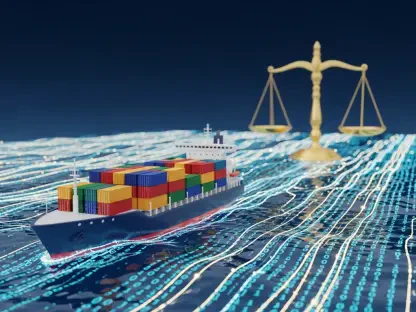
This has also sparked a wave of legal challenges as companies seek recourse. Over 1,000 corporate lawsuits have been filed contesting the legality and application of these tariffs, with a landmark case concerning potential refunds now pending before the Supreme Court. While a favorable ruling could offer some financial relief, experts caution that it would not undo the economic damage already inflicted by years of disrupted operations and cash flow pressures.
The Path Forward: Reimagining Supply Chains for a New Era
In response to this volatility, businesses are actively seeking ways to build more resilient supply networks. A key strategy has been diversification, as companies move away from single-source dependencies and explore a broader range of international suppliers. Moreover, there is a growing trend toward regionalization, with many organizations “near-shoring” production to neighboring countries to shorten supply lines and reduce exposure to transoceanic trade disputes.
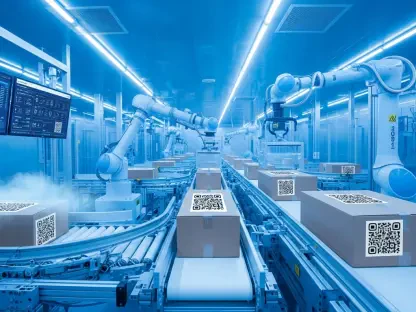
This challenging environment is also accelerating the adoption of new technologies. Increased automation in warehouses and manufacturing facilities is becoming a crucial tool to offset rising labor and operational costs. By leveraging robotics and artificial intelligence, companies can enhance efficiency and create a buffer against both wage inflation and workforce reductions, positioning themselves for greater stability in an unstable world.
The Final Tally: Weighing the True Cost of Tariffs
The evidence presents a clear and definitive conclusion: protectionist tariffs are a direct catalyst for significant layoffs and unsustainable cost increases across the supply chain sector. The operational disruptions and pervasive climate of uncertainty inflict long-term damage that extends far beyond quarterly earnings reports, eroding the very foundation of industrial stability. The industry’s path to recovery ultimately depends on the restoration of a predictable and stable policy environment, which remains the essential prerequisite for fostering the confidence needed for new investment and sustainable growth.