
Modern commerce moves at a pace that often leaves traditional, centralized logistics networks struggling to breathe under the weight of surging consumer demands and unpredictable global disruptions. For decades, companies relied on massive, singular hubs to manage their entire inventory, but the modern marketplace has proven that such models are inherently fragile. This review examines the paradigm shift toward automated, decentralized supply chains, analyzing how integrated technology and strategic planning redefine operational efficiency.
The Evolution and Core Principles of Automated Logistics
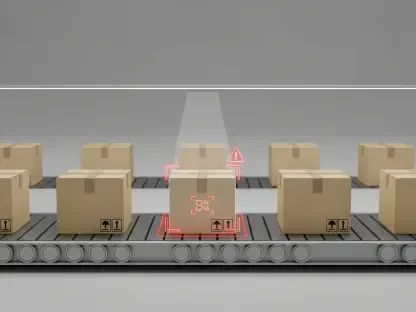
The transition from manual warehousing to integrated digital and physical systems marks a departure from labor-intensive operations toward high-speed precision. In the past, workers spent the majority of their shifts navigating vast warehouse floors to locate and move individual items. Today, the core of a modern supply chain lies in the Warehouse Management System (WMS), which acts as a digital nervous system, coordinating every movement from receiving to final dispatch.
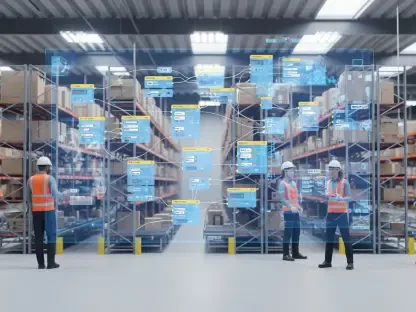
These systems utilize real-time data to synchronize robotics with human labor, ensuring that inventory is not just stored but actively managed. By integrating data-driven forecasting with physical automation, companies can now predict demand spikes before they occur. This shift is particularly vital for managing the complexity of omnichannel commerce, where a single facility must simultaneously handle massive wholesale shipments and individual e-commerce parcels with equal accuracy.
Strategic Pillars of High-Performance Automation Systems
Decentralized Regional Network Modeling
A critical advancement in logistics is the move from a centralized distribution hub to a multi-site regional footprint. By positioning inventory in multiple strategic locations closer to end consumers, businesses significantly reduce shipping times and costs. This decentralization serves as a hedge against peak-period risks; if one facility reaches its capacity wall, others can absorb the overflow, preventing the total system bottlenecks that often plague single-hub operations.
Unit-Based Forecasting and Granular Data Analysis
Precision in modern logistics requires moving beyond high-level financial projections toward granular, unit-based forecasting. Instead of planning for “ten million dollars in sales,” high-performance systems analyze daily volume segments and specific product units. This level of detail allows managers to allocate labor and facility throughput with surgical accuracy. Understanding the exact “footprints” of products enables a more disciplined approach to space management, ensuring that every square foot of a facility contributes to the bottom line.
Collaborative Robotics and Labor Optimization
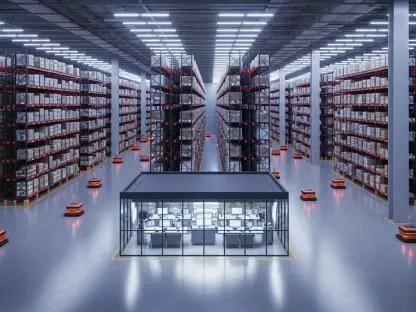
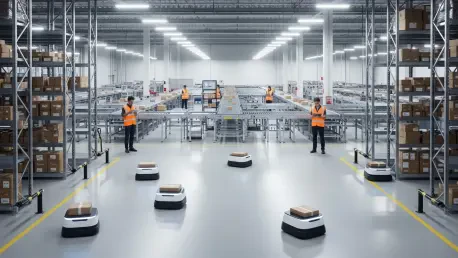
Autonomous Mobile Robots (AMRs) have redefined the warehouse floor by eliminating the “travel time” that once consumed up to half of a worker’s shift. Unlike older automation that required rigid tracks, AMRs navigate dynamically, working alongside humans to streamline the picking process. This collaborative approach focuses on optimizing “fingerprints”—the actual touchpoints of a product—rather than replacing human oversight entirely. The result is a more ergonomic environment where robots handle the heavy lifting and long distances, while humans manage complex decision-making and quality control.
Innovations and Emerging Trends in Fulfillment Technology
The current landscape is being reshaped by AI-driven predictive analytics that can anticipate regional demand shifts with startling accuracy. These systems do not just react to orders; they position inventory in anticipation of them. As consumer behavior becomes more erratic, the adoption of agile fulfillment centers that can pivot between different product categories or shipping methods in hours, rather than weeks, is becoming the industry standard.
Real-World Applications: Transforming the Apparel Industry
The apparel sector provides a compelling case study for these technologies, particularly through the partnership between Carhartt and DHL Supply Chain. By implementing a four-site regional model, the brand managed to double its operational scale while simultaneously reducing overall supply chain costs. This transformation was not merely about adding more robots, but about a fundamental shift in how the network functioned across wholesale and e-commerce channels.
This specific deployment allowed the company to handle a fifty percent increase in volume while raising service levels from eighty-eight percent to over ninety-nine percent. It demonstrates that when automation is applied with intentionality, it ceases to be a capital expense and becomes a primary driver of brand loyalty. The ability to maintain high service levels during peak seasons without a linear increase in overhead proves the scalability of this regionalized, automated approach.
Operational Hurdles and Adoption Challenges
Despite the benefits, scaling these systems involves significant technical and financial hurdles. Integrating legacy software with modern robotic fleets often creates “data silos” that can hinder the flow of information. Furthermore, the initial capital investment required for a decentralized network is substantial, making it a difficult path for enterprises that lack the discipline to plan for growth several years in advance. Regulatory shifts and varying labor laws across different regions also influence the pace at which companies can deploy fully autonomous solutions.
Future Outlook: The Next Frontier of Supply Chain Intelligence
The next stage of evolution involves fully autonomous logistics ecosystems where hyper-local fulfillment centers operate with minimal human intervention. We are moving toward a reality where machine learning refined demand planning becomes so precise that “out-of-stock” scenarios become a relic of the past. These breakthroughs will likely focus on resource allocation at the edge of the network, ensuring that global trade efficiency reaches unprecedented levels through sheer algorithmic optimization.
Final Assessment of Automated Supply Chain Systems
The successful integration of automation into the supply chain proved that technology is most effective when paired with structural discipline and regional strategy. Organizations that moved away from centralized, manual models found that they could transform logistical bottlenecks into significant competitive advantages. The shift toward unit-based planning and collaborative robotics provided a blueprint for sustainable growth that balanced cost reduction with improved service delivery. Ultimately, the transition to these intelligent systems showed that the future of global commerce depends on the ability to remain agile in a decentralized world.