
In the fast-paced world of modern commerce, the warehouse floor often operates on a foundation of educated guesswork, where managers rely on historical averages to predict the immense complexity of daily operations. This traditional approach, however, struggles to keep pace with fluctuating demand and the sheer variability of order fulfillment, leading to bottlenecks, missed deadlines, and inefficient labor allocation. The core challenge lies in the fact that no two orders are identical; picking a small, lightweight item from an easily accessible bin is a vastly different task than retrieving a bulky carton from a top-level rack during a peak-hour rush. Relying on a single average time for these disparate tasks creates a distorted view of reality, making accurate planning nearly impossible. As supply chains become more sophisticated, this fundamental inadequacy of conventional management systems is pushing the logistics industry toward a more intelligent, data-driven solution capable of understanding and predicting nuance in real time.
From Averages to Intelligence
The Shortcomings of Traditional Planning
For decades, warehouse management has been anchored to systems that use simplistic, average-based metrics to forecast labor needs and set performance targets. This methodology fundamentally fails to capture the dynamic and multifaceted nature of the fulfillment environment. Such systems treat every pick as more or less equal, ignoring critical variables that dramatically impact task duration. For instance, the physical characteristics of an item, including its size, weight, and fragility, directly influence handling time. Furthermore, an item’s location within the warehouse is a major factor; retrieving an object from a ground-level slot is significantly faster than navigating a lift to a high rack. Operational conditions add another layer of complexity, as factors like aisle congestion, equipment availability, and even the time of day can create unforeseen delays. Human elements, such as a worker’s experience level or fatigue setting in toward the end of a long shift, also introduce performance variations that static averages cannot account for. This reliance on outdated planning models results in unreliable forecasts, leading to unfair workload distribution, unexpected bottlenecks, and an inability to make dependable service commitments to customers.
The Power of Predictive Learning
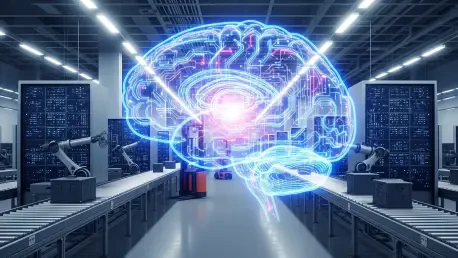
In response to the limitations of rule-based systems, neural networks have emerged as a transformative technology capable of navigating the inherent complexity of warehouse logistics. Unlike their predecessors, which operate on fixed algorithms, neural networks are designed to learn and adapt by processing vast streams of real-world operational data. These advanced systems analyze a comprehensive array of inputs, including granular item details, specific order compositions, storage locations, the type of equipment used, and even individual worker tenure. By continuously ingesting and correlating this information, the network identifies subtle, complex patterns that would be invisible to human analysts. It learns, for example, how morning congestion in certain aisles impacts pick times or how a particular mix of items in an order creates a unique set of handling challenges. This ability to synthesize diverse data points allows the system to generate highly accurate, context-aware predictions about how long specific tasks will realistically take under current conditions, empowering managers with a powerful tool for proactive decision-making.
Tangible Applications in Modern Logistics
Redefining Task Time Estimation
One of the most immediate impacts of implementing neural networks is the creation of smarter, more realistic time estimates for order fulfillment. Traditional warehouse management systems often rely on a generic historical average, which fails to differentiate between simple and complex tasks. A neural network, in contrast, can analyze a specific block of upcoming orders and predict the required completion time with remarkable precision. It accomplishes this by considering the actual mix of items, their precise locations within the facility, and even anticipates potential congestion based on the time of day and staffing levels. The system can also learn and factor in more nuanced patterns, such as a gradual decrease in worker speed after several hours of continuous activity. This data-driven forecasting leads to a cascade of operational benefits. Managers can distribute workloads more equitably, ensuring that employees are assigned tasks with realistic and achievable goals. It also enables the early detection of potential delays, allowing for proactive intervention before a bottleneck disrupts the entire workflow and providing the business with the ability to offer more reliable delivery promises to its customers.
Crafting Smarter Pick Paths
Beyond time estimation, neural networks are revolutionizing how workers navigate the warehouse floor by optimizing pick paths with a level of intelligence that rigid algorithms cannot match. While conventional software attempts to solve the “shortest path” problem, it often produces routes that are theoretically optimal but impractical in a dynamic, real-world environment. Warehouses are fluid spaces where obstacles and congestion can change by the minute. Neural networks offer a more effective alternative by learning directly from the historical movement data of actual pickers. The system observes and internalizes the organic, efficient routes that experienced workers naturally take, essentially digitizing and distributing their institutional knowledge. It learns which aisles are prone to traffic jams during certain shifts, which non-linear paths are surprisingly efficient, and how to best sequence picks to minimize travel. As a result, the network suggests routes that are not just mathematically short but are also proven to be effective in practice, adapting to the specific layout and current conditions of the facility while always adhering to established safety protocols.
A Future of Adaptive Operations
The integration of neural networks signaled a fundamental shift from static, rule-based management to a model of continuous, real-time learning. The true power of this technology was its ability to evolve, with each fulfilled order, completed shift, and passing season refining its understanding of the operational landscape, ensuring its insights remained perpetually relevant. While these advanced systems did not eliminate the inherent complexities of warehouse logistics, they provided managers with the sophisticated tools needed to finally manage that complexity effectively. By transforming a constant stream of raw operational data into clear and actionable intelligence, neural networks fostered a more efficient, predictable, and resilient fulfillment process. This evolution created a symbiotic ecosystem where managers gained tighter control and faced fewer surprises, workers were measured against fairer and more realistic performance goals, and customers ultimately enjoyed a more consistent and dependable service.