
The modern industrial landscape is currently witnessing a profound transformation as traditional storage facilities shed their roles as passive repositories to become high-speed, data-driven engines of commerce. This shift is not merely a response to the lingering logistical bottlenecks of previous years but is a calculated evolution driven by the maturation of artificial intelligence and the critical need for operational resilience in a volatile global market. As consumer expectations for instantaneous delivery become the baseline rather than the exception, the architecture of the warehouse is being fundamentally rewritten to prioritize throughput over simple storage capacity. This transition represents a departure from the “box” mentality of the past, moving instead toward a holistic ecosystem where physical infrastructure and digital intelligence are inextricably linked. The result is a new generation of facilities designed to anticipate shifts in demand, self-optimize in real-time, and maintain high efficiency despite the ongoing challenges of labor availability and escalating real estate costs across major metropolitan hubs.
Structural Versatility and the Modular Mandate
Implementation of Reconfigurable Internal Frameworks
The rigid layouts that once defined logistics centers are rapidly giving way to modular environments that can be reconfigured in a matter of days rather than months. Modern facility managers are increasingly moving toward a strategy of fluid interior design, utilizing movable racking systems and pallet positions that can be adjusted to accommodate shifting stock-keeping unit profiles. This approach allows a single facility to pivot from handling heavy industrial equipment to processing high-volume consumer electronics as seasonal cycles or market trends dictate. By employing modular shelving units that can be decoupled and relocated using autonomous mobile robots, organizations avoid the sunken costs associated with permanent, fixed-aisle installations. This flexibility is essential for maintaining high utilization rates, as it ensures that the physical floor plan remains an asset that evolves alongside the business strategy rather than becoming a structural limitation that hinders growth during periods of rapid scaling.
Beyond the physical movement of shelves, this modularity extends to the functional zones within the building envelope. Operators are now designing “swing spaces” that can serve as receiving docks in the morning and transition into returns processing or kitting stations by the afternoon. This level of versatility is supported by standardized utility grids and wireless communication arrays that provide consistent power and data access regardless of how the floor is arranged. The ability to rapidly resize picking zones or expand packing areas without calling in construction crews is a significant competitive advantage. It allows companies to test new product lines or fulfillment models with minimal risk, as the infrastructure can simply be reset if the trial concludes. Consequently, the warehouse is no longer a static monument to a specific point-in-time business model but a living laboratory capable of continuous iteration and optimization to meet the demands of an unpredictable economy.
Vertical Optimization and Density Strategies
As the cost of industrial land continues to climb at an unprecedented rate, the industrial sector is looking upward to maximize the utility of every square foot of the building footprint. The current design trend emphasizes the utilization of cubic volume through high-bay racking systems that reach heights previously reserved for specialized heavy industry. By integrating advanced automated storage and retrieval systems, often referred to as AS/RS, facilities can store goods in extremely dense configurations that would be inaccessible to traditional human-operated forklifts. These systems use high-speed cranes and shuttles to navigate narrow vertical channels, allowing for a significant reduction in aisle width. This transition toward verticality effectively multiplies the storage capacity of a standard site, enabling companies to maintain larger inventories closer to urban centers where land is scarce but consumer proximity is highest, thereby reducing the “last mile” transit times that often inflate logistical costs.
Furthermore, the rise of multi-story warehousing is becoming a common sight in densely populated regions, breaking the traditional mold of the sprawling single-level distribution center. These vertical structures incorporate heavy-duty freight elevators and internal ramps to facilitate the movement of goods between levels, often dedicating lower floors to rapid-sortation and upper floors to long-term storage or specialized value-added services. The structural requirements for these buildings are immense, requiring reinforced flooring to support the concentrated weight of high-density racking and robotic fleets. By building up rather than out, developers can secure prime locations that were previously considered too small for a modern logistics operation. This strategic use of vertical space not only improves the efficiency of land use but also creates a more sustainable model for urban growth, as it prevents the excessive conversion of greenfield sites while keeping essential supply chain nodes integrated within the city’s infrastructure.
Technological Integration and Cognitive Infrastructure
Engineering for an Automation-First Environment
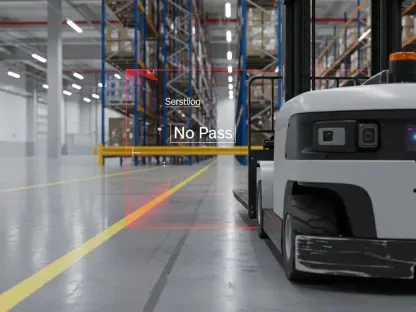
The contemporary approach to facility development has shifted from retrofitting technology into existing shells to an “automation-first” philosophy where the building is designed around the machines it will house. This means that structural engineers and architects are involved in digital workflow planning from the very beginning, ensuring that ceiling heights, floor flatness, and load-bearing capacities are optimized for specific robotic platforms. For instance, the deployment of large-scale robotic picking arms and autonomous mobile robots requires floor surfaces with near-zero deviations to prevent navigation errors or mechanical wear. Additionally, the inclusion of mezzanine levels and dedicated robotic highways allows for the separation of high-speed machine traffic from human-occupied zones, significantly increasing safety and operational velocity. This proactive design mindset ensures that the facility can support the high power requirements and specialized cooling needs of the server racks that act as the local “brain” for the automated systems.
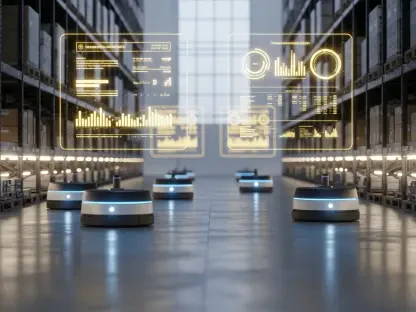
This integration goes beyond the physical placement of hardware to include the foundational digital layer of the warehouse. Modern construction now routinely includes the installation of private 5G networks and dense IoT sensor arrays as part of the primary building services. These systems provide the low-latency connectivity required for thousands of individual robots to communicate and coordinate their movements in real-time, preventing bottlenecks before they occur. By embedding sensors directly into the racking and conveyor systems, the facility itself becomes a source of continuous data, feeding information back into a “digital twin” that simulates various operational scenarios. This allow managers to stress-test their workflows in a virtual environment before making physical changes on the floor. When the building and the technology are treated as a single, unified system, the warehouse transitions from a simple shell into a high-performance tool that actively contributes to the speed and accuracy of the entire supply chain.
Human-Centric Design in the Robotic Age
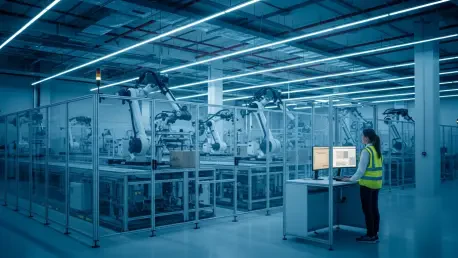
Despite the rapid proliferation of automated systems, the human element remains a critical component of the warehouse ecosystem, though the nature of the work has undergone a significant shift toward technical oversight and exception handling. Current architectural designs reflect this by prioritizing ergonomics and environmental quality in spaces where humans and robots interact. Designers are incorporating advanced lighting systems that mimic natural circadian rhythms and acoustic treatments that dampen the noise generated by high-speed sorters and cooling fans. These improvements are not merely aesthetic; they are strategic investments in worker retention and productivity. By creating a more comfortable and intuitive workspace, companies can attract the skilled technicians and site managers needed to maintain complex automated arrays. Shared workspaces are now designed with sophisticated safety barriers and proximity sensors that allow people to work alongside robots without the need for intrusive physical cages.
The focus on the human experience also extends to the digital interfaces used to manage the facility. Wearable technology and augmented reality headsets are becoming standard equipment, providing workers with real-time data overlays that guide them through complex tasks or alert them to maintenance needs. This reduces the cognitive load on staff and minimizes the training time required for new hires to become proficient. Moreover, the physical layout of break areas and administrative offices is being reimagined to foster collaboration and continuous learning. As the workforce shifts from manual labor to “cobot” management, the warehouse must provide the infrastructure for ongoing professional development. This holistic approach ensures that the facility supports the well-being and growth of its employees, creating a sustainable labor model that balances the efficiency of automation with the creative problem-solving and adaptability that only human workers can provide in the face of unexpected disruptions.
Actionable Strategies for the Next Industrial Phase
The evolution toward agile and automated ecosystems is not a distant objective but a present reality that requires immediate strategic alignment from supply chain leaders. To remain competitive, organizations must move away from evaluating warehouse performance based on static metrics like cost-per-square-foot and instead focus on throughput-per-cubic-foot and the total cost of fulfillment. The primary objective should be the creation of a “flexible core”—a facility that can scale its technological and physical footprint without requiring a total shutdown. This involves investing in standardized modular components and ensuring that all digital systems use open-source protocols to allow for the seamless integration of new hardware as it becomes available. By prioritizing interoperability and structural adaptability, businesses can insulate themselves against the risk of technological obsolescence and ensure that their capital investments remain productive for decades rather than just a single business cycle.
In light of these developments, the path forward involves a radical commitment to data transparency and inter-departmental collaboration. Success in this new era of warehousing was defined by how well a company could synthesize its real estate strategy with its IT and human resources initiatives. Leaders should begin by auditing their existing facilities for “bottlenecks of rigidity”—areas where fixed infrastructure prevents the adoption of more efficient automated workflows. Transitioning to a pilot-driven approach for new technologies allows for the incremental hardening of the supply chain, moving away from high-risk, all-at-once migrations. Ultimately, the warehouses that thrived were those that embraced their role as dynamic nodes in a global network, leveraging vertical density, modularity, and a human-machine partnership to deliver unprecedented speed and reliability. The focus must now remain on continuous optimization, ensuring that the facility is never “finished” but is instead always evolving to meet the next wave of industrial challenges.