
The global logistics network currently faces a pivotal moment where the necessity of preserving perishable goods must be balanced against the urgent requirement to eliminate carbon footprints. As the 2026 Cold Chain Climate & Energy Summit at the University of Warwick demonstrates, there is a growing consensus that energy management is the fundamental cornerstone for future industry resilience and economic survival. This shift represents more than just a regulatory compliance exercise; it is a complete reimagining of how thermal energy is generated, retained, and managed across vast international networks. Traditionally, the cold chain was viewed as a high-waste sector due to the inherent difficulty of maintaining sub-zero temperatures in transit and storage. However, the integration of advanced thermodynamic modeling and smart infrastructure is now enabling operators to reach performance levels that were previously considered impossible. This evolution is driven by both environmental necessity and the rising costs of traditional energy, forcing a move toward a fully integrated, green-tech ecosystem.
Engineering Resilience Through Infrastructure and Automation
High-Efficiency Hardware: Precision Thermal Barriers
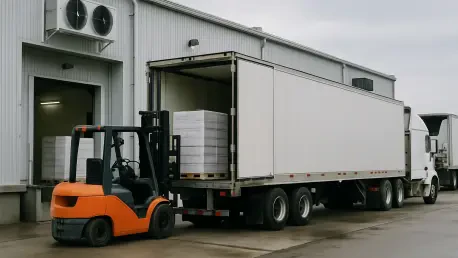
One of the most immediate and effective ways to address energy loss is through the installation of high-speed freezer doors, which act as a critical barrier against ambient heat infiltration. Companies like the BID Group have pioneered rapid-action hardware that significantly limits the duration an opening is exposed to warmer air during the loading and unloading processes. By minimizing the exchange of cold and warm air, these systems directly reduce the workload on refrigeration compressors, leading to a substantial decrease in utility expenses. These hardware solutions are not merely passive upgrades; they are integrated components of a facility’s thermal management strategy that work in tandem with sensor technology to ensure optimal sealing. Beyond the immediate energy savings, reducing the moisture ingress associated with air exchange prevents ice buildup on evaporators and floors, which enhances safety and equipment longevity. This practical approach provides a scalable solution for both new and existing warehouses.
The secondary benefit of implementing such high-precision hardware lies in the preservation of product integrity through stabilized internal environments. When temperature fluctuations are minimized, the risk of micro-thawing and subsequent bacterial growth is virtually eliminated, which is essential for high-value pharmaceutical and food shipments. Modern freezer doors now incorporate insulated materials with high R-values, ensuring that even when the doors are closed, thermal leakage is kept to an absolute minimum. As facilities transition toward net-zero, every kilowatt saved through better insulation contributes to a more favorable carbon balance. Furthermore, the automation of these barriers allows for seamless integration with warehouse management systems, ensuring that doors only operate when necessary. This level of mechanical efficiency serves as the foundation upon which more complex digital systems are built, creating a robust physical environment that supports the broader goals of energy reduction and operational excellence.
Automated Scale: The Future of Distribution Hubs
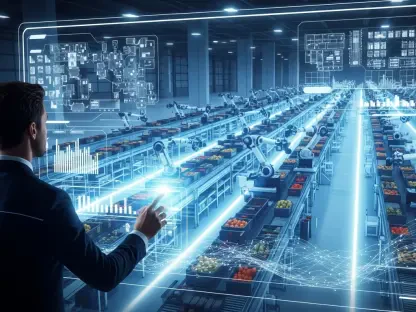
The expansion of massive, automated facilities represents a significant shift toward centralized, high-efficiency logistics hubs that maximize throughput while minimizing the carbon footprint per pallet. For example, NewCold’s sophisticated hub in Poland illustrates the trend of combining high-volume storage capacity with advanced value-added services powered by robotics. These automated systems allow for much higher storage density, which reduces the total surface area that requires cooling, thereby lowering the overall energy demand of the facility. By utilizing oxygen-reduction fire prevention systems and dark-warehouse operations, these hubs can operate with significantly less energy than traditional, labor-intensive sites. Automation also eliminates the human error often responsible for temperature excursions, ensuring that the cold chain remains unbroken from the moment a product enters the facility until it is dispatched. This centralized model facilitates better consolidation of retail flows, optimizing transport routes.
Beyond the physical storage of goods, these automated hubs are becoming centers for complex data processing and value-added logistics functions. The integration of robotic picking and packing lines allows for rapid order fulfillment, which is essential for maintaining the freshness of perishable inventory in a high-velocity retail market. By streamlining the movement of goods through the warehouse, these systems reduce the time products spend in transitional zones where temperature control might be less efficient. Additionally, the scale of these operations allows for the implementation of large-scale renewable energy projects, such as rooftop solar arrays and industrial-scale battery storage, which further support the push toward net-zero. This transition from fragmented, manual warehouses to integrated, automated centers is a key driver in the industry’s ability to handle increasing global demand while simultaneously meeting strict environmental targets and reducing long-term operational costs.
Digital Integration and Fleet Modernization
Telematics: Data-Driven Fleet Management
In the realm of transportation, the adoption of advanced connectivity platforms has transformed how operators monitor and manage high-value, temperature-sensitive shipments across the globe. Systems such as Thermo King’s TracKing platform offer a level of transparency that was previously unattainable, providing real-time insights into the status of every refrigerated unit in a fleet. Through advanced telematics, fleet managers can monitor fuel consumption, engine hours, and exact temperature profiles, allowing for proactive adjustments before issues escalate into product loss. This data-driven approach does more than just ensure compliance; it enables the optimization of entire routes and delivery schedules based on real-time environmental conditions. By leveraging these insights, companies can reduce idle times and ensure that refrigeration units are running at peak efficiency. This level of oversight is critical for maintaining the stringent standards required for modern medicine and premium food products.
The integration of artificial intelligence into these telematics platforms allows for predictive maintenance, which identifies potential mechanical failures before they result in costly downtime or energy waste. By analyzing historical performance data, these systems can alert technicians to declining efficiency in a refrigeration unit, allowing for repairs that maintain the system’s net-zero trajectory. This transition to proactive management represents a significant departure from reactive maintenance cycles, which often involve inefficient energy use and higher repair costs. Furthermore, the transparency provided by digital platforms allows for more accurate carbon reporting, which is increasingly required by regulatory bodies and environmentally conscious consumers. As the industry moves forward, the ability to prove a low-carbon journey for every pallet will become a major competitive advantage. Consequently, digital connectivity is no longer an optional feature but a core necessity for any modern cold chain operation.
Greener Transportation: High-Efficiency Refrigeration Units
Modernizing delivery fleets is a critical component of the broader strategy to reach net-zero, with a heavy focus on transitioning to high-efficiency refrigeration technology. UK suppliers and international operators are increasingly turning to advanced units like the Carrier Transicold Supra HE, which significantly reduces fuel consumption while maintaining rigorous cooling standards. These modern units utilize multi-speed engine technology and optimized airflow designs to provide consistent temperatures with a much lower environmental impact than older models. By reducing the reliance on traditional diesel-powered cooling, the industry is making measurable progress in lowering its direct carbon emissions during the final stages of the supply chain. This modernization is often paired with the adoption of alternative fuels and electric drivetrains, creating a multi-layered approach to sustainable transport. The result is a fleet that is not only quieter and cleaner but also more cost-effective to operate.
The shift toward greener transport also involves the implementation of regenerative braking systems and solar-assisted cooling, which capture and reuse energy that would otherwise be wasted. These innovations allow refrigerated trailers to maintain sub-zero temperatures using clean energy, even when the vehicle is stationary or navigating dense urban environments. This is particularly important for last-mile delivery, where frequent stops and starts typically lead to high fuel consumption and increased wear on cooling systems. By integrating these high-efficiency units into the broader logistics network, companies can ensure that the environmental benefits achieved in the warehouse are not lost during transit. The combined impact of these technological advancements creates a cohesive and resilient supply chain that is capable of meeting the demands of the future while prioritizing ecological responsibility. This transition reflects a deep commitment to systemic change across every link of the temperature-controlled journey.
Implementing Sustainable Cold Chain Strategies
The industry successfully moved away from fragmented, incremental improvements toward a cohesive and technology-driven model that prioritized environmental responsibility. Organizations were encouraged to conduct comprehensive energy audits of their existing infrastructure to identify immediate opportunities for hardware upgrades, such as high-speed doors or improved insulation. Decision-makers prioritized the integration of telematics across all transport assets to ensure that data-driven insights informed every operational choice, from route planning to predictive maintenance. Furthermore, the adoption of automated storage solutions was recognized as a vital step for scaling operations without a proportional increase in carbon output. By investing in high-efficiency refrigeration units and exploring electrification, stakeholders ensured that their fleets remained compliant with tightening emissions standards. These actions collectively established a new benchmark for operational excellence, where product integrity and sustainability were no longer mutually exclusive but were instead deeply interdependent goals.