
The silent hum of a conveyor belt and the distant beep of a forklift no longer define the sound of a modern warehouse; instead, it is the persistent, invisible flow of data that dictates the pace of global commerce. In today’s high-velocity logistics environment, the warehouse has undergone a radical transformation. What was once a passive, four-walled space for storing goods has been thrust into the role of a strategic, high-stakes fulfillment hub. The pressures of on-demand e-commerce and increasingly complex global supply chains have exposed the profound inadequacies of traditional management methods. This report analyzes the critical evolution from manual oversight to intelligent, data-driven monitoring, arguing that this shift is no longer a competitive advantage but a foundational requirement for operational survival.
The New Warehouse Landscape from Storage Space to Strategic Hub
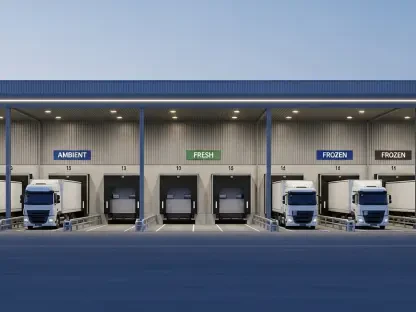
The modern warehouse serves as the central nervous system for the supply chain, a dynamic environment where goods are received, sorted, picked, packed, and shipped with unprecedented speed. This evolution has been driven largely by the seismic shift in consumer behavior, where next-day or even same-day delivery has become the expected standard. Consequently, the warehouse is no longer judged by its storage capacity but by its throughput velocity and order accuracy. This new reality places immense pressure on all market segments, from direct-to-consumer brands to large-scale industrial suppliers.
Within this landscape, third-party logistics (3PL) providers have become indispensable partners for countless businesses, managing the complexities of fulfillment at scale. These key players operate at the intersection of technology and physical logistics, and their success hinges on maximizing efficiency across multiple clients and diverse product lines. The reliance on 3PLs underscores the industry-wide recognition that sophisticated logistics is a specialized discipline requiring significant investment in both infrastructure and technology.
The foundation for today’s smart warehouses was laid by earlier waves of technology. Warehouse Management Systems (WMS) first brought digital organization to inventory, replacing paper ledgers with databases. Following this, early automation in the form of conveyors, sorters, and barcode scanners introduced a new level of efficiency to physical processes. While groundbreaking at the time, these foundational technologies were designed for a less demanding era. They have shaped current operations but are now proving insufficient on their own to handle the volume, speed, and complexity of modern demands.
The Unstoppable Momentum Trends and Projections Shaping Logistics
The Great Shift Why Proactive Data Driven Operations Are Winning
The most significant trend shaping modern logistics is the migration from reactive to proactive management. Historically, warehouse supervisors operated in a “firefighting” mode, responding to bottlenecks, stockouts, and shipping errors only after they occurred. This approach, reliant on manual checks and delayed reporting, is no longer viable. Today’s winning operations are powered by proactive, intelligent monitoring systems that use real-time data to anticipate problems before they disrupt the workflow, allowing for course correction instead of crisis management.
This operational shift is a direct response to evolving consumer expectations. The tolerance for error has vanished; customers demand perfect order accuracy and compressed delivery deadlines. A single delayed or incorrect shipment can damage brand reputation and result in lost business. These market drivers have made operational excellence a non-negotiable aspect of customer service. Warehouses are now on the front line of the customer experience, and their performance is a direct reflection of a company’s commitment to quality.
Enabling this proactive stance is a new generation of interconnected technologies. Internet of Things (IoT) sensors embedded in machinery, vehicles, and even on pallets provide a constant stream of status updates. Integrated scanners and cameras track inventory movement with near-perfect accuracy from dock to dispatch. All of this information feeds into centralized data dashboards, which provide managers with a comprehensive, live overview of the entire facility. This ecosystem of tools has become the new operational standard, transforming the warehouse floor into a transparent, measurable, and highly controllable environment.
By the Numbers Quantifying the Demand for Warehouse Modernization
Market data confirms that the logistics industry is in the midst of a significant technological investment cycle. The global market for warehouse automation and monitoring technologies is experiencing robust growth, with projections indicating a compound annual growth rate exceeding 14% between 2025 and 2030. This investment surge is not limited to large enterprises; small and mid-sized operations are increasingly adopting scalable solutions to remain competitive, recognizing that inaction is a greater financial risk than modernization.
Future investment is flowing toward smart logistics infrastructure, particularly in areas like artificial intelligence, robotics, and advanced analytics. Performance indicators for modern warehouses now extend far beyond simple inventory counts. Metrics such as dock-to-stock time, order picking accuracy, cost per order, and on-time shipping rates are meticulously tracked in real time. These KPIs provide a granular understanding of operational health and are essential for identifying opportunities for continuous improvement.
Ultimately, the drive toward a data-driven warehouse is rooted in clear financial incentives. Enhanced efficiency translates directly into lower operational costs through optimized labor allocation, reduced error rates, and maximized space utilization. Moreover, the ability to consistently meet delivery promises and maintain accurate inventory builds customer trust and loyalty, which are critical drivers of long-term profitability. In this competitive market, the operational intelligence gained through modern monitoring is a direct pathway to a stronger bottom line and a more resilient market position.
The Breaking Point Exposing the Fatal Flaws of Manual Oversight
Traditional warehouse management, dependent on clipboards, walkie-talkies, and end-of-shift reports, is riddled with inherent weaknesses. The most critical of these is data latency; by the time information is manually collected and entered, it is already outdated. This system is also highly susceptible to human error, from simple typos in inventory counts to miscommunications about pallet locations. These information gaps create a distorted and unreliable picture of the warehouse’s actual state.
The consequences of these flaws are severe and compounding. One of the most common issues is “inventory drift,” a gradual divergence between the recorded inventory in the system and the physical stock on the shelves, leading to surprise stockouts or costly overstocking. Unforeseen bottlenecks can emerge in picking or packing zones without warning, causing a cascade of delays that ripple through the entire fulfillment process. Without access to real-time conditions, strategic decisions about staffing, equipment deployment, and shipping schedules are reduced to guesswork based on historical averages, a fragile approach that shatters under the pressure of unexpected volume spikes.
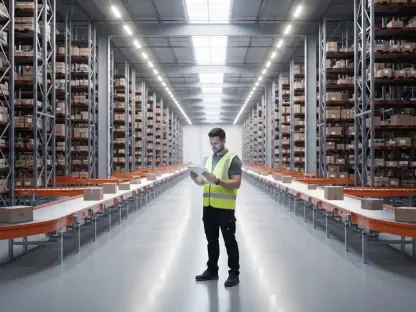
Overcoming these challenges requires a fundamental shift toward operational transparency. Intelligent monitoring systems provide the single source of truth needed to create resilient and predictable operations. By deploying a network of sensors and scanners, managers gain a live, unfiltered view of every activity on the floor. This eliminates the information gaps and data latency of manual systems, allowing teams to base their decisions on reality, not on assumptions. This visibility transforms the warehouse from a reactive, unpredictable environment into a proactive and finely tuned operation.
Charting a Safe Course Navigating Data Security and Regulatory Compliance
The adoption of comprehensive monitoring systems introduces new responsibilities related to data and privacy. The regulatory landscape governing the collection of operational data, particularly when it involves employee activity, is complex and varies by jurisdiction. Organizations must ensure their monitoring practices are transparent, justified by legitimate business needs, and compliant with all relevant labor and privacy laws. Establishing clear policies on how data is collected, used, and stored is essential for maintaining trust and avoiding legal complications.
Beyond regulatory compliance, the vast amounts of sensitive data generated by a smart warehouse—including inventory levels, customer order details, and shipping logistics—represent a valuable target for cyber threats. A breach could lead to significant operational disruption, financial loss, and reputational damage. Therefore, robust data security measures, such as network segmentation, access controls, and encryption, are not optional additions but critical components of any modernization strategy. Protecting this operational intelligence is as important as collecting it.
Furthermore, a secure and effective technology ecosystem relies on compliance with industry standards for system integration and data governance. As warehouses adopt technologies from multiple vendors, ensuring these systems can communicate seamlessly and securely is paramount for creating a unified operational view. Establishing strong data governance protocols ensures that the information flowing between these systems is accurate, consistent, and reliable. This interoperability and data integrity are the bedrock of a scalable, secure, and future-proof smart warehouse.
Blueprint for Tomorrow Envisioning the Next Generation Warehouse
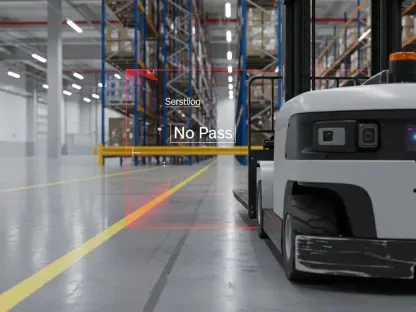
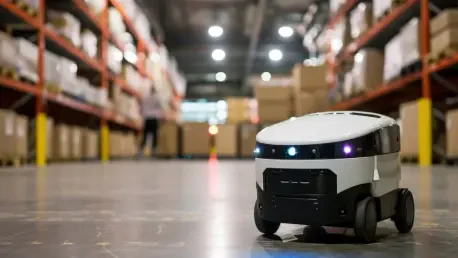
Looking ahead, the next-generation warehouse will be defined by the deep synergy between intelligent monitoring and advanced automation. These two pillars of modernization are not independent but work in a reinforcing loop. Automated systems, such as autonomous mobile robots and robotic picking arms, will handle the physically demanding and repetitive tasks with speed and precision. Simultaneously, a comprehensive monitoring network will act as the central nervous system, ensuring all automated and human activities are perfectly synchronized with real-time conditions.
The role of emerging technologies, particularly artificial intelligence (AI), will be transformative. AI-powered algorithms will analyze the continuous stream of data from monitoring systems to deliver predictive analytics. This will enable warehouses to move beyond reacting to the present and begin actively shaping the future. For example, AI can forecast demand fluctuations to optimize inventory placement, predict equipment failures to enable proactive maintenance, and dynamically allocate labor and robotic resources to the areas of greatest need before a bottleneck even begins to form.
This future vision is not one of a fully automated, human-free facility. Instead, it is a balanced ecosystem where technology augments human capabilities. Automated processes will manage the repetitive physical workload, comprehensive monitoring will provide complete visibility, and a skilled human workforce will be empowered to focus on strategic oversight, problem-solving, and continuous improvement. This collaborative model promises to deliver a new standard of efficiency, resilience, and adaptability, defining the future of the logistics industry.
Your Strategic Imperative Evolve Now or Risk Obsolescence
This analysis revealed that intelligent monitoring is no longer a luxury for achieving a competitive edge; it is a foundational requirement for survival in the modern logistics industry. The speed, accuracy, and complexity demanded by today’s market have rendered traditional manual oversight obsolete. Warehouses that fail to embrace this technological evolution face a future of escalating errors, unforeseen bottlenecks, and an inability to compete on the metrics that matter most to customers.
For organizations embarking on this transformation, a phased and human-centric implementation approach is recommended. Modernization does not require a risky, all-at-once overhaul. Instead, a strategic rollout beginning with the most critical or problematic zones allows teams to build confidence and demonstrate value quickly. By starting small, measuring the impact, and scaling successes, companies can mitigate risk and ensure that the technology is adapted to their unique operational needs, fostering buy-in from the workforce along the way.
Ultimately, the greatest benefit of this evolution is the creation of a culture of transparency and shared intelligence. When all teams work from the same reliable, real-time data, conversations shift from assigning blame to collaboratively solving problems. This shared visibility empowers employees, improves accountability, and fuels a cycle of continuous improvement. Fostering such a culture is the ultimate strategic imperative, as it builds an organization that is not only efficient today but also agile and ready to adapt to the challenges of tomorrow.