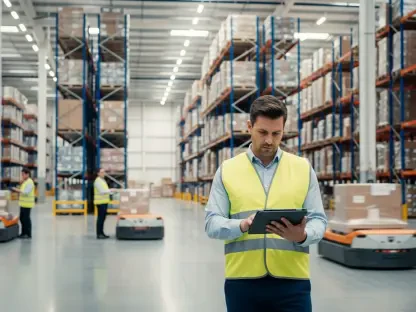

The silent avalanche of cardboard boxes flowing back to warehouses each January represents one of the most misunderstood and costly aspects of modern commerce. For years, the process of handling returned merchandise was viewed as a pure cost center—a logistical nightmare and a drain on profits. Now, as customer expectations and e-commerce volumes reshape the retail landscape, a fundamental question emerges: can this expensive operational burden be transformed into a source of tangible value and even profit? The answer lies in a strategic rethinking of the entire returns process, from customer convenience to asset recovery.
The $890 Billion Question: When “Free Returns” Is Not Free at All
The financial scale of the returns challenge is staggering. In 2024 alone, U.S. retailers processed an estimated $890 billion worth of returned merchandise, a figure that underscores the immense pressure on supply chains and balance sheets. This phenomenon, often driven by the competitive necessity of offering “free and easy” returns, creates a significant operational and financial dilemma. The cost is not merely in shipping but extends to labor for inspection, processing, potential markdowns, and, in many cases, the complete loss of a product’s value.
This situation forces retailers and logistics partners to confront a critical strategic choice. Instead of simply trying to minimize or discourage returns, which risks alienating customers, the focus has shifted toward optimizing the reverse journey of a product. The central challenge is no longer about preventing returns but about mastering the art of reverse logistics to recapture value, enhance customer loyalty, and discover efficiencies in a system traditionally defined by loss.
The New Consumer Mandate: Why Seamless Returns Became a Dealbreaker
The modern shopper’s journey does not end at the point of purchase; it extends through the potential return. For today’s consumers, a retailer’s return policy has evolved from a secondary consideration into a primary factor influencing the initial buying decision. Data reveals that this is not a minor preference but a dealbreaker, with 79% of shoppers stating they will abandon a potential purchase if the return policy is perceived as inconvenient. Convenience, once a luxury, is now a fundamental expectation that directly impacts conversion rates.
This consumer mandate is amplified by online shopping behaviors, most notably the practice of “bracketing.” This trend, where a customer orders multiple sizes, colors, or styles of an item with the full intention of returning most of them, has transformed the home into a digital fitting room. The apparel industry is at the epicenter of this shift, with return rates for certain product categories approaching a startling 90%. This behavior fuels a tsunami of returns that retailers must be equipped to handle efficiently.
Contrary to common assumptions, the majority of these returns are not due to shipping errors or damaged goods. The primary drivers are issues related to sizing and product quality, which places the responsibility squarely on the retailer to manage customer expectations and product representation. This reality highlights that a smooth returns process is an integral part of the overall customer experience, reflecting directly on the brand’s reputation and its ability to foster long-term loyalty.
The Strategic Pivot: From Fighting Returns to Mastering Reverse Logistics
In response to consumer demand for frictionless experiences, a new “hybrid” model has emerged as the industry standard. Shoppers now expect the convenience of buying online to be paired with a dense network of accessible physical locations for easy, no-hassle drop-offs. This blend of digital ease and physical access has become the benchmark for a positive post-purchase experience, compelling companies to build sophisticated, multi-channel reverse logistics networks.
Leading logistics providers are actively building the infrastructure to support this new paradigm. DHL, for example, is expanding its global network to encompass nearly 170,000 service points, creating the widespread physical footprint necessary for seamless returns. This expansion is a direct response to the need for accessible drop-off locations that integrate smoothly into a consumer’s daily life, turning a potential chore into a simple, quick errand.
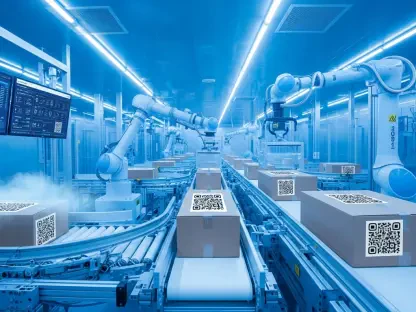
Furthermore, the technological aspect of returns is evolving rapidly to cater to the expectations of the next generation of shoppers. The shift toward digital, labelless solutions, where a customer simply presents a QR code on their smartphone, is gaining significant traction. This printer-free, package-free approach resonates particularly strongly with younger demographics like Gen Z, who prioritize speed, simplicity, and digital-first interactions.
Unlocking the Invisible Value Pool: Expert Perspectives on Recapturing Lost Revenue
A crucial paradigm shift is underway in how returned goods are perceived—not as trash, but as a valuable pool of recoverable assets. When items are simply discarded, the financial loss is immense. Expert analysis from DHL estimates that a staggering $62.5 billion in global revenue is forfeited annually when returned merchandise is not properly processed for resale or routed to secondary markets. This “invisible value pool” represents a massive opportunity for businesses that can implement effective recovery strategies.
A real-world example of a successful recovery model is the expansion of the DHL ReTurn Network in North America, which strategically co-locates returns processing centers with fulfillment operations. This integrated approach allows for unprecedented speed and efficiency. Instead of returned products languishing in a separate facility, they are immediately inspected, sorted, and, if in sellable condition, rapidly reintroduced into available inventory.
The power of this model lies in its ability to dramatically shorten the cycle time from return to resale. By integrating these two critical functions, products can be made available to the next customer almost instantaneously. This not only recaptures revenue that would otherwise be lost but also improves inventory turnover and ensures that products, especially seasonal or trend-dependent items, do not lose their value while sitting in a returns pile.
A Blueprint for Turning Returns into Revenue
The most direct strategy for transforming returns into revenue involved consolidating operations to accelerate the resale process. By co-locating returns processing with fulfillment centers, retailers enabled products to be inspected, repackaged, and placed back into sellable inventory, sometimes within the same day. This rapid turnaround proved crucial for maintaining the value of time-sensitive goods and satisfying immediate customer demand.
For items not suitable for immediate restocking as new, a structured approach to secondary markets became a powerful tool. The strategy of batching goods based on condition, category, and brand allowed for efficient liquidation through specialized channels. This methodical process enabled companies to recover up to 90% of a product’s original resale value, turning what was once considered unproductive inventory into a reliable stream of recovered revenue.
Ultimately, the most successful strategies connected profitability directly with sustainability. An efficient and intelligent reverse logistics system did more than just capture lost revenue; it also played a vital role in reducing environmental impact. By finding a new home for returned products through resale or recycling, companies directly diverted millions of items from landfills. This approach demonstrated that sound financial strategy and corporate responsibility were not mutually exclusive but could, in fact, be powerfully synergistic.