
Once overlooked as a simple plastic box for moving goods, the humble warehouse tote has quietly become one of the most critical and technically sophisticated assets in the entire logistics network. This fundamental shift marks a new era where the design of a container can dictate the efficiency, speed, and profitability of a multi-million dollar automated fulfillment center. As robotics and high-speed systems become the standard, the tote is no longer a passive vessel but an active participant, engineered with a level of precision that was once reserved for the machines that handle it. Its evolution is a direct response to the complex demands of modern supply chains, where every component must contribute to a seamless, integrated, and highly efficient operational flow.
From Simple Box to Integrated System: The New Role of Totes in Modern Logistics
The journey of the warehouse tote mirrors the technological leap of the logistics industry itself. For decades, it was a durable but unintelligent container, designed primarily for manual handling and basic storage. Its main qualifications were strength and stackability. However, the proliferation of automated storage and retrieval systems (AS/RS), robotic arms, and high-speed conveyors has fundamentally rewritten its job description. Today’s tote is an integrated system component, designed to communicate flawlessly with a diverse ecosystem of machines. Its surfaces, dimensions, and structural features are engineered to be read, gripped, and transported by robots with near-perfect reliability, transforming it from a cost center into a key enabler of automation.
This evolution is not merely an engineering exercise; it is a strategic necessity with direct financial implications. An advanced, automation-ready tote is now inextricably linked to core key performance indicators. Its precise design prevents system jams that can halt an entire operation, saving thousands of dollars in downtime. Its compatibility with scanners and vision systems ensures near-perfect inventory accuracy, reducing costly errors and returns. Ultimately, the ability of a tote to move smoothly and predictably through an automated workflow directly translates into faster order fulfillment, higher throughput, and greater profitability.
The modern container sits at the convergence of three powerful forces: precision engineering for automation, human-centric design for the remaining manual touchpoints, and a growing mandate for environmental sustainability. This article explores how these trends are interacting to shape the next generation of warehouse totes, redefining them as high-performance assets essential for competing in the fast-paced world of automated fulfillment.
The Interplay of Technology, Design, and Operational Strategy
Engineering Precision: Why Modern Totes Are Built for Robots, Not Just for Storage
The industry-wide pivot toward automation has made “automation-ready” the new baseline for container design. This is a move away from general-purpose boxes and toward highly specialized tools engineered for robotic interaction. Key to this shift is absolute dimensional consistency, a hallmark of molded reusable totes. Unlike expendable cardboard, which can warp, tear, or vary in size, a molded tote maintains its exact dimensions through thousands of cycles. This predictability is paramount for high-speed shuttles and robotic grippers that operate on millimeter-level tolerances, ensuring smooth, uninterrupted movement. Furthermore, these containers feature specialized design elements like reinforced lifting slots for vertical transport and perfectly flat, non-reflective surfaces that guarantee flawless reads by optical scanners and vision systems.
The financial incentive for adopting these precision-engineered totes is rooted in risk mitigation. Industry leaders emphasize that in a highly integrated automated environment, the container is often the most common point of failure. A single warped cardboard box or a tote with a slight imperfection can cause a jam that brings an entire conveyor line or AS/RS to a standstill. The resulting downtime is immensely costly, not only in lost productivity but also in the labor required to diagnose and resolve the physical issue. Consequently, the initial investment in higher-quality reusable totes is easily justified by the prevention of these expensive system interruptions, ensuring the reliability and uptime of the core automation infrastructure.
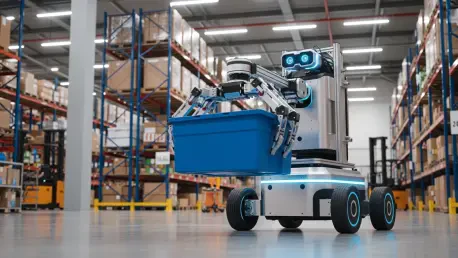
This demand for reliability is also driving a significant trend toward customization. As warehouses deploy increasingly diverse automation—from massive shuttle systems to small, nimble mobile “ibots”—a one-size-fits-all approach to containers is no longer viable. Companies are now collaborating directly with manufacturers to develop totes engineered for their specific technologies and product mixes. This collaborative process ensures the container’s weight, balance, and physical features are perfectly matched to the equipment, preventing issues like tipping on fast-moving conveyors or premature wear from robotic grippers. The tote becomes a critical link that allows the automation to be tailored to the operational space, rather than forcing the operation to conform to a standard container.
Redefining Efficiency: The Rise of Single-Container Systems and Smarter Space Utilization
One of the most powerful strategies emerging from advanced tote design is the single-container workflow. This approach eliminates the time-consuming and error-prone process of repacking goods as they move through different stages of fulfillment. In a leading example from an athletic footwear distribution center, a single type of molded plastic tote serves an order from its inception to the final packing station. An AS/RS shuttle retrieves the tote, which is then sent via conveyor to a goods-to-person workstation where items are picked directly into it. From there, the same container can travel at high speeds through vertical shuttles before arriving at its final destination.
This unified strategy offers a profound advantage by simplifying system integration. When every piece of automation—from shuttles and robots to conveyors—is designed to handle the exact same container, the complexity of the overall system is dramatically reduced. Installers and engineers know the precise tolerances required, which accelerates the implementation of new equipment and makes future upgrades cleaner and faster. There is no risk of a mismatch between different parts of the system, a common problem that can lead to persistent operational bottlenecks and downtime. The single container becomes a universal language understood by every machine in the facility.
Beyond system speed, a parallel trend is optimizing the physical warehouse footprint through more intelligent space utilization. Operations are increasingly adopting tactical solutions to activate traditionally unused areas. A prime example is the use of open-front bins and accessible containers placed on the floor level beneath the first tier of pallet racking. This simple strategy transforms dead airspace into a highly productive picking zone for fast-moving items or seasonal goods. Workers can access these products quickly without ladders or equipment, while forklifts can still service the upper racks unimpeded. This multi-use approach reflects a broader definition of efficiency that encompasses not only the speed of fulfillment but also the complete and intelligent use of every available cubic foot of storage space.
Beyond the Bot: Designing for Human Interaction and Extended Lifecycles
Even as automation expands, the industry has renewed its focus on the durability and ergonomics of containers, recognizing that manual touchpoints remain critical. Customers are demanding totes with longer operational lifespans, seeking to maximize the return on their investment by keeping assets within a closed-loop system for as long as possible. This emphasis on longevity reduces the total cost of ownership and minimizes the operational disruption associated with replacing worn-out containers.
This focus is increasingly paired with a human-centric design philosophy. Manufacturers now engage in a detailed discovery process, analyzing how workers will interact with a tote to inform its ergonomic features. Factors like the weight of the products being carried and the frequency of manual handling directly influence design choices. This leads to optimally placed handles for balanced lifting, offset hand-holes that provide a more comfortable grip, and even advanced features like automated lids that open and close without manual intervention. These designs are engineered to reduce physical strain, minimize the risk of repetitive motion injuries, and create a safer, more productive environment for warehouse associates.
This approach challenges the common assumption that automation renders ergonomics irrelevant. In reality, well-designed totes enhance the symbiotic relationship between humans and machines. In goods-to-person systems, for instance, a worker may handle hundreds of totes per hour. An ergonomic design that reduces fatigue and physical stress allows that worker to maintain a high level of productivity and accuracy throughout their shift. By improving the efficiency and well-being of the human element, these design considerations contribute directly to the overall throughput and reliability of the entire automated system.
The Green Mandate: How Sustainability and Regulation Are Reshaping Tote Materials and Lifecycles
Sustainability has evolved from a corporate ideal to a practical and regulatory imperative, profoundly influencing container design and material science. The core of this movement is the push for reusability, with a growing demand for totes that incorporate higher levels of post-consumer recycled content. This presents a significant engineering challenge: balancing environmental goals with the strict performance requirements of automated systems. The material must be sustainable yet retain the dimensional consistency and strength needed for high-speed handling.
To further these sustainability goals, the industry is moving toward the concept of “smart containers.” By embedding tracking technologies, companies can gain unprecedented visibility into their asset pool. This data allows them to monitor a tote’s number of use cycles, its exposure to extreme temperatures, and its overall handling history. Such insights enable proactive maintenance and help organizations optimize their closed-loop systems, extending the operational life of each container and ensuring a greater return on investment while reducing waste.
At the same time, government regulations are becoming a powerful catalyst for change. Europe’s Packaging and Packaging Waste Regulation (PPWR), for example, sets ambitious targets to minimize waste and promote reuse, creating ripple effects across the global supply chain. Industry analysts assert that these rules will impact any company shipping products internationally, prompting a proactive shift in packaging strategies worldwide to ensure future compliance. In response, container manufacturers are actively researching new additives and alternative materials to reduce the reliance on petroleum-based plastics, turning the conversation from mere compliance to genuine innovation in sustainable, high-performance design.
Integrating the Next Generation Tote: A Strategic Blueprint for Warehouse Leaders
The modern warehouse tote must be evaluated on a new set of criteria. The core takeaways from current industry trends are clear: containers must be selected for their seamless automation compatibility, their operational flexibility in diverse workflows, their ergonomic benefits for workers, and their long-term sustainable lifecycle. These four pillars now define a high-performance container and should guide any investment decision. A tote that excels in one area but fails in another can create a weak link in an otherwise sophisticated supply chain.
For warehouse managers, this new reality calls for a more strategic approach to container procurement. A crucial first step is to conduct a system-wide audit of container needs, identifying every touchpoint where totes interact with machinery and people. Following this assessment, leaders should collaborate directly with manufacturers to explore custom-fit solutions engineered for their specific operational challenges. This partnership ensures that the chosen container is not merely adequate but is optimized to enhance the performance of the existing infrastructure.
Future-proofing these investments requires a long-term vision centered on a closed-loop asset management strategy. Best practices include prioritizing durable, reusable, and regulation-compliant totes that can withstand years of rigorous use. By viewing containers as a long-term capital asset rather than a disposable commodity, organizations can build a more resilient, efficient, and sustainable logistics operation prepared for the challenges of tomorrow.
The Tote as a Strategic Imperative: The Future of Automated Fulfillment
The central conclusion of the industry’s evolution is that the warehouse tote has become a sophisticated and indispensable asset. It is no longer a background player but a primary enabler of the speed, accuracy, and reliability that modern automation promises. Its transformation from a simple box to an engineered component is a testament to the intricate demands of today’s fulfillment landscape, where success is measured in milliseconds and millimeters.
This progression highlights the ongoing co-evolution of robotics and the containers they handle. The two are locked in a symbiotic relationship where advances in one propel innovation in the other. Future breakthroughs in logistics—whether in robotic dexterity, AI-driven routing, or system speed—will almost certainly depend on the development of even smarter, more responsive, and more integrated tote designs.
Ultimately, this shift has permanently altered how logistics leaders must approach procurement. Treating container selection as a strategic investment, rather than a simple commodity purchase, is now a key differentiator in a fiercely competitive market. The companies that recognize the tote as a cornerstone of their automation strategy will be the ones best positioned to achieve new levels of efficiency and lead the future of automated fulfillment.