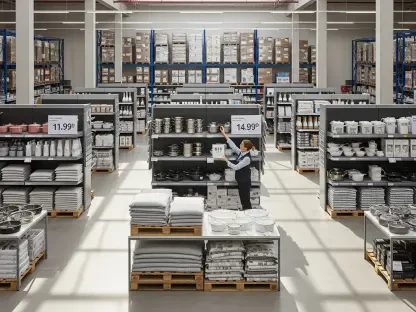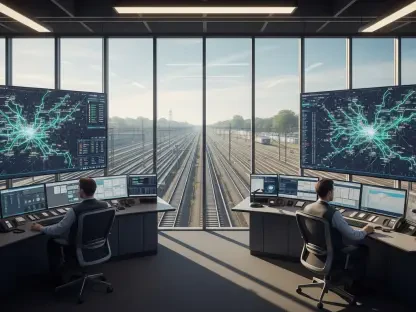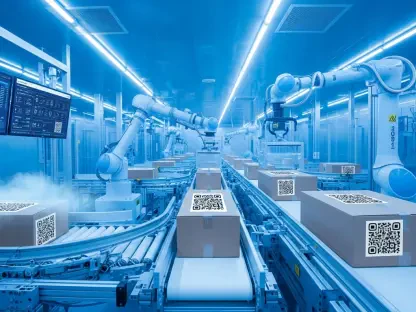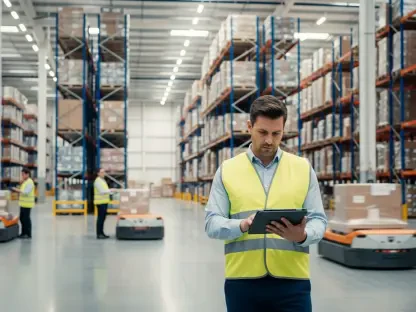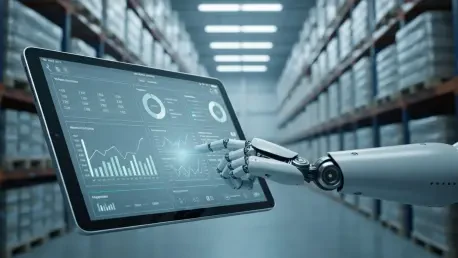

Imagine a warehouse humming with activity during the Black Friday rush, where orders are picked with pinpoint accuracy, inventory updates in real-time, and workers move seamlessly alongside smart machines. This is no longer a futuristic vision but a present-day reality in the logistics industry, driven by the rapid integration of artificial intelligence. The warehouse sector, a cornerstone of global supply chains, is undergoing a profound transformation as AI reshapes operations, enhances efficiency, and, surprisingly, creates more jobs. A comprehensive study by key industry players sheds light on this revolution, revealing how technology is not displacing human labor but empowering it in unexpected ways.
Unveiling the Warehouse Revolution: AI’s Rising Role
The logistics and warehouse industry stands as the backbone of global commerce, ensuring goods flow from manufacturers to consumers with speed and reliability. With e-commerce booming and consumer expectations soaring, the pressure to optimize every link in the supply chain has never been greater. Today, over 90% of warehouses have adopted AI and automation technologies to meet these demands, marking a significant shift toward intelligent operations. Companies like Mecalux, alongside research hubs such as MIT Intelligent Logistics Systems Lab, are at the forefront of this change, driving innovation and collaboration across the sector.
This technological wave impacts critical operational areas, from order picking to inventory management and labor planning. AI systems streamline the process of locating and retrieving items, reducing errors and speeding up fulfillment. Meanwhile, predictive analytics help maintain optimal stock levels, preventing costly overstocking or shortages. Perhaps most notably, labor planning tools powered by AI ensure workers are deployed efficiently, balancing workloads and minimizing fatigue. This synergy of human effort and machine precision is redefining what a warehouse can achieve, especially during high-pressure seasons.
Decoding Industry Dynamics: Trends and Growth in AI Adoption
Emerging Technologies and Market Shifts
A key driver behind AI integration is the urgent need for intelligent warehouses that can handle peak seasons like Black Friday without buckling under pressure. The industry is witnessing a surge in demand for adaptability, pushing companies to adopt cutting-edge solutions that ensure operational resilience. Evolving technologies, such as generative AI, are emerging as powerful tools, aiding in complex tasks like warehouse layout planning and even generating system code. These advancements promise to take decision-making to new heights, blending data-driven insights with creative problem-solving.
Moreover, the focus on worker productivity and the ability to navigate demand volatility are shaping market priorities. Companies are increasingly recognizing the value of combining human expertise with AI capabilities, opening doors to innovation. This hybrid approach not only enhances efficiency but also fosters a workplace where technology supports rather than supplants human roles. The result is a dynamic environment where adaptability and collaboration pave the way for sustained growth.
Performance Metrics and Future Forecasts
The numbers paint a compelling picture of AI’s impact. Over 50% of surveyed companies have reached advanced stages of automation, while a staggering 92% plan further investments in AI. Financially, the commitment is clear, with 11% to 30% of technology budgets dedicated to AI initiatives, yielding returns on investment typically within two to three years. These gains stem from improved accuracy in inventory, faster order processing, and optimized labor allocation, all of which bolster the bottom line.
Looking ahead, growth projections remain robust, with 87% of companies anticipating increased AI budgets over the next three years starting from 2025. This trend signals a long-term commitment to scaling technology adoption. As AI continues to evolve, its role in transforming warehouse efficiency and scalability will only deepen, promising smarter systems that can anticipate challenges and respond proactively. The future of logistics appears not just automated, but intelligently orchestrated.
Navigating the Hurdles: Challenges in AI Implementation
Despite the enthusiasm, scaling AI in warehouses is not without obstacles. System integration issues often arise when new technologies clash with legacy infrastructure, slowing down deployment. Additionally, a lack of technical expertise within teams, coupled with poor data quality, complicates efforts to harness AI’s full potential. High initial costs further deter smaller players, creating an uneven playing field in the race toward automation.
Expert voices underscore these struggles, with Dr. Matthias Winkenbach of MIT pointing to the “last mile” of integration as a critical pain point. Blending people, data, and analytics into cohesive systems remains a daunting task. However, solutions are within reach—enhanced training programs can bridge skill gaps, while robust data management practices can improve input quality. Overcoming these hurdles requires a strategic balance between pushing technological boundaries and maintaining operational practicality in fast-paced warehouse settings.
Regulatory Landscape: Governing AI in Warehouses
As AI reshapes logistics, the regulatory framework surrounding its use demands attention. Compliance with safety standards and data privacy laws is paramount, ensuring that automated systems protect both workers and sensitive information. Governments and industry bodies are crafting evolving laws that influence how AI is deployed, often requiring warehouses to adapt quickly to new mandates. This dynamic legal environment shapes everything from equipment use to data handling protocols.
Security measures are equally critical, safeguarding AI systems from cyber threats that could disrupt operations. Protecting operational data is not just a technical necessity but a competitive advantage in an industry reliant on trust and reliability. Furthermore, regulatory shifts impact labor management and technology adoption, prompting companies to stay agile. Navigating this landscape means aligning innovation with accountability, a challenge that will define responsible growth in the sector.
Future Horizons: AI’s Next Steps in Warehouse Innovation
Peering into the industry’s trajectory, generative AI stands out as a potential game-changer for decision-making in warehouses. Unlike traditional models that predict issues, this technology designs solutions, from optimizing layouts to streamlining documentation. Its rise signals a shift toward proactive rather than reactive strategies, equipping warehouses to stay ahead of challenges. Emerging technologies and shifting consumer demands for faster, more accurate deliveries will likely accelerate this trend.
Potential disruptors, including global economic fluctuations and new tech breakthroughs, could further reshape the landscape. Innovation hotspots like smarter labor planning and AI-driven equipment maintenance offer exciting possibilities for enhancing efficiency. As regulatory and economic conditions evolve, they will influence investment patterns, pushing companies to prioritize adaptable, scalable solutions. The coming years promise a warehouse sector that is not just tech-savvy but strategically forward-thinking.
Synthesis and Outlook: AI as a Warehouse Game-Changer
Reflecting on the insights gathered, it became evident that AI had redefined warehouse operations by enhancing efficiency, driving financial returns, and fostering new job roles. Over 75% of respondents highlighted improved employee satisfaction and productivity, a testament to technology’s empowering effect. The narrative shifted away from fears of job loss toward a recognition of AI as a creator of diverse, skilled positions like data specialists and automation technicians.
This transformation proved particularly impactful during high-pressure seasons, where AI supported seamless, disruption-free operations. Looking back, the journey underscored a powerful synergy between human ingenuity and machine precision. For industry stakeholders, the path forward involved investing in AI training and integration to unlock both operational excellence and human potential. Embracing strategic partnerships and robust data practices emerged as essential steps to sustain momentum in an ever-evolving logistics landscape.