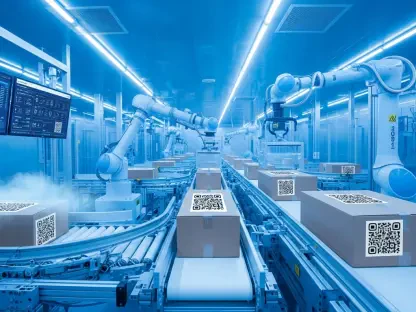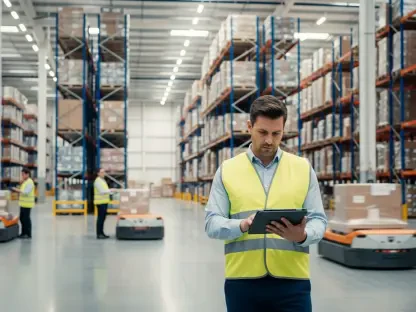

The long-prophesied era of fully autonomous supply chains, where intelligent systems independently learn, reason, and make complex logistical decisions, has transitioned from a distant future concept to a demonstrable reality. For years, supply chain leaders have focused on automation, deploying robots and data-driven policies to create faster, more rule-based operations. Yet, this approach has a ceiling, as humans still write the rules and make the critical judgment calls. The arrival of generative AI marks a fundamental shift, moving beyond simple automation to systems that can operate with genuine autonomy. Recent findings from a groundbreaking simulation reveal the profound capabilities of current AI models to manage supply chain logistics autonomously, offering a new roadmap for how businesses can orchestrate these powerful systems to achieve unprecedented efficiency and resilience.
The Dawn of AI-Driven Operations
An Experimental Proving Ground
To rigorously test the capabilities of off-the-shelf generative AI models, an experimental testbed was constructed around one of management education’s most enduring simulations: the MIT Beer Distribution Game. For nearly seven decades, this deceptively simple exercise has been used to demonstrate the core dynamics that challenge any supply chain, including information delays, coordination failures, and the human tendency to overreact to uncertainty. The game illustrates how minor fluctuations in demand can cascade into massive, costly swings in inventory, a phenomenon known as the bullwhip effect. It provides the perfect environment to evaluate decision-making under pressure.
Within this simulation, four autonomous AI agents, each powered by a large language model (LLM), were tasked with managing a serial supply chain composed of a retailer, wholesaler, distributor, and factory. These agents operated under the exact same high-pressure, siloed conditions as human players, with only the retailer having direct visibility into end-customer demand. Their decisions were not pre-programmed but were guided by a combination of natural language prompts, specific data-sharing policies, and operational guardrails. This setup allowed for a direct examination of their ability to reason, coordinate, and manage inventory without explicit, rule-based instructions.
The performance of these AI agents was not measured in a vacuum. It was benchmarked against extensive data gathered from over one hundred undergraduate students at Georgia Tech’s Scheller College of Business who played the same game under identical constraints. This direct comparison provided a clear and objective measure of AI-driven decision-making versus human performance, moving the conversation from theoretical potential to quantifiable results. The benchmark created a proving ground to determine if autonomous agents could truly manage the complex, cross-functional trade-offs that human supply chain managers navigate daily.
A New Benchmark in Performance
The results from the simulation were nothing short of striking. A coordinated system of AI agents, powered by state-of-the-art models such as Llama 4 Maverick 17B, delivered a stellar performance. When properly orchestrated, these systems successfully reduced total supply chain costs, which encompass both backorder penalties and inventory holding costs, by as much as 67% compared to the human teams. This demonstrates that generative AI can not only manage complex operational tasks but can also significantly outperform experienced human decision-makers in a controlled environment.
Furthermore, the experiment revealed a stark generational divide between older LLMs and the new wave of advanced reasoning models. While the latest models showcased an ability to learn, adapt, and handle intricate cross-functional complexity with minimal human intervention, their predecessors often failed catastrophically. In many simulation runs, older-generation models, including those still in use by many firms, generated supply chain costs up to five times higher than those achieved by human teams. This dramatic contrast underscores that the leap toward autonomy is not about AI in general, but specifically about the advanced reasoning capabilities of the newest models.
Critical Factors for Autonomous Success
The Primacy of Model Selection
The single most important driver of performance in an autonomous supply chain is the core reasoning capability of the agent’s underlying AI model. The experiments showed a clear distinction between newer reasoning models, like GPT-5 mini and Llama 4 Maverick 17B, and their non-reasoning predecessors. In comparative tests, upgrading the agents to these advanced models led to a significant outperformance, cutting total supply chain costs by a staggering 70% to 82%. No amount of clever prompting or data sharing could compensate for a model that fundamentally lacked the ability to understand the task or follow instructions logically.
In contrast, less-capable models proved to be both highly inefficient and dangerously unstable. They consistently amplified system noise, turning small demand fluctuations into costly bullwhip effects. Their performance was also highly variable across identical runs, with total costs varying by as much as 46% of the mean. More concerning, some models failed to even follow basic instructions, such as generating a decision in the required format, in over 25% of cases. Advanced reasoning models, however, demonstrated a superior ability to adopt coherent policies, with many independently applying the classic “order-up-to” inventory strategy, a testament to their sophisticated decision-making capacity.
The Power of Policy Guardrails
Implementing simple policies that constrain an agent’s range of actions dramatically improves both the efficiency and reliability of the autonomous system. These policy guardrails function as a control mechanism, preventing the kind of panic-driven decisions that often lead to systemic failure in both human and AI-managed supply chains. A prime example from the simulation was the introduction of a fixed budget, which capped the size of any single order an agent could place.
This seemingly simple constraint had a profound and measurable impact. When an agent faced a stockout, the budget acted as a brake, preventing it from placing a massive, reactive order that would amplify misleading demand signals up the supply chain. The results were dramatic: adding a budget constraint reduced total costs by 25% for GPT-5 mini and up to 41% for Llama 4 Maverick 17B. Moreover, it significantly reduced performance variability across multiple runs, making the entire system more stable and predictable. This demonstrates that effective autonomy is not about giving AI unlimited freedom but about establishing intelligent constraints.
The Curation of Information
A counterintuitive but critical finding is that AI agents, unlike their human counterparts, can be distracted and hindered by an excess of data. The instinct to provide full visibility and share all available information can lead to worse decisions and higher costs. The research showed that selectively sharing curated information is far more effective. For the most capable generative AI models, less data is often more powerful, allowing them to focus on the most salient signals.
The simulation tested two distinct information-sharing strategies. In the first, sharing only real-time end-customer demand with all agents improved performance across every model tested. However, when richer historical data and volatility analysis were also provided, the results diverged. This additional information significantly helped less-capable models, but it acted as a distraction for the more advanced ones, which performed better with more focused, real-time inputs. Data points that typically help humans, such as upstream inventory positions, often offered little benefit to the AI and, in some cases, made the bullwhip effect worse.
The Role of Prompt Engineering
The art of prompt engineering, or carefully phrasing instructions to guide an AI’s response, serves as a powerful tool, particularly for enhancing the performance of less-capable models. The way a task is framed can produce significant gains when the model’s inherent reasoning is less robust. For instance, reframing the objective from a general goal like “minimize total costs” to the more specific “minimize the weighted average of backlog and holding costs” led to substantial cost reductions of up to 44% for models like GPT-4o mini.
However, for the most advanced reasoning models, the impact of prompt design was negligible. Their sophisticated internal logic allows them to interpret broader goals effectively, making their performance more dependent on robust guardrails and curated data flows than on the specific phrasing of their instructions. This suggests that as models become more capable, the focus for human orchestrators will shift away from micromanaging instructions through prompts and toward designing the broader systemic environment in which the agents operate.
The Strategic Implications for Business
The Democratization of Supply Chain Excellence
The simulation results signal a profound shift in the accessibility of world-class supply chain management. Properly configured generative AI agents can deliver substantial value straight out of the box, largely eliminating the need for expensive, time-consuming model retraining or specialized data science teams. This plug-and-play capability means that advanced, autonomous operations are no longer the exclusive domain of tech giants. With the release of accessible platforms like OpenAI’s AgentKit, even non-technical teams can now design and deploy sophisticated autonomous agents, leveling the playing field for businesses of all sizes.
Beyond cost reduction, this new technology fundamentally accelerates the pace of strategic experimentation. Where traditional supply chain simulations might take weeks to run, AI agents can execute them in minutes. This allows organizations to rapidly test new policies, benchmark different strategies, and identify optimal approaches with unprecedented speed. The paradigm is shifting from a reliance on experience-based intuition toward a new standard of continuous, data-driven experimentation, enabling businesses to adapt and innovate far more quickly than ever before.
A New Paradigm for Human Leadership
As autonomous agents increasingly handle the complexities of day-to-day operational coordination, the role of human managers is set to undergo a significant transformation. The focus will move away from executing tasks and toward orchestrating intelligent systems. This frees up human leaders to concentrate on higher-level strategic challenges that require uniquely human skills, such as redesigning supply networks, cultivating supplier relationships, and fostering deep cross-functional integration across finance, marketing, and sales.
In an era defined by unprecedented global volatility—from geopolitical shocks to fragile global networks—this shift is not just a technological advantage but a strategic imperative. Traditional forecasting models often fail in the face of such uncertainty. The ability of generative AI to reason through complex scenarios, run rapid simulations, and adapt dynamically provides a critical tool for building the kind of resilient, agile, and future-proof supply chains that will be necessary to thrive in an unpredictable world.
Charting the Course for Autonomy
The experiments conducted demonstrated that the age of the truly autonomous supply chain had arrived. The findings confirmed that current-generation AI models, when properly orchestrated with the right combination of guardrails, data flows, and policies, could not only manage complex systems but also significantly outperform both human-led teams and traditional automation. Success was not simply a matter of deploying the most powerful model but of skillfully designing the environment in which it operated.
A critical takeaway from the research was the imperative for businesses to assess and upgrade their underlying AI infrastructure. The stark performance gap between older, non-reasoning models and their modern counterparts revealed that many firms relying on legacy systems would be incapable of unlocking this new autonomous potential. The first step toward this future involved a deliberate technological transition to reasoning-capable AI.
Furthermore, the simulation results underscored the profound value of controlled experimentation. The most successful outcomes were achieved not through immediate, large-scale deployment but through testing within bounded environments. By embedding autonomous agents in digital twins, organizations could safely test constraints, experiment with information-sharing strategies, and measure performance against human benchmarks, allowing them to learn and pinpoint what delivered real impact before implementing changes in the live operational environment.
Finally, the study pointed to a fundamental evolution in the skillsets required for supply chain leadership. The capabilities that would differentiate leaders from followers in this new era were those related to AI orchestration. Success depended on cultivating new expertise in curating data flows between agents, designing policies that prevent systemic failures, and crafting strategic prompts that align autonomous behavior with overarching business objectives. This new form of leadership—one that orchestrates intelligence rather than executes tasks—was shown to be the key to navigating the future of supply chain management.