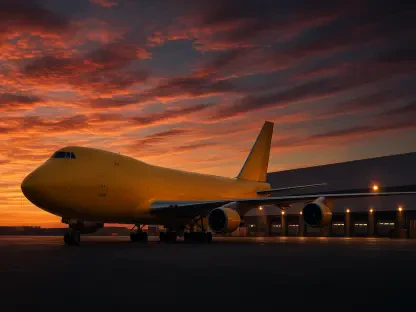

Airbus appears to be gaining unprecedented ground in the American freight sector following reports that Kalitta Air has committed to eight A350F wide-body aircraft. This strategic move by the Michigan-based carrier signals a significant departure from its long-standing reliance on Boeing’s 747 and 777 freighter families. While Airbus noted a firm commitment for eight units from an undisclosed customer in its August 2026 commercial recap, industry observers have increasingly pointed toward Kalitta as the likely recipient. For its part, the airline has maintained a pragmatic stance, stating that fleet evaluations are ongoing to ensure long-term operational viability. This potential deal is not merely a single purchase; it represents a fundamental shift in the competitive landscape of the United States cargo market. Historically, domestic carriers have shown a strong preference for American-made aircraft, but the modern demand for efficiency and lower emissions is beginning to erode these traditional manufacturer ties and brand loyalties across the logistics industry.
Strategic Evolution in the Air Freight Sector
Modernization Through Advanced Materials and Propulsion
The appeal of the A350F lies in its clean-sheet design, which utilizes advanced carbon-fiber-reinforced polymers to significantly reduce weight and improve structural integrity. Powered by the Rolls-Royce Trent XWB-97 engines, the aircraft offers a substantial reduction in fuel burn and carbon emissions compared to the aging four-engine jets currently populating many global cargo fleets. As environmental regulations like CORSIA become more stringent, carriers such as Kalitta Air must prioritize assets that meet strict noise and emission standards. The A350F’s payload capacity, which targets the same market segment as the Boeing 777F, provides a versatile alternative for long-haul routes. By integrating these next-generation wide-bodies, operators can capitalize on lower maintenance costs and higher dispatch reliability. This transition is essential for staying competitive in a market where margins are increasingly thin and sustainability is no longer optional but a core requirement for international logistics contracts in a globalized trade environment.
Economic Disruption of Traditional Aerospace Loyalties
This emerging trend suggests that technical specifications and operational economics are beginning to outweigh domestic heritage in the procurement process. For Airbus, securing a foothold with a major American operator like Kalitta Air represents a major tactical victory that validates the A350F’s competitiveness against Boeing’s upcoming 777-8F. The global cargo market is currently experiencing a period of intense transformation as supply chain risks force carriers to diversify their fleets to avoid being tied to the production schedules or technical issues of a single manufacturer. Boeing has traditionally enjoyed a near-monopoly in the wide-body freight sector, but the entry of a viable European alternative has provided airlines with much-needed leverage during fleet negotiations. This shift towards a more fragmented and competitive market is expected to accelerate as more carriers seek to phase out legacy tri-jets and four-engine aircraft in favor of modern, high-efficiency twin-engine platforms that offer better economies of scale.
Strategic Imperatives for Fleet Sustainability
Industry analysts concluded that the successful integration of multi-manufacturer fleets was the most effective way to safeguard against unforeseen disruptions. Organizations that diversified their assets were better positioned to navigate the challenges of the current decade, ensuring that their delivery schedules remained robust despite localized manufacturing delays. Logistics providers were urged to prioritize airframes that balanced high payload capacity with the lowest possible environmental footprint. It was observed that early adopters of the A350F technology gained a significant edge in the trans-Pacific corridors by optimizing fuel consumption per revenue ton-kilometer. The move toward advanced digitalization and more efficient engine technology provided a clear roadmap for achieving long-term profitability. Furthermore, the decision to pivot away from a single-vendor strategy was viewed as a necessary evolution for companies seeking to maintain resilience in an increasingly volatile global economy.