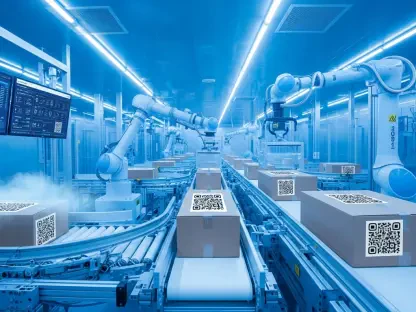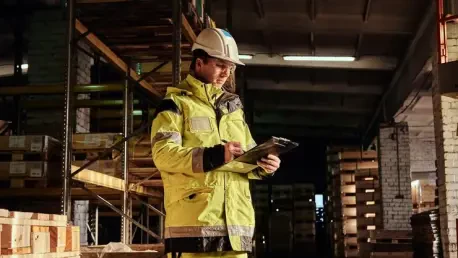

Applying the same heavy-duty steel barrier for a quiet workshop corridor as for a bustling forklift superhighway reflects a fundamental misunderstanding of modern operational risk. Such a uniform safety strategy, while seemingly straightforward, often fails to address the nuanced and varied dangers present across different zones of a single industrial facility. This approach can lead to both over-engineering in low-risk areas and, more critically, under-protection where it matters most. Consequently, facilities are better served by moving beyond a single standard and adopting a strategic, risk-based methodology.
This shift in perspective prioritizes a tailored approach to impact protection, where safety measures are precisely matched to the specific hazards of an area. Rather than a blanket solution, this article outlines a more effective tiered system. This framework allows for a more intelligent and efficient allocation of safety resources, ensuring that every part of a facility receives the appropriate level of protection required to maintain a safe and productive environment.
The Benefits of a Tailored, Risk-Based Safety Plan
Adopting a customized safety strategy is essential for navigating the complexities of modern industrial workplaces, from sprawling logistics hubs to dynamic manufacturing plants. When safety infrastructure is aligned with specific operational risks, businesses unlock significant advantages that a generic plan simply cannot provide. The primary benefit is the optimized allocation of resources. Instead of investing in maximum-strength protection everywhere, funds can be directed toward robust solutions in high-consequence zones while employing more cost-effective measures in less critical areas.
Moreover, this targeted methodology leads to enhanced protection where it is most needed. By identifying and fortifying critical zones—such as high-traffic intersections, loading bays, and areas around vital machinery—a facility can drastically reduce the likelihood of costly accidents and operational downtime. This clarity also improves compliance and operational flow. A well-defined, visually intuitive safety system helps employees and vehicle operators understand traffic routes and hazards, fostering a stronger safety culture and streamlining day-to-day activities.
A Three-Tier Framework for Effective Impact Protection
A structured, three-tier framework provides a clear and actionable path for implementing a risk-based safety plan. This system breaks down impact protection into distinct levels, each designed for a specific application and environmental context. By categorizing protection needs into tiers, businesses can move away from ambiguous decision-making and toward a logical process that aligns safety investments with tangible risks. Each level offers a different degree of resilience and functionality, ensuring that the chosen solution is always fit for purpose.
The Essential Tier Foundational Safety and Visual Guidance
The foundational level of a tiered system is designed to provide basic demarcation and light-duty protection in low-risk environments. Its primary role is not to withstand high-energy impacts but to offer clear visual guidance that directs pedestrian and vehicle traffic, thereby improving situational awareness and preventing minor incidents. This tier is ideally suited for areas such as quieter workshops, indoor car parks, and general access ways where the main goal is to define safe zones and support compliance with organizational safety protocols.
Products within this tier, such as the ImpactSAFE Protection Post, serve as excellent real-world examples. These posts are engineered to create clear visual boundaries, effectively segregating pedestrian walkways from light-traffic routes. Their value lies in enhancing site clarity and reinforcing safe behaviors in less demanding environments, offering a practical and cost-effective solution for foundational safety needs without the expense of over-specification.
The Core Tier Balanced Protection for Standard Industrial Environments
The mid-level tier represents a significant step up in performance, offering a balanced solution for most standard industrial environments. This category is engineered for durability and high visibility, making it suitable for busier facilities with regular forklift traffic, such as distribution centers, warehouses, and production lines. The focus of this tier is to provide dependable, long-lasting protection against the moderate impacts that are common in these active settings.
A prime application for this tier is the safeguarding of valuable assets. Products like the ImpactCORE Bollard are specifically designed to protect racking ends, structural columns, and sensitive equipment from damage caused by forklifts and other material handling vehicles. By absorbing and withstanding repeated, moderate impacts, these solutions prevent costly repairs and operational disruptions, delivering a practical balance of performance and value for large-scale or multi-site installations.
The Plus Tier Maximum Resilience for High-Risk Zones
The premium tier is reserved for high-risk zones where the potential consequences of an impact are most severe. Engineered for maximum energy absorption and resilience, these solutions provide the highest level of protection available. They are specified for the most demanding locations within a facility, including busy loading bays, high-traffic forklift aisles, and critical infrastructure points where an equipment failure or collision could have catastrophic results.
Confidence in the performance of these top-tier products is paramount. For this reason, specifiers should look for solutions that have been independently tested and verified. For example, the PAS 13 verified ImpactSAFE Bollard has undergone rigorous testing by a third-party organization like TÜV Nord to prove its performance under real-world conditions. This independent validation gives facility managers and safety engineers the assurance that their most critical zones are protected by a system with proven capabilities.
Conclusion Making an Informed Strategic Investment in Safety
It became clear that a tailored, multi-level safety strategy was superior to a one-size-fits-all model. By moving away from a uniform approach, businesses created safer, more efficient, and more cost-effective operational environments. The adoption of a tiered framework empowered them to make more intelligent and strategic investments in their safety infrastructure.
The most effective path forward involved conducting task-specific risk assessments for different zones within a facility. This practice allowed decision-makers to select the appropriate level of impact protection by carefully balancing performance requirements, budgetary constraints, and operational needs. Ultimately, this strategic approach ensured that critical areas received maximum protection while preventing the misallocation of resources in lower-risk zones, fostering a more resilient and secure workplace.