
With decades of experience in the logistics industry, Rohit Laila has been at the forefront of navigating the complex interplay between global trade, supply chain innovation, and consumer value. His insights into how major retailers are tackling modern challenges, from tariffs to technological disruption, provide a masterclass in strategic resilience. We delve into how his team is turning tariff pressures into opportunities for efficiency, leveraging cutting-edge technology to redefine productivity and protect the all-important customer relationship.
Your CFO mentioned that sourcing adjustments and targeted price hikes are key to your tariff strategy. Can you walk us through the process of deciding which products get a price increase, like denim, versus which are addressed through production or sourcing changes?
It’s a delicate, multi-faceted process that always starts and ends with the customer. We’re laser-focused on maintaining the overall value proposition they expect from our brands. When we look at a category like denim, it’s an iconic product with strong demand. We analyze all the inputs—the cost of goods, the tariff impact, competitor pricing—and determine if we can make a selective price adjustment that the market can absorb without eroding that sense of value. For other categories, a price hike would be the wrong move. In those cases, we dive deep into our supply chain, looking for opportunities to shift production to a different region or re-engineer the product to offset the new costs without the customer ever feeling the difference.
You expect “meaningful benefits” from tariff mitigation by Q2 of next year, with a “tailwind” in the back half of 2026. What specific financial or operational metrics will define this success, and what key steps is your team taking now to hit those targets?
Success for us will be clearly visible on the bottom line. The primary metric is the stabilization of our operating income; we’ve been clear that we don’t expect the annualization of these tariffs to cause further declines into 2026. Operationally, we’re watching the cost of our inventory, which saw that 5% jump due to duties. Seeing that number level off and then decline will be a huge win. The “tailwind” we’re forecasting for 2026 is the direct result of the hard work we’re putting in now. By then, our new sourcing pathways will be fully optimized, and we’ll be lapping the initial shock of the tariff impact, creating a much more favorable financial comparison and demonstrating that our strategic shifts have paid off.
Despite a 5% inventory increase from tariffs, you boosted supply chain productivity by 30% using AI and automation. Can you share an anecdote or a step-by-step example of how this new technology is directly helping you manage higher-cost inventory in your fulfillment centers?
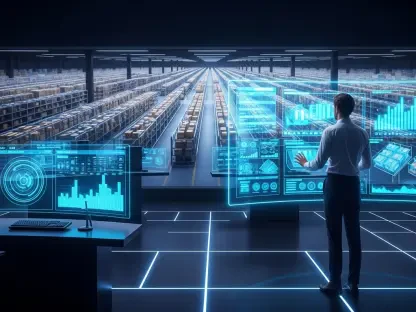
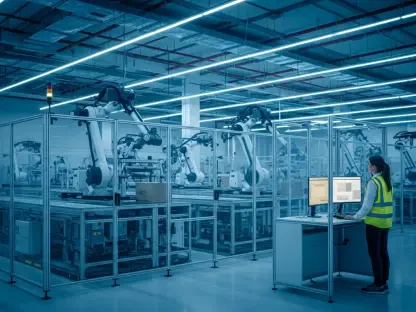
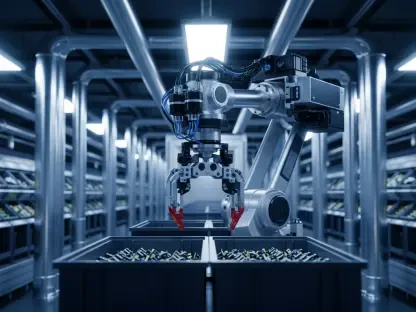
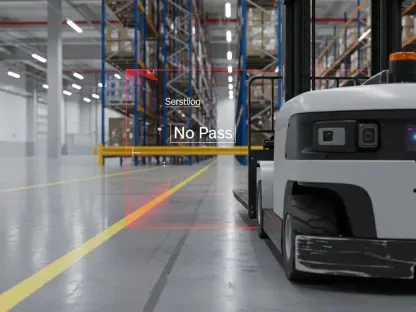
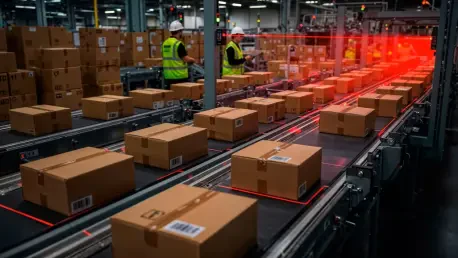
That 30% productivity gain is where the magic is happening. Imagine a fulfillment center humming with activity. Previously, managing inventory was more reactive. Now, our AI systems can predict demand with incredible accuracy, right down to the specific store or region. This means that higher-cost, tariff-impacted inventory doesn’t just sit on a shelf depreciating. The system flags it, prioritizes it, and our automated retrieval systems move it to the front of the line for picking and packing. Every movement is optimized, slashing the time it takes to get an order out the door. We’re essentially using intelligence and speed to directly counteract the financial drag of holding more expensive goods.
The company emphasized maintaining the consumer value proposition. How do you balance raising prices on select categories with protecting customer loyalty, and what specific data or feedback guides the team in making these critical pricing decisions to avoid alienating your shoppers?
That balance is the cornerstone of our entire strategy. We are not making these decisions in a vacuum. It’s a deeply data-driven process where we analyze a universe of inputs. We’re constantly monitoring customer feedback, sales velocity, and price elasticity for thousands of items. This allows us to see which categories have the brand strength to withstand a small, targeted price increase without damaging loyalty. It’s about being surgical. Instead of a blunt, across-the-board hike that would alienate shoppers, we identify specific items where the value is so strong that the customer relationship remains intact. This careful approach is how we navigate external cost pressures while reinforcing the trust our customers place in our brands.
What is your forecast for how technologies like AI and automation will reshape retail supply chains over the next five years, especially in the context of ongoing geopolitical and trade uncertainties?
What we’re seeing now is just the tip of the iceberg. That 30% productivity boost is a powerful proof of concept. Over the next five years, AI will evolve from a tool for optimization within the four walls of a warehouse to the central nervous system of the entire supply chain. We’re moving toward a future where our network can autonomously react to geopolitical events. Imagine a system that can reroute thousands of containers in real-time to avoid a new tariff or port strike, automatically adjusting inventory levels and production schedules across the globe. In an era of constant uncertainty, the most successful supply chains won’t just be efficient; they will be predictive, adaptive, and incredibly resilient. Technology is the only way to achieve that at scale.