
A single name, unearthed from sealed court documents, has sent tremors through the foundations of a global logistics empire, raising questions that extend far beyond one executive’s conduct to the very core of corporate governance and investor trust. DP World, a Dubai-based titan that acts as a primary artery for international commerce, now confronts an unprecedented reputational crisis following revelations linking its long-standing CEO, Sultan Ahmed bin Sulayem, to the convicted sex offender Jeffrey Epstein. The immediate financial fallout has been swift and severe, but the long-term implications for the company’s credibility and strategic partnerships remain dangerously uncertain. This report analyzes the confluence of ethical failure, investor revolt, and governance challenges that will determine the future of this logistics giant.
A Titan of Global Trade: Understanding DP World’s Dominance
The modern global economy runs on a complex network of ports, terminals, and logistics hubs, a high-stakes chessboard where control over key nodes translates directly into economic and geopolitical influence. Companies operating in this sphere are not merely moving containers; they are the gatekeepers of international supply chains, wielding immense power over the flow of goods that fuels industries and nations. Their reliability and strategic positioning are paramount in a world increasingly dependent on just-in-time delivery and seamless trade.
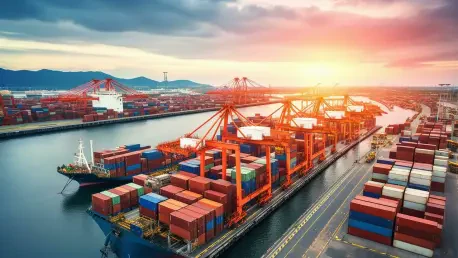
Within this critical arena, DP World stands as a formidable force. Its expansive portfolio of 78 marine and inland terminals spans six continents, making it a lynchpin in the global supply chain. From the bustling port of Jebel Ali in Dubai to strategic assets in the Americas, Europe, and Asia, the company’s infrastructure is integral to the operations of the world’s largest shipping lines. This vast and strategically located footprint has cemented DP World’s status as an indispensable partner for countless multinational corporations and governments.
While it operates in a competitive landscape alongside other major players like Singapore’s PSA International and China’s COSCO Shipping Ports, DP World’s status as a state-owned enterprise provides it with a unique blend of commercial ambition and sovereign backing. This has enabled aggressive global expansion and long-term investments. However, this government ownership also introduces a distinct layer of complexity, particularly when corporate leadership becomes embroiled in a scandal with international political and ethical dimensions.
Shifting Tides: The New Rules of Corporate Reputation and Investment
The ESG Imperative: When Leadership Ethics Dictate Market Access
In the current investment climate, financial returns are no longer the sole determinant of a company’s value. The rise of Environmental, Social, and Governance (ESG) criteria has fundamentally altered how institutional investors assess risk, transforming ethical conduct from a soft metric into a hard line for capital allocation. For global enterprises like DP World, access to international markets and partnerships is now inextricably linked to demonstrating a robust commitment to these principles.
The scandal surrounding CEO Sultan Ahmed bin Sulayem serves as a stark illustration of this paradigm shift. The revelations strike directly at the heart of the “S” (Social) and “G” (Governance) pillars of ESG. The association with a convicted sex offender represents a profound social failing, while the board’s handling of the crisis puts its governance structures under intense scrutiny. For investors, this is not just a public relations issue; it is a material risk that signals a potential breakdown in corporate oversight and ethical accountability at the highest level.
By the Numbers: Gauging the Financial Shockwaves
The market’s reaction to the disclosures was immediate and decisive, translating reputational damage into tangible financial consequences. The decision by Canada’s La Caisse, the country’s second-largest pension fund, to halt a planned $3.7 billion investment was a significant blow. This move was particularly damaging given the fund’s existing 45% stake in DP World Canada, signaling a deep loss of confidence from a key partner.
This financial tremor was amplified when the United Kingdom’s development agency, British International Investment (BII), followed suit by suspending its own investments. The synchronized retreat by two major Western institutional investors has created a risk of financial contagion, as other partners are now compelled to re-evaluate their exposure to DP World. The crisis threatens to derail the company’s growth projections, as the capital required for future expansion projects may become more difficult and expensive to secure.
The Scandal at the Helm: A Deep Dive into the Allegations
The crisis was ignited by the release of unredacted court documents related to Jeffrey Epstein, which contained specific and troubling details about Sultan Ahmed bin Sulayem’s association with him. After U.S. congressmen pushed for the disclosure of names previously redacted by the Trump administration, Sulayem was identified, bringing his long-standing connection to Epstein into the public domain and triggering immediate alarm among investors and partners.
The documents revealed a relationship that was not fleeting or incidental but one that spanned more than a decade, continuing well after Epstein’s 2008 conviction for sex crimes. Disclosed email exchanges paint a disturbing picture, reportedly showing Sulayem engaging in inappropriate conversations about sexual exploits and consulting with Epstein on a variety of business matters. These communications suggest Epstein served as a fixer and connector for Sulayem, leveraging his network to provide access to influential figures.
This evidence of a sustained and close relationship with a known predator, maintained long after his crimes were public knowledge, prompted a swift investor revolt. The actions taken by La Caisse and BII were not merely precautionary; they were a clear and public condemnation of the conduct revealed in the files. Their expectation that DP World will “take necessary actions” has placed immense pressure on the company’s board to respond decisively to the crisis at its helm.
The Governance Gauntlet: Navigating a Crisis of Credibility
The burden of navigating this scandal now falls squarely on DP World’s board of directors, who face a complex web of legal, ethical, and fiduciary duties. Their primary obligation is to protect the company and its stakeholders from further damage, a task that requires a transparent and robust response to the allegations against the CEO. In the world of ESG-driven investment, silence or inaction is often interpreted as complicity, amplifying the reputational and financial risk.
The pressure on the boardroom is not only internal but also comes from a powerful coalition of external forces. The demands from major institutional investors for “necessary actions” carry immense weight, as their capital is essential for the company’s global operations and expansion plans. Furthermore, the involvement of U.S. politicians in the disclosure of Sulayem’s name indicates that the scandal has political ramifications, potentially affecting DP World’s operations and partnerships in key Western markets.
As a government-owned enterprise, DP World confronts unique governance challenges. While state backing can provide stability, it can also complicate accountability, particularly when the individual at the center of a scandal is a powerful public figure. The Dubai government’s response will be closely watched by the international community, as it will signal whether the company’s governance standards align with global expectations for transparency and corporate responsibility.
Charting the Path Forward: Potential Scenarios for DP World’s Future
The most direct path to appeasing investors and beginning the process of restoring trust involves a significant leadership overhaul. The resignation or removal of the CEO would send a clear message that the board is taking the issue seriously and is committed to upholding high ethical standards. Such a move could potentially reopen the door to paused investments and stabilize key partnerships, allowing the company to pivot its narrative toward reform and a new chapter of governance.
Conversely, the company could attempt to weather the storm by adopting a defense and diversion strategy, hoping that the news cycle moves on and its operational importance outweighs the reputational damage. This approach, however, is fraught with risk. In an era of heightened ESG scrutiny, investors have demonstrated a long memory for governance failures. An attempt to downplay the scandal without substantive changes at the top could lead to a permanent erosion of trust, making it harder to attract capital and talent in the future.
Regardless of the path taken with its leadership, DP World must embark on a comprehensive campaign to rebuild its credibility. This will require more than just public statements; it necessitates concrete actions, including a thorough review of its corporate governance policies, the implementation of more stringent ethical guidelines for its executives, and proactive, transparent communication with all stakeholders. The road to recovery will be long, and success will depend entirely on the authenticity of these efforts.
Final Verdict: Reputation Resilience and the Future of a Logistics Giant
The Epstein scandal inflicted immediate and substantial damage on DP World, striking at the core of its reputation and threatening its financial stability by jeopardizing crucial investment partnerships. The crisis exposed a critical vulnerability not in the company’s vast operational infrastructure, but at its highest level of leadership, creating a profound disconnect between its role as a global economic engine and the ethical conduct expected of its executives.
In the final analysis, DP World’s operational strengths and its strategic importance to global trade provided a foundation of resilience that helped it withstand the initial shock. However, the survival and future prosperity of the logistics giant ultimately depended on its leadership’s willingness to address the governance failure head-on. The decisive actions taken by the board to overhaul its executive oversight and implement stringent new ethical protocols were crucial in signaling a genuine commitment to reform. This allowed the company to begin the arduous process of rebuilding trust with its international partners, demonstrating that even a titan of industry is not immune to the modern standards of corporate accountability.