
Listen to the Article
For many years now, “supply chain resilience” has led as the ultimate buzzword in logistics circles: universally praised, rarely implemented with any significant sense of conviction. The lack of balance came to the surface recently, with the chaos and disruption overtaking the business world and proving that most resilience strategies were paper-thin.
Lean, just-in-time models looked brilliant on a spreadsheet. But the reality of today’s global economy shattered them at the first sign of real uncertainty.
The old playbook is failing, and many enterprises still don’t have a reliable, modern alternative that can safeguard their success and performance. The goal is no longer to simply survive and weather down the next crisis by building reactive, expensive defenses.
A real game changer is instead emerging: re-architecting a supply chain that can actually profit from volatility. But there’s a catch. Capitalizing on it means pushing a fundamental shift in corporate mindsets. Instead of viewing disruptions as a threat that must be mitigated at all cost,s leaders must see them as new market opportunities. An agile operational framework for your supply chain doesn’t just recover faster. It also captures market share that sector competitors who haven’t invested in innovation can’t cover. Outperforming your peers now depends on transforming the supply chain ecosystem from a reactive cost center into a proactive engine for growth.
You’re Invested. But How Do You Push the Shift from Reactive Habits to Proactive Strategy?
To manage demand fluctuations accurately, you must begin your journey long before the actual crisis hits. A foundational move from reactive problem-solving to future-focused, strategic foresight is your best friend here. Some demand swings are predictable (such as seasonal holiday rushes), but most are triggered by unforeseen events. Your only choice moving forward is positioning your enterprise to handle all types of uncertainty.
The key to building an organizational capacity that can anticipate variables lies in closely monitoring macroeconomic trends, trade policies, and consumer sentiment. This involves using data analytics to create ‘what-if’ scenarios to model the impact of various disruptions, unlocking a new level of preparation that activates an already well-considered plan when an unexpected event occurs, instead of starting from scratch.
This structured approach must have risk identification at its heart. Businesses should catalog both internal risks (stemming from neglected supplier relationships, poor inventory management, or a lack of visibility across departments) and external risks (ransomware attacks, port blockages, sudden tariff implementations, natural disasters) and address all specific threats with clear, actionable steps.
It’s important to note that this plan cannot be a static document. It must be a living strategy, routinely reviewed, tested, and updated to reflect the evolving risk landscape.
Designing an Agile Operational Framework
A truly resilient supply chain is built on strategic redundancy and operational flexibility. Over-reliance on a single supplier, geographic region, or point of engagement is more prone to creating failure and disruption.
To mitigate this, organizations must cultivate a diversified portfolio of contingent suppliers who are vetted and ready for activation. This is not about undermining primary partnerships but about creating a necessary safety net. This diversification strategy insulates the business from localized disruptions and provides the agility needed to pivot sourcing quickly.
This same principle of flexible capacity extends beyond materials and to the workforce. A sudden increase in demand requires more hands to assemble, pack, and ship finished products. A smart approach involves forming strategic partnerships with workforce management firms that can supply trained, temporary labor on demand, bypassing the delays of traditional hiring or the overhead of a bloated payroll for immediate access to personnel.
The New ROI: Quantifying Supply Chain Resilience
For decades, logistics leaders were measured based on one simple element: their ability to drive cost reduction. This narrow focused create the brittleness that is now plaguing modern supply chains. To build a truly agile system of operations, leaders must adopt a new set of metrics that quantify resilience and its overall impact on the bottom line.
Instead of focusing solely on cost-per-mile or inventory turns, winning organizations now track Key Performance Indicators such as Mean-Time to-Recovery (how quickly operations return to optimal capacity after a major disruption), Value-at-Risk (the potential revenue loss tied to the failure of a specific supplier, route, or facility), and On-Time Delivery (expected to maintain a rate of 95% or higher for top-performing organizations, even under stress).
Technology: Is It Your Supply Chain’s Agility Engine?
A resilient supply chain has an agile framework. And an agile framework relies on technology. Advanced digital tools are essential for achieving the end-to-end visibility that’s necessary to manage complex, multi-tiered supply networks.
Is observability something you can compromise on? The answer is no. Recent research shows that three in five (60%) companies only discover shipment damage after delivery, or even not at all. Without real-time monitoring, enterprises face rejected shipments, potentially wasted inventory, or loss in customer trust, all issues that could have been prevented through visibility.
Implementing Internet of Things sensors will help you gather real-time data on inventory levels and shipment locations. Layering on artificial intelligence and machine learning algorithms transforms this data into predictive analytics, offering more accurate demand forecasts and early warnings of potential bottlenecks.
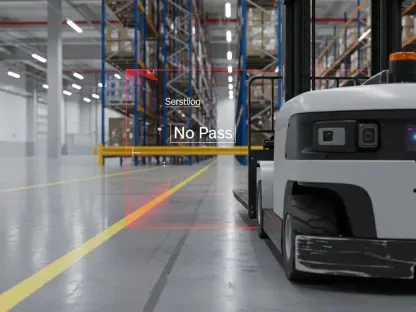
Furthermore, automation solutions, from robotic process automation in the back office to autonomous mobile robots in the warehouse, can significantly increase efficiency and reduce manual errors. Adopting this technological ecosystem empowers businesses to monitor their entire supply chain, detect problems as they unfold, and respond with speed and precision.
In Closing
Logistics is one part of business that never stops evolving. It continues growing, adapting, and shifting according to not only new technological advantages but also geopolitical tensions, geographical trends, and potential uncertainties that might target both local and global industries.
The potential for change is immense and always one step away from disrupting your business. So, it’s the perfect time to reconsider your static approach to supply chain management and reimagine it into the edge that’ll keep your company winning.
It’s your time to invest in agility and next-gen technologies that’ll help you thrive where your competitors fail to adapt, no matter what new uncertainties might emerge in your field.