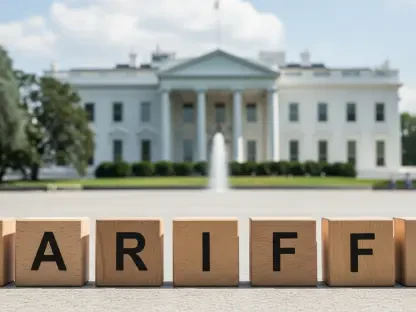

A single social media post from President Donald Trump in January 2026 threatening a key ally with a 25% tariff upended a multibillion-dollar trade pact, perfectly encapsulating the growing volatility of modern trade diplomacy. This abrupt shift toward transactional, executive-driven trade policies marks a significant departure from decades of multilateral negotiations, raising profound questions about global economic stability and the durability of international alliances. The unfolding U.S.-South Korea dispute serves as a critical case study in this new era. This analysis will dissect the current conflict, place it within the broader pattern of recent U.S. trade strategy, and explore the future implications of a world where foundational economic partnerships can be renegotiated by public decree.
The Anatomy of a Modern Trade Dispute
The U.S. South Korea Pact a Deal on the Brink
The foundation of the current dispute rests on a trade agreement that was carefully constructed just last year. In July 2025, the United States and South Korea established a framework for a new economic partnership, which was later formalized in a comprehensive deal signed in November 2025. This pact was designed to rebalance trade flows and foster mutual investment, representing what both administrations initially hailed as a landmark achievement.
At its core, the deal was a balancing act of significant concessions. The United States agreed to cap tariffs on a wide array of South Korean goods at 15%, a ceiling that notably included the contentious Section 232 national security duties on vital imports like cars and lumber. In return, South Korea committed to a massive $350 billion investment in the U.S. economy, with $150 billion earmarked for the American shipbuilding industry, alongside promises to lower barriers for U.S. automobiles and agricultural products.
The entire structure was thrown into jeopardy on January 27, 2026, when President Trump publicly vowed to unilaterally raise tariffs to 25% on key South Korean imports, including cars, lumber, and pharmaceuticals. Citing delays in the legislative ratification process within South Korea’s National Assembly as the primary justification, the threat was issued without a specified timeline or formal documentation, introducing a potent dose of uncertainty into a carefully negotiated agreement.
A Pattern of Pressure the EU and Beyond
The high-pressure tactic deployed against South Korea is not an isolated incident but rather a signature component of the Trump administration’s foreign trade policy. Similar framework agreements have been pursued with other major economic partners, including Japan, the European Union, and Thailand, suggesting a strategic preference for bilateral deals over multilateral consensus. These pacts are often structured around specific U.S. demands in exchange for tariff relief, making them susceptible to the same kinds of enforcement pressures.
The U.S.-EU framework pact provides a stark parallel and a cautionary tale. The European Parliament recently suspended its ratification process after President Trump threatened new tariffs against several EU member states. The threat was linked to the entirely unrelated political ambition of annexing Greenland, demonstrating a willingness to leverage economic tools for non-economic goals. Although the threat was later retracted, the EU has not resumed ratification, signaling a deep-seated mistrust.
This recurring pattern reveals a central paradox in the administration’s strategy. The use of abrupt, high-stakes threats as a tool to enforce compliance often has the opposite effect, destabilizing the very agreements they are meant to uphold. By creating an environment of unpredictability, these tactics foster hesitation and mistrust among allies, making them reluctant to fully commit to long-term economic partnerships with the United States.
The High Stakes Art of the Deal
From Seoul’s perspective, the situation is more nuanced than a simple failure to act. The Democratic Party of Korea, which holds a majority in the National Assembly, acknowledged the legislative delay but emphasized that it has not been idle. It pointed to proactive steps already taken, such as incorporating key investment provisions from the agreement directly into the 2026 national budget, a move intended to signal good faith while the broader legislative package is debated.
However, the consensus among many trade analysts is that these framework deals are inherently unstable. Their vulnerability stems from their deep reliance on executive goodwill and their susceptibility to sudden, unilateral pressure. Unlike traditional treaties that undergo extensive legislative scrutiny and are harder to unravel, these agreements can be jeopardized by a single pronouncement, turning long-term economic planning into a high-stakes political gamble.
The lasting damage of this approach is evident in the continued hesitation from partners like the European Union. Even when a specific threat is withdrawn, the underlying message—that any part of the deal is subject to immediate revision based on presidential whim—lingers. This residue of mistrust chills diplomatic relations and discourages partners from proceeding with ratification, creating a cycle of stalemates that undermines the administration’s stated goals.
The Future of Transactional Diplomacy
The U.S.-South Korea agreement now faces an uncertain future with several potential outcomes. Seoul could capitulate to the pressure and fast-track the legislation, rewarding the high-pressure tactic. Conversely, the deal could collapse entirely, leading to a costly trade war between two vital economic and military allies. A third possibility is a prolonged stalemate, where the agreement exists on paper but is functionally frozen by mutual distrust.
More broadly, this episode signals a significant shift in the landscape of global trade. The established norms of predictability and rules-based order are being replaced by personality-driven negotiations and sudden policy pivots. This forces other nations to re-evaluate their reliance on the United States as a stable and predictable economic partner, potentially accelerating efforts to build alternative trade blocs and supply chains that are less exposed to American political volatility.
The long-term challenges of this diplomatic model are profound. It risks a systemic erosion of trust in international agreements, as commitments become viewed as temporary and contingent rather than binding. Furthermore, the persistent use of trade as a coercive tool to achieve unrelated political objectives could lead to widespread economic fragmentation, with other nations adopting similar retaliatory measures and turning global commerce into a battleground of competing national interests.
Conclusion Redefining Global Trade Rules
The prevailing trend in U.S. trade strategy shows a clear reliance on transactional framework deals enforced by public, high-stakes threats, a method that consistently injects instability into global economic relations. This approach prioritizes short-term leverage over long-term stability, fundamentally altering the nature of international negotiations.
The tense standoff with South Korea stands as a prime example of this new paradigm. It demonstrates how a strategy of executive pressure can jeopardize critical economic partnerships, fray alliances, and undermine the foundational principles of international trade law that have governed the global economy for decades.
This confrontational model has left the world to wonder whether it represents a temporary aberration in American foreign policy or a permanent and structural shift in how global economic powers will negotiate and interact. The resolution of the current disputes will offer a crucial indication of the future rules of global trade.